目次
重要なポイント
- A warehouse trolley is a broad material-handling category that may include shelves, sides, baskets, handles, or specialized load-support structures.
- A platform cart usually uses an open flat deck that makes loading cartons, machinery parts, tools, and bulky goods more convenient.
- Load shape, rather than load weight alone, should determine which transport solution is more suitable.
- Wheel diameter, tread material, bearing quality, and caster arrangement directly affect maneuverability.
- Folding, extendable, anti-slip, and heavy-duty designs solve different warehouse handling problems.
- Buyers should compare storage space, aisle width, route conditions, operator visibility, and maintenance requirements.
- The lowest purchase price does not always provide the lowest long-term operating cost.
導入

Choosing between a warehouse trolley and a platform cart may appear straightforward, but these products are not interchangeable in every application. Both are designed to move goods over short distances, yet their platform structures, handling methods, storage requirements, and ideal load types can differ significantly.
A warehouse trolley may include a flat deck, multiple shelves, side panels, a basket, or an integrated handle. A platform cart is usually defined by its broad, open loading surface and push handle. One design may be better for loose goods and order-picking tasks, while the other may be more efficient for cartons, equipment, furniture, or heavy components.
For procurement teams, warehouse managers, workshops, distributors, and material handling equipment suppliers, choosing the wrong design can create avoidable problems. These may include unstable loads, difficult steering, blocked operator visibility, excessive storage requirements, damaged goods, and repeated replacement of wheels or structural parts.
This guide compares warehouse trolley and platform cart designs across the factors that matter most to commercial buyers. It also explains how folding platform carts, wooden dollies, basket trucks, anti-slip moving dollies, and heavy-duty transport trolleys fit into a complete warehouse handling system.
What Is a Warehouse Trolley?
A warehouse trolley is a manually operated wheeled device used to move products, tools, components, packaging, and other materials within a warehouse or industrial facility. It belongs to the broader field of material-handling equipment, which includes equipment used to move, store, control, and protect materials.
The term warehouse trolley can describe several different product structures. Some models use a flat platform, while others have shelves, baskets, side panels, handles, or adjustable loading surfaces.
Common Warehouse Trolley Designs
Warehouse trolley designs commonly include:
- Flatbed warehouse trolleys
- Heavy-duty warehouse trolleys
- Multi-level shelf trolleys
- Basket trucks with wheels
- Folding transport trolleys
- Tool storage carts
- Extendable moving dollies
- Wooden platform carts
- Anti-slip furniture dollies
The right design depends on the goods being moved and the route through which they travel.
Trolley for Warehouse Use
A trolley for warehouse use is normally selected for repeated short-distance movement between storage, picking, packing, assembly, and dispatch areas. It should be simple to operate and suitable for the warehouse floor, aisle width, load type, and operating frequency.
The Easemovo article about common trolley in warehouse types provides additional comparisons between small wooden trolleys, moving dollies, and other manual transport solutions.
Warehouse Trolley Cart Terminology
The terms trolley, cart, dolly, and platform truck often overlap. Buyers should therefore avoid choosing a product by name alone.
Platform dimensions, wheel configuration, handle design, load capacity, and surface protection provide a more accurate basis for comparison.
What Is a Platform Cart?
A platform cart is a wheeled transport unit built around an open, flat loading deck. It generally includes four wheels and a fixed, removable, or folding handle.
The open platform allows users to load cartons, containers, machines, furniture, appliances, and other goods without interference from side panels. A platform cart can be made from steel, plywood, hardwood, plastic, or a combination of materials.
Flatbed Platform Design
The defining feature of a platform cart is its flatbed structure. The deck supports the load from below and allows loading from different directions.
A flatbed warehouse trolley is especially useful when goods vary in shape or when operators need quick access to the platform. However, loads that can roll, slide, or fall may require straps, side protection, or an anti-slip surface.
Folding Platform Cart
A folding platform cart uses a handle that folds toward the loading deck. This structure reduces the amount of space required when the cart is stored or transported between facilities.
その TC1860 折りたたみ式プラットフォームトラック combines a foldable design with a steel frame and tire options for different surfaces. It is relevant to warehouses, factories, shops, and other workplaces where storage space and flexible use are important.
Platform Dolly Cart
A platform dolly cart is usually lower than a conventional handled platform truck. It may not have a permanent pushing handle, allowing the load to occupy more of the deck.
Low-profile designs are commonly used for furniture, boxes, equipment, and bulky goods. They are compact but may require users to bend during loading or reposition the dolly manually.
Warehouse Trolley vs Platform Cart Comparison
| Comparison factor | Warehouse trolley | Platform cart |
|---|---|---|
| General structure | May include shelves, sides, baskets, or handles | Primarily an open flat platform |
| Best load type | Loose goods, tools, picked orders, containers | Cartons, equipment, furniture, bulky items |
| Loading access | May be limited by sides or shelves | Open access from several directions |
| Load containment | Usually better on sided or basket models | May require straps or anti-slip surfaces |
| Storage requirement | Depends on frame and shelf design | Folding models can save considerable space |
| Operator visibility | Can be affected by tall shelves or stacked goods | Depends mainly on load height |
| 操縦性 | Varies by structure and caster layout | Often suitable for straightforward transport routes |
| Customization potential | Shelves, baskets, dividers, handles, and brakes | Deck size, handle, wheels, surface, and capacity |
| Typical environment | Warehouses, workshops, retail stockrooms | Warehouses, factories, offices, and moving tasks |
| Main buying priority | Workflow organization and load containment | Platform support, stability, and mobility |
Compare the Type of Goods Being Moved
The most important difference between a warehouse trolley and a platform cart is how each design supports the load. Buyers should start by documenting what will be moved rather than immediately comparing product prices.
Cartons and Packaged Products
A platform cart works well for stable cartons with flat bases. The open deck allows boxes to be loaded quickly and arranged according to their dimensions.
When cartons are stacked, the total load height should not obstruct the operator’s view. Tall stacks may also require straps or retaining sides, especially when the trolley moves across thresholds or around tight corners.
Loose Materials and Small Items
Loose products, textiles, packaging, sports equipment, laundry, and mixed inventory can fall from an open platform. A basket truck provides better containment for these materials.
その HWS9066W バスケットトラック combines a removable vinyl liner with a steel and hardwood frame. This type of basket truck with wheels is suitable for facilities that need to transport loose or mixed goods without placing them into separate boxes.
Tools and Workshop Equipment
A workshop may need a warehouse trolley with shelves or compartments rather than a completely open platform. Tool storage carts keep frequently used equipment organized and accessible near production or maintenance areas.
A heavy-duty table trolley can also provide separate levels for tools, parts, and equipment. The 400kg Heavy Duty Table Transport Trolley with Handle is designed for warehouses, workshops, production lines, packaging areas, and other industrial transport tasks.
Irregular and Long Loads
Long items may not receive adequate support from a standard fixed platform. Excessive overhang can make the load unstable and difficult to control.
その PWD6045SD 伸縮式台車 uses a length-variable wooden loading surface that can be adjusted to different load dimensions. An extendable design can reduce the need to keep several fixed-size dollies for changing cargo lengths.
Evaluate Load Capacity and Weight Distribution
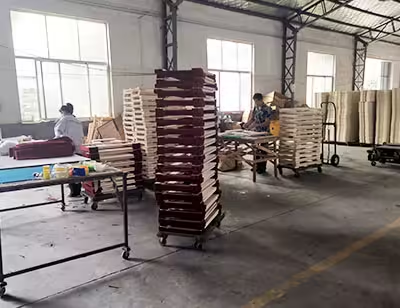
Load capacity is one of the first specifications buyers compare, but it should not be considered separately from weight distribution, platform size, wheel rating, and route conditions.
Rated Capacity
The rated capacity indicates the maximum load the equipment is designed to carry under defined operating conditions. Buyers should follow the manufacturer’s stated limit and avoid using maximum capacity as the routine target.
Occasional impact, uneven floors, poor load positioning, and sudden directional changes can place additional stress on the platform, caster plates, frame, and wheels.
Concentrated Loads
A compact metal component may place most of its weight on a small area of the deck. Although its total weight may be within the stated limit, the concentrated force can still damage a weak platform.
Buyers transporting machinery parts, safes, appliances, or industrial components should confirm whether the platform can support concentrated loads without excessive bending.
Weight Distribution
Loads should be centered and distributed over the supporting wheels whenever possible. Placing a heavy item near one edge can make a warehouse trolley difficult to steer and increase the risk of tipping.
The article on warehouse trolley safety considerations explains how capacity, weight distribution, wheel maintenance, ergonomics, and environmental conditions affect safe daily use.
Dynamic Working Load
A stationary load produces different forces from a moving load. Starting, stopping, turning, and crossing uneven surfaces can increase stress on the equipment.
The trolley should therefore be evaluated with a representative working load rather than tested only when empty.
Compare Platform Materials
Platform material affects strength, weight, grip, noise, impact protection, moisture resistance, and cost. No single material is ideal for every warehouse trolley application.
Steel Platform
Steel platforms provide high structural strength and are commonly used in heavy-duty platform carts. They are suitable for industrial components, tools, machinery, and repetitive warehouse transport.
A steel deck may be heavier and noisier than a wooden platform. Protective coatings are also important where the cart is exposed to moisture or corrosive environments.
Plywood Platform
Plywood combines manageable weight with useful structural strength. It is widely used in moving dollies, furniture carts, and wood platform trucks.
その PWDシリーズ合板台車 uses a plywood deck, non-slip pads, corner protection, and swivel wheels. This type of wood platform cart is suitable for warehouses, offices, homes, and workshops.
Hardwood Platform
A hardwood dolly offers a strong frame and a traditional open structure. Carpeted or rubber-covered ends can help protect furniture, equipment, and finished surfaces.
その SHWD7646 ソリッドデッキハードウッドドリー uses a solid hardwood deck and swivel casters for furniture, appliances, and industrial equipment.
Carpeted Platform
A carpet dolly is designed to reduce direct contact between hard platform edges and finished goods. It is commonly used by movers, furniture suppliers, warehouses, offices, and appliance distributors.
その RPWD7050-III カーペット付き移動台車 combines a carpeted platform with a ribbed rubber surface, rounded corners, and swivel wheels. Buyers searching for carpet dollies or a furniture dolly for carpet should compare surface protection with load stability and cleaning requirements.
Choose Wheels for the Warehouse Floor
The wheels often have a greater effect on daily usability than the platform material. Wheel diameter, tread hardness, bearing design, caster offset, and swivel configuration affect starting effort, turning, noise, and floor protection.
ゴム車輪
A rubber wheel trolley can reduce noise and vibration on many indoor surfaces. Rubber tread may also provide useful grip on tile, concrete, or finished floors.
The correct rubber composition should be selected according to load, floor condition, temperature, and exposure to oil or chemicals.
ポリウレタンホイール
Polyurethane wheels can provide a balance between durability, floor protection, and rolling performance. They are frequently used on warehouse handling equipment.
Buyers should confirm the wheel’s individual capacity rather than assuming every polyurethane caster is suitable for a heavy-duty warehouse trolley.
Pneumatic and Solid Tires
Pneumatic tires provide cushioning over rough or outdoor surfaces. They can make movement more comfortable but require pressure checks and may be vulnerable to punctures.
Solid tires generally require less maintenance. They can be suitable for warehouses, workshops, yards, and mixed transport routes where puncture resistance is a priority.
ホイール直径
Larger-diameter wheels generally move over joints, thresholds, and small surface irregularities more easily. Smaller wheels keep the platform closer to the floor and reduce overall product height.
OSHA’s materials handling guidance for pushing carts recommends using suitable handling equipment and notes that pushing generally requires less effort than pulling when the equipment and route allow it.
Swivel vs Fixed Casters
Swivel casters allow a warehouse trolley to turn in tight spaces. Fixed casters help it maintain a straight direction over longer routes.
A combination of fixed and swivel wheels often provides balanced handling. Four swivel casters may offer excellent maneuverability in confined areas but can require more correction during straight travel.
The general mechanics and industrial uses of caster systems are explained in the caster overview.
Compare Load Control and Surface Protection
A platform cart provides easy loading access, but an open deck may not prevent goods from sliding. The need for containment depends on the cargo, floor, speed, turning frequency, and route gradient.
Anti-Slip Surface
An anti-slip surface increases friction between the load and the platform. It is useful for cartons, furniture, machinery, containers, and equipment with smooth bases.
その FPWD8060 Anti Slip Dolly uses a plywood platform with an anti-slip coating, an integrated handle, galvanized components, and swivel casters.
Side Panels
Side panels help contain loose or uneven goods. They are useful for garden materials, packaging, tools, and mixed products that could fall from a flatbed transportation trolley.
However, fixed sides can slow loading and prevent oversized items from fitting on the deck.
Straps and Tie-Down Points
Tall, irregular, or valuable goods may need straps even when carried on an anti-slip surface. Tie-down points should be positioned so that restraints stabilize the load without interfering with wheels or operator movement.
Edge and Corner Protection
Rubber bumpers, carpeted ends, rounded corners, and protective rails can reduce damage to products, racks, doorframes, and walls.
Surface protection is particularly important for furniture moving equipment and commercial moving dollies used in customer-facing environments.
Consider Warehouse Layout and Storage Space
The best warehouse trolley is not determined only by the load. It must also fit the physical route and storage system.
Aisle Width
Measure the narrowest point along the complete route, including shelving, doors, corners, lifts, packing stations, and loading areas.
The product should have sufficient clearance to turn without striking racks or forcing operators into awkward positions.
Turning Radius
Long platform carts may support oversized loads but require more turning space. Shorter carts can move more easily in confined areas but may not provide adequate support for long items.
Evaluate the trolley while loaded because the cargo may extend beyond the platform and change the effective turning radius.
Folding Storage
A folding handle platform cart is useful when several units must be stored in a limited area. It can also be transported more easily in service vehicles or delivery trucks.
Folding joints and locking mechanisms should be inspected regularly. The handle must remain secure during pushing and should not collapse unexpectedly.
Stackable or Nestable Equipment
Some flat dollies and platform carts can be stacked or nested when not in use. This can reduce storage requirements in warehouses with seasonal demand.
Buyers should check whether stacking places pressure on wheels, brakes, handles, or coated surfaces.
Mixed Equipment Fleet
A single warehouse trolley design may not suit every department. A more effective fleet may include:
- Folding platform carts for cartons
- Basket trucks for loose goods
- Tool carts for maintenance areas
- Carpet dollies for furniture
- Extendable dollies for long loads
- Heavy-duty platform carts for industrial components
The Easemovo Material Handling Carts Buying Guide provides a broader framework for comparing cart types, platform materials, costs, and warehouse applications.
Evaluate Ergonomics and Operator Control

A warehouse trolley should reduce unnecessary lifting without creating excessive pushing, pulling, or steering demands.
Handle Position
The handle should allow the operator to maintain a comfortable, upright posture. A handle that is too low may encourage bending, while one that is too high may increase shoulder strain.
Vertical handles can accommodate users of different heights more easily than a single fixed horizontal grip in some applications.
Push vs Pull
Pushing is normally preferable for handled platform carts because the operator can use body weight and maintain better control. Pulling may be appropriate for wagons and drawbar dollies designed for that movement.
The operating method should always match the manufacturer’s instructions and the workplace route.
Operator Visibility
The load should not block the operator’s view of people, shelving, doors, ramps, or floor obstacles. If the load is too tall, it may need to be divided into smaller trips.
A larger cart does not automatically improve productivity when it creates visibility or control problems.
Starting and Stopping Force
Starting a loaded warehouse trolley often requires more effort than maintaining movement. Damaged wheels, dirty bearings, uneven floors, and poorly aligned casters increase the force required.
Brakes or wheel locks are useful during loading, unloading, and parking. They are particularly important near slopes, dock areas, and busy work zones.
OSHA’s ergonomics guidance explains how fitting tasks and equipment to workers can reduce fatigue and work-related musculoskeletal risks.
Warehouse Trolley or Platform Cart: Application Comparison
Distribution Centers
Distribution centers commonly move cartons, totes, packaging materials, and mixed orders. Platform carts are useful for consolidated cartons, while basket trucks are more suitable for loose items.
Order-picking operations may benefit from custom trolleys with shelves, dividers, or identification holders.
Manufacturing Facilities
Factories use heavy-duty platform carts for components, tooling, work-in-progress materials, and finished goods. The cart should match the production line height and route.
Custom trolleys may be required when parts have unusual shapes or must remain separated during transport.
Workshops
Workshops often need tool service carts, mobile shop tool carts, and multi-level equipment trolleys. Organization can be more important than having the largest possible platform.
Shelves, drawers, trays, brakes, and durable tool cart wheels should be included in the buying specification.
Furniture and Moving Operations
Furniture movers commonly use wooden dollies, carpeted dollies, hardwood dollies, and four-wheel furniture dollies. Low deck height reduces lifting distance, while carpet and rubber contact points protect finished surfaces.
The Easemovo guide to choosing furniture moving equipment explains how moving dollies, platform carts, and protective surfaces fit different moving tasks.
Retail Stockrooms
Retail operations may prioritize quiet wheels, compact dimensions, easy storage, and floor protection. Folding platform carts are useful when equipment must be stored behind counters or in small stockrooms.
A basket truck may be preferable for textiles, packaging, or mixed lightweight stock.
How to Choose Between a Warehouse Trolley and Platform Cart
Step 1: Define the Load Profile
Record the average and maximum load weight, dimensions, center of gravity, packaging, surface sensitivity, and frequency of movement.
Do not rely on a single example. Include both routine loads and occasional peak requirements.
Step 2: Map the Complete Route
Measure aisles, doors, turns, ramps, lifts, thresholds, and storage locations. Record floor types and any outdoor sections.
This information helps determine cart size, wheel diameter, tread material, and caster arrangement.
Step 3: Select the Basic Structure
Choose an open platform for stable cartons and equipment. Select shelves, baskets, sides, or anti-slip surfaces when loads need organization or containment.
Consider an adjustable platform when cargo length changes frequently.
Step 4: Test a Representative Load
Test starting, turning, straight travel, braking, visibility, noise, and floor marking. A product that performs well while empty may behave differently under load.
Include the employees who will operate the warehouse trolley in the evaluation process.
Step 5: Compare Maintenance and Replacement Parts
Ask whether wheels, brakes, handles, deck panels, and fasteners can be replaced. Confirm component availability before purchasing a large fleet.
Standardized components can simplify maintenance and reduce downtime.
Step 6: Evaluate Customization
Custom trolleys can be designed around specific dimensions, wheel layouts, handles, brakes, load surfaces, colors, shelves, or restraints.
Customization is worthwhile when a standard trolley creates repeated handling problems or product damage.
Step 7: Calculate Total Cost
Compare purchase price, maintenance, replacement wheels, storage, handling time, product damage, and expected service life.
A slightly higher initial investment may provide better value when the equipment is used throughout every shift.
Common Buying Mistakes
Selecting by Capacity Only
A high capacity does not guarantee suitable dimensions, wheels, or steering. The load must fit securely on the platform and remain controllable along the route.
Buying the Smallest Wheels
Small wheels may reduce price and platform height, but they can perform poorly on damaged floors, thresholds, or debris.
Wheel selection should reflect the operating surface rather than the empty appearance of the cart.
Ignoring Load Height
Tall stacks can block visibility and raise the center of gravity. A lower load or additional trip may be safer and more efficient than an unstable oversized load.
Using One Design for Every Department
Warehouses often handle cartons, loose items, tools, furniture, and industrial components. One universal warehouse trolley may not perform each task effectively.
A small, standardized range of task-specific carts can provide better results.
Overlooking Storage Requirements
Non-folding carts can occupy valuable floor space when idle. Storage dimensions should be compared alongside working dimensions.
Choosing Price Over Parts Availability
Wheels, brakes, handles, and grip surfaces eventually wear. A low-cost cart can become expensive if replacement components are difficult to obtain.
結論
The choice between a warehouse trolley and a platform cart should be based on the load, route, working environment, and handling process.
A warehouse trolley with shelves, sides, or a basket is usually better for organized picking, loose goods, tools, and contained materials. A platform cart provides faster loading access and greater flexibility for cartons, equipment, furniture, and bulky products.
Within these broad categories, buyers can choose folding platform carts, heavy-duty table trolleys, wooden dollies, carpet dollies, extendable platforms, basket trucks, and anti-slip moving dollies. Each design solves a different operational problem.
The right warehouse trolley should support the load securely, move smoothly over the actual floor, fit through the complete route, remain easy to control, and allow practical maintenance. Buyers who compare these factors before ordering are more likely to build an efficient material handling fleet rather than simply purchase another cart.
よくある質問
What is the best warehouse trolley for moving boxes?
A folding or fixed platform cart is usually suitable for stable boxes with flat bases. Select a platform large enough to support the cartons without excessive overhang.
For tall stacks, consider side rails, straps, or multiple trips to maintain visibility and stability.
What is the difference between a warehouse trolley and a dolly?
A warehouse trolley commonly has a handle, shelves, sides, or a basket. A dolly is normally a low wheeled platform positioned directly beneath a load.
Dollies are compact and useful for furniture or equipment, while handled trolleys provide greater steering control.
Is a wooden platform cart suitable for warehouse use?
Yes. A properly constructed wood platform cart can be suitable for boxes, furniture, appliances, tools, and equipment.
Buyers should compare deck thickness, frame reinforcement, caster mounting, moisture exposure, load rating, and surface protection.
Are four-wheel dollies easy to steer?
A four-wheel dolly with swivel casters can turn easily in confined areas. However, it may require more directional correction over long straight routes.
Caster quality, wheel diameter, load position, and floor condition all influence handling.
Should a warehouse trolley have brakes?
Brakes are useful when the trolley is loaded or unloaded, parked near a slope, or used in busy working areas. They help prevent unintended movement.
The brake system should be easy to access and should lock the wheel or caster securely.
What wheels are best for a warehouse trolley?
Rubber wheels are commonly selected for quiet operation and floor protection. Polyurethane wheels can provide a balance of durability and rolling performance.
Pneumatic tires may be useful for uneven surfaces, while solid wheels reduce puncture-related maintenance.
Is a heavy-duty warehouse trolley always better?
Not necessarily. A heavy-duty model may be stronger, but it can also be larger, heavier, and less convenient in tight aisles.
The best warehouse trolley is one that safely supports the real load without adding unnecessary size or operating effort.
What is a basket truck used for?
A basket truck is used to move loose, irregular, or mixed goods that could fall from an open platform. Common applications include textiles, packaging, sports equipment, laundry, books, and warehouse supplies.
Removable liners can make the basket easier to clean and maintain.
When should I choose an extendable dolly?
Choose an extendable dolly when the business frequently moves products with different lengths. The adjustable platform can provide better support beneath long or irregular loads.
Check the locking system, extension range, load rating, and frame stability before purchasing.
Can warehouse trolleys be customized?
Yes. Common custom trolley options include platform dimensions, wheel material, caster arrangement, handles, brakes, shelves, baskets, anti-slip surfaces, colors, and load restraints.
Provide the manufacturer with load drawings, route details, floor conditions, and operating frequency to improve the accuracy of the design.
会話を続けましょう!
この記事はいかがでしたか?業界の洞察、リアルタイムの議論、そして限定最新情報をお届けするコミュニティにぜひご参加ください。こちらからアクセスしてください:
→ フェイスブック: 青島金華陽工貿株式会社
→ ユーチューブ: キンカヨ産業貿易
一緒にイノベーションを探求しましょう。今すぐつながりましょう。
 Japanese
  English
  French
  Spanish
  German