目次
- Understand the main types of workshop carts and their ideal uses.
- Compare platform, anti-slip, folding, telescopic-handle, and two-tier designs.
- Match load capacity, deck size, wheel type, and brakes to the actual job.
- Review practical Easemovo products for garages, workshops, warehouses, and service teams.
- Avoid common buying mistakes before requesting a quotation.
- Use a simple checklist to choose the right cart configuration.
A well-selected mobile shop tool cart can reduce repeated carrying, keep equipment close to the work area, and make heavy or bulky items easier to handle. However, the best cart is not automatically the largest or strongest model.
The right choice depends on the load, floor condition, aisle width, turning space, storage area, and frequency of use. This guide explains the most important concepts and compares several practical mobile cart options available from Easemovo.
What Is a Mobile Shop Tool Cart?

Basic Definition
A mobile shop tool cart is a wheeled unit used to move tools, components, boxes, equipment, or work-in-process materials around a workshop. It may have a flat platform, multiple shelves, an integrated handle, a telescopic handle, or a folding frame.
Its main purpose is mobility. Instead of carrying equipment back and forth, workers can bring the required load directly to the workstation.
Storage Cart vs. Transport Cart
A drawer cabinet is designed mainly for organizing hand tools. A platform-style mobile shop tool cart is better for transporting toolboxes, power tools, repair kits, machine parts, and packaged materials.
Workshops that need both functions can use a two-tier trolley or add removable bins to a platform cart.
The First Question to Ask
Do you need to organize many small tools or move fewer but heavier items? This answer determines whether drawers, shelves, a flat deck, or an anti-slip surface should be the priority.
Where Is a Mobile Shop Tool Cart Used?
Automotive Workshops
Automotive teams use a mobile shop tool cart to move batteries, spare parts, diagnostic equipment, repair kits, and tool cases between service bays.
A compact model with good steering and a stable platform is usually more practical than an oversized cart that is difficult to position beside a vehicle.
Manufacturing and Assembly
Production teams use a mobile shop tool cart to deliver components, fixtures, gauges, fasteners, and tooling to individual workstations.
Durability, predictable movement, and compatibility with existing aisle widths are especially important in manufacturing environments.
Warehouses and Stockrooms
A workshop connected to a warehouse may use a mobile shop tool cart to move cartons, maintenance supplies, replacement parts, and packaged equipment over longer indoor routes.
In this setting, larger wheels and a comfortable push handle can improve everyday usability.
Mobile Service Work
Mobile technicians should consider folded size, empty weight, handle design, and storage convenience.
A mobile shop tool cart that works well inside a large workshop may still be unsuitable if it is difficult to load into a service van or move between customer sites.
How to Choose the Best Mobile Shop Tool Cart
1. Calculate the Real Load
List the normal load, occasional peak load, and the way weight will sit on the deck. A mobile shop tool cart should offer a reasonable capacity margin without becoming unnecessarily heavy or difficult to steer.
Always use the complete cart rating supplied by the manufacturer. Do not estimate capacity only from platform thickness or cart dimensions.
Concentrated Load
A motor, dense toolbox, battery, or machine component places most of its weight in a small area.
This creates greater stress around the platform and caster mounting points than the same weight spread across several boxes.
Distributed Load
Several cartons or parts bins may distribute weight across the platform.
Even when the total weight is within the rated capacity, tall stacking can reduce forward visibility and make the cart less stable.
2. Measure the Entire Workshop Route
Measure doorways, aisles, corners, ramps, thresholds, elevators, and the intended storage location.
The mobile shop tool cart must fit the entire route, not only the workstation where it will be loaded.
A smaller cart is often better in crowded repair bays. A wider platform may be more efficient in an open warehouse because it can reduce the number of trips.
3. Match the Wheels to the Floor
Wheel diameter and material affect starting force, steering, noise, vibration, and floor protection.
その Canadian Centre for Occupational Health and Safety handcart guidance identifies wheel size, caster arrangement, cart stability, floor condition, route distance, and frequency of use as important factors in cart selection.
Swivel Casters
Swivel casters rotate to support tight turns and lateral positioning.
They are useful around vehicles, machinery, workbenches, and narrow production cells where frequent direction changes are required.
固定ホイール
Fixed wheels provide more stable straight-line movement.
They suit longer transport routes but are less flexible when a mobile shop tool cart must move sideways or turn within a narrow bay.
Mixed Caster Layout
A combination of two fixed and two swivel casters can balance steering ability and directional control.
Four swivel casters provide greater maneuverability, but they may require more operator attention when moving quickly along a straight route.
4. Compare Platform Materials
Plywood provides a practical balance of strength and manageable weight. PVC-covered and anti-slip surfaces can improve grip and help protect painted or finished items.
Steel frames are generally selected for more demanding workshop transport. However, the material alone does not determine the quality of a mobile shop tool cart.
Buyers should also examine reinforcement, fasteners, welds, coatings, caster plates, and the availability of replaceable components.
5. Check the Handle and Working Posture
The handle should allow operators to move the mobile shop tool cart without excessive bending, twisting, or wrist strain.
その OSHA guidance on pushing and pulling materials recommends appropriate handles, properly maintained wheels, clear visibility over the load, and pushing rather than pulling where practical.
A vertical or telescopic handle can accommodate operators of different heights. The handle should also provide enough grip space and keep hands away from walls, machinery, and other pinch points.
6. Decide Whether You Need Brakes
Brakes are useful on ramps, near loading areas, or when the cart doubles as a temporary work surface.
They prevent unintended movement while tools, parts, or equipment are being loaded and unloaded.
Two brakes may be adequate for many level indoor floors. More demanding applications may require additional wheel locks or a specialized braking system.
Mobile Shop Tool Cart Comparison
| カートの種類 | 最優秀アプリケーション | Main Advantage | Main Limitation |
|---|---|---|---|
| Compact plywood dolly | Toolboxes, cartons, and small equipment | Easy to store and maneuver | No raised handle or shelves |
| Anti-slip dolly | Irregular tools and machinery parts | Better load grip | Low platform requires careful lifting |
| PVC-covered dolly | Painted or finished equipment | Helps protect load surfaces | Limited small-tool organization |
| Telescopic-handle dolly | Service teams and mixed users | Easier pulling and positioning | Handle lock requires inspection |
| Folding platform truck | Large or bulky workshop loads | High capacity and compact storage | Larger turning radius |
| Two-tier trolley | Assembly tools and parts bins | Separates tools and supplies | Must be loaded carefully for stability |
Recommended Easemovo Mobile Shop Tool Cart Options
PWD4530/PWD6045/PWD9060 合板移動台車
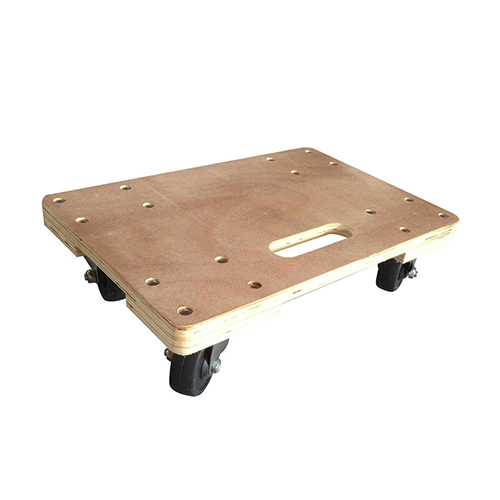
その PWD4530/PWD6045/PWD9060 合板移動台車 is a low-profile option for moving toolboxes, cartons, equipment, and workshop supplies.
Easemovo lists multiple platform sizes and 3-inch swivel casters, giving buyers several options for different load dimensions and storage spaces.
This series can work as a compact mobile shop tool cart when the buyer needs a simple moving base rather than shelves or drawers.
最適な用途
- Small workshops
- Repair toolboxes
- Packaged components
- Maintenance equipment
- Short-distance indoor movement
FPWD7050 Anti-Slip Moving Dolly
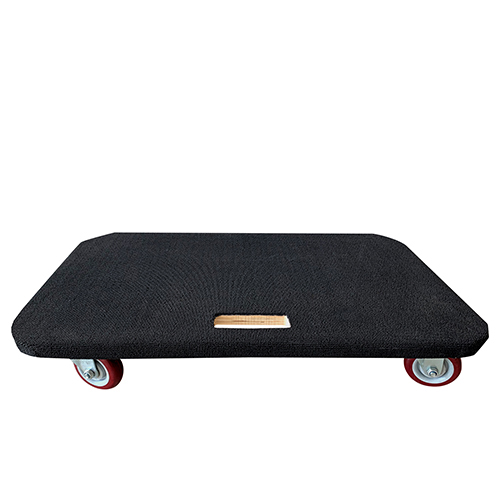
その FPWD7050 Anti-Slip Moving Dolly has a plywood platform with an anti-slip coating, an integrated handhold, 4-inch swivel casters, and two brakes.
Its listed body size is 70 × 50 × 14.5 cm.
This mobile shop tool cart format is suitable for boxed tools, repair equipment, fixtures, and irregular parts that may shift during movement.
最適な用途
- Irregular equipment
- Tool cases
- Workshop replacement parts
- Loads requiring additional grip
- Areas where wheel brakes are useful
RPWD6030/RPWD7050 PVC製移動台車

その RPWD6030/RPWD7050 PVC製移動台車 is available with 60 × 30 cm or 70 × 50 cm platforms and 4-inch swivel casters.
Its PVC-covered surface is intended to improve grip and help protect finished items during transport.
It is worth considering for painted parts, appliances, finished fixtures, or workshop equipment that should not rest directly on a hard metal platform.
PWD80406045H-III Telescopic-Handle Dolly

その PWD80406045H-III 伸縮ハンドル付き移動台車 combines a plywood platform, four non-slip pads, 3-inch swivel casters, and a telescopic handle.
This option is suitable for buyers who want a low-platform mobile shop tool cart but prefer to guide it using an adjustable handle.
The telescopic design can also make the cart easier to store or transport between different work locations.
TC1860 折りたたみ式プラットフォームトラック
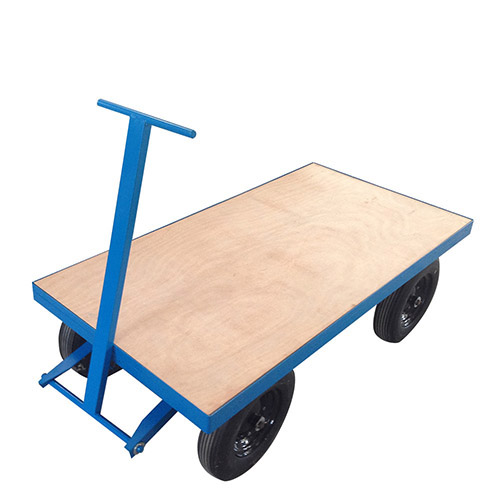
その TC1860 折りたたみ式プラットフォームトラック is designed for warehouses, factories, shops, and other heavy-load environments.
Easemovo states that available configurations may handle loads from 150 kg to 1 tonne and may use pneumatic or solid tyres. Buyers should confirm the capacity and wheel configuration of the exact ordered version.
Choose this mobile shop tool cart for large tool cases, multiple containers, machinery accessories, or bulky workshop equipment.
Its folding frame can also reduce the amount of storage space required when the cart is not in use.
400 kg Two-Tier Transport Trolley
その 400 kg Heavy Duty Table Transport Trolley provides upper and lower loading levels, a listed maximum capacity of 400 kg, and a 1,000 × 700 mm loading area.
The upper shelf is listed at 120 kg, while the lower shelf limit changes when both levels are loaded.
For production support, maintenance, and assembly work, this style provides a more organized mobile shop tool cart.
Heavy items should remain on the lower shelf to keep the center of gravity lower and improve stability.
Mobile Shop Tool Cart vs. Fixed Tool Cabinet
モビリティ
A mobile cart brings tools and parts directly to the job.
A fixed cabinet is better for centralized storage, security, and detailed drawer organization.
Tool Capacity
A fixed cabinet may store more small hand tools in a structured layout.
A platform or shelf-style mobile shop tool cart is generally better for large tool cases, parts bins, machinery components, and mixed-size equipment.
Floor Space
A mobile cart uses temporary floor space and must move through active workshop routes.
A fixed cabinet requires permanent floor space but does not create additional cart traffic in aisles.
Purchase Cost
A compact platform cart usually has a simpler structure than a drawer cabinet.
However, the final cost depends on capacity, materials, wheel quality, brakes, coatings, handle design, and customization requirements.
Best Combined Setup
Many professional workshops use a fixed cabinet for the complete tool inventory and a smaller mobile shop tool cart for the tools required during the current job.
This setup provides mobility without placing every tool on wheels.
Common Mobile Shop Tool Cart Buying Mistakes
Buying Only by Maximum Capacity
A high load rating does not automatically guarantee easy handling.
A heavy frame, undersized wheels, or poor caster alignment can make a mobile shop tool cart difficult to move even when it is loaded below its rated capacity.
Ignoring the Turning Radius
A cart may pass through a doorway but still fail to turn into the next aisle.
Buyers should consider platform length, handle position, wheel layout, operator space, and expected load overhang.
Choosing Small Wheels for Rough Floors
Small casters may struggle with cracks, expansion joints, debris, and thresholds.
OSHA notes that poorly functioning wheels and uneven terrain increase the force required to move carts.
Stacking Tools Too High
Tall loads reduce forward visibility and raise the center of gravity.
Place dense tools and components low on the mobile shop tool cart and keep the operator’s line of sight clear.
Forgetting Replacement Parts
Casters, brakes, bearings, handles, and platform surfaces can wear over time.
Before placing a bulk order, ask whether matching spare parts, maintenance instructions, and installation support are available.
Choosing by Price Alone
A low initial price may be attractive, but it does not show how the cart will perform after repeated use.
Buyers should compare expected service life, caster quality, spare-part availability, maintenance requirements, and the suitability of the cart for the actual working environment.
Mobile Shop Tool Cart Procurement Checklist
Load Details
Provide the supplier with:
- Normal load weight
- Maximum expected weight
- Load dimensions
- Center of gravity
- Weight distribution
- Frequency of movement
- Fragile, oily, sharp, hot, or irregular load conditions
These details help the supplier determine whether a standard mobile shop tool cart is suitable or whether a customized configuration is needed.
Workplace Details
Record the following information:
- Floor material
- Floor joints and thresholds
- Aisle width
- Doorway width
- Turning space
- Travel distance
- Ramp conditions
- Indoor or outdoor use
- Exposure to water, oil, dust, or chemicals
Required Cart Features
Specify the preferred:
- Platform dimensions
- Number of shelves
- Handle type
- Caster arrangement
- Wheel material
- Wheel diameter
- Brake configuration
- Edge protection
- Anti-slip treatment
- Folding mechanism
Supplier Questions
Ask for the load rating of the complete mobile shop tool cart, not only the platform or individual casters.
Buyers should also request caster ratings, product test information, packaging details, spare-part availability, production lead time, and customization options.
Industrial buyers may review ISO 22883:2004, which specifies requirements and testing for castors and wheels used on manually propelled or power-towed industrial equipment operating at speeds up to 1.1 m/s.
How to Use a Mobile Shop Tool Cart Safely
Inspect the Cart Before Use
Check wheel rotation, caster mounting, brakes, handles, fasteners, and the platform before use.
Remove a damaged mobile shop tool cart from service until the problem has been properly repaired.
Load From the Bottom Up
Place the heaviest tools near the center and on the lowest available level.
Secure items that may slide, roll, tip, or extend beyond the platform.
Push When Practical
Keep both hands on the handle, move at a controlled speed, and avoid sudden turns.
Pushing normally provides better forward visibility than walking backward while pulling a loaded cart.
Keep the Route Clear
Remove hoses, cables, packaging, metal chips, liquids, and other obstacles from the travel route.
CCOHS recommends clear aisles, maintained floors, adequate turning space, and braking or powered assistance where ramps increase handling risks.
Follow the Rated Capacity
Never exceed the specified capacity of the mobile shop tool cart.
The load should also be positioned evenly unless the manufacturer confirms that the platform is designed for concentrated loads.
結論
The best mobile shop tool cart is the one that fits the real workflow. Load capacity matters, but platform size, wheel performance, brakes, handle design, turning space, storage requirements, and floor conditions usually determine daily usability.
For compact tool transport, Easemovo offers plywood, PVC, anti-slip, and telescopic-handle moving dollies. For heavier workshop operations, the TC1860 folding platform truck and 400 kg two-tier trolley provide larger-capacity alternatives.
Buyers can explore the Easemovo material handling product range and provide detailed load and workplace information when requesting a suitable mobile shop tool cart recommendation.
FAQ About Mobile Shop Tool Carts
What is the best mobile shop tool cart for a small garage?
A compact plywood or anti-slip dolly is often suitable when turning space and storage space are limited.
Choose a platform that fits the largest regularly used toolbox and wheels that can cross garage floor joints without excessive effort.
How much weight should a mobile shop tool cart hold?
Add the weight of the normal tool inventory and allow for occasional heavier tasks without exceeding the manufacturer’s rating.
Do not assume that a larger platform automatically provides a higher safe capacity.
Are bigger wheels always better on a tool cart?
Larger wheels generally cross joints and small obstacles more easily, but they also raise the platform height.
Select wheel size according to floor condition, load weight, travel distance, required working height, and available storage space.
Should I choose rubber, polyurethane, or pneumatic wheels?
Rubber wheels are often chosen for quieter movement and floor protection.
Polyurethane is widely used for durability on indoor industrial floors, while pneumatic tyres may provide better movement on uneven surfaces but require pressure maintenance.
Does every mobile shop tool cart need brakes?
No. Brakes are most important on ramps, beside loading areas, around valuable equipment, or when the cart is used as a temporary workstation.
A basic cart used only for short movements across a flat floor may not require brakes on every caster.
Can a platform dolly really be used as a tool cart?
Yes. A platform dolly can transport toolboxes, power equipment, parts, repair supplies, and maintenance materials.
It does not provide the drawer organization of a traditional tool cabinet, but it can still perform the main transport function of a mobile shop tool cart.
Can one cart serve both a workshop and warehouse?
Yes, provided the platform, wheels, capacity, and handle suit both environments.
A folding platform truck or two-tier trolley is often more adaptable when travel distances and load types vary.
What size mobile shop tool cart do I actually need?
Measure the largest regular load and the narrowest point along the transport route.
The selected platform should support the load without excessive overhang while still leaving enough room for safe steering and turning.
What details should I send the supplier?
Send the load weight and dimensions, floor condition, aisle width, travel distance, preferred handle, braking requirements, and expected order quantity.
Photos or a simple route drawing can also help the supplier recommend a suitable mobile shop tool cart.
Can a mobile shop tool cart be customized?
Depending on the manufacturer, customization may include platform size, materials, wheel type, brakes, handles, surface treatment, color, packaging, and branding.
For B2B orders, buyers should provide detailed application information before asking for a customized quotation.
会話を続けましょう!
この記事はいかがでしたか?業界の洞察、リアルタイムの議論、そして限定最新情報をお届けするコミュニティにぜひご参加ください。こちらからアクセスしてください:
→ フェイスブック: 青島金華陽工貿株式会社
→ ユーチューブ: キンカヨ産業貿易
一緒にイノベーションを探求しましょう。今すぐつながりましょう。
 Japanese
  English
  French
  Spanish
  German