

目次
Choosing the right heavy duty platform cart requires more than checking the maximum weight printed on a specification sheet. Load distribution, platform dimensions, wheel diameter, caster configuration, floor condition, travel distance, turning space, and daily operating frequency all affect how a cart performs in real material handling work.
A cart with a higher rated capacity is not automatically the better choice. The goal is to select a platform truck whose complete structure matches the actual load, route, working environment, and handling frequency.
Key takeaways:
- Start with the heaviest real load, not the average load.
- Consider load dimensions and center of gravity together with total weight.
- Platform size should support the load without creating unnecessary aisle or turning problems.
- Caster diameter, wheel material, bearings, and swivel configuration strongly affect pushing effort.
- Rough floors, thresholds, ramps, and long routes require different wheel considerations from smooth warehouse floors.
- Do not treat a rated maximum capacity as the only specification that matters.
- For unusual dimensions, surfaces, or operating conditions, a custom platform cart may be more appropriate than a standard model.
What Is a Heavy Duty Platform Cart?

A heavy duty platform cart is a wheeled material handling platform designed to move comparatively heavy, bulky, or difficult-to-carry goods over short internal transport routes.
Unlike a two-wheel hand truck, a platform cart normally supports the load horizontally on a broad deck. This makes it useful for cartons, equipment, components, tools, appliances, containers, packaged materials, and other loads that benefit from a stable flat support surface.
Platform carts belong to the wider field of material-handling equipment, which includes equipment used to move, store, control, and protect materials during manufacturing, distribution, and storage.
Common applications include:
- 倉庫
- Distribution centers
- Manufacturing plants
- Workshops
- 小売倉庫
- Maintenance departments
- Office and facility relocation
- Logistics operations
Easemovo’s ワゴンとトロリー range includes platform-based equipment for different transport and storage requirements.
Why Load Capacity Is More Complicated Than It Looks
The phrase “load capacity” appears simple, but it is frequently misunderstood.
A heavy duty platform cart is a complete mechanical system. The platform, frame, caster plates, fasteners, wheel bearings, wheel tread, handle, and structural joints all contribute to its usable performance.
Rated Capacity
Rated capacity is the maximum load specified for a product under the conditions established by its manufacturer.
It should be treated as a limit, not as permission to ignore operating conditions.
A cart carrying the same total weight can behave very differently depending on whether the load is:
- Evenly distributed
- Concentrated in the center
- Concentrated near one edge
- Tall and unstable
- Wider than the platform
- Positioned primarily above one or two casters
Therefore, capacity selection should begin with the actual load geometry.
Static Weight vs Moving Load
A cart holding an object while stationary is not experiencing exactly the same conditions as a cart moving across a warehouse.
During movement, the structure may encounter:
- Starting forces
- Turning forces
- Floor joints
- Thresholds
- Small impacts
- Ramps
- Braking
- Sudden directional changes
- Load shifting
This is why a platform cart should be selected as a transport system rather than as a simple stationary shelf with wheels.
Step 1: Determine the Maximum Real Load
The first specification to confirm is the heaviest load the cart will actually transport.
Do not base the decision only on an average carton or common daily load if significantly heavier items are sometimes handled.
For example, a warehouse may normally move lightweight cartons but occasionally transport:
- Motors
- Machine components
- Tooling
- Packed equipment
- Large containers
- Replacement parts
Those occasional heavy loads may determine the required platform cart class.
Create a Load Profile
Before selecting the cart, record:
| Load Factor | Question to Ask |
|---|---|
| Maximum weight | What is the heaviest item or combined load? |
| Normal weight | What load will be moved most frequently? |
| Load dimensions | How long, wide, and high are typical loads? |
| Contact area | Does the cargo sit flat or on several small feet? |
| Center of gravity | Is the weight centered or concentrated on one side? |
| Load stability | Can cartons or components shift during movement? |
| Frequency | How many transport cycles occur each shift? |
| Route length | How far does the cart usually travel? |
This simple profile is more useful than selecting a cart from capacity alone.
Step 2: Understand Load Distribution
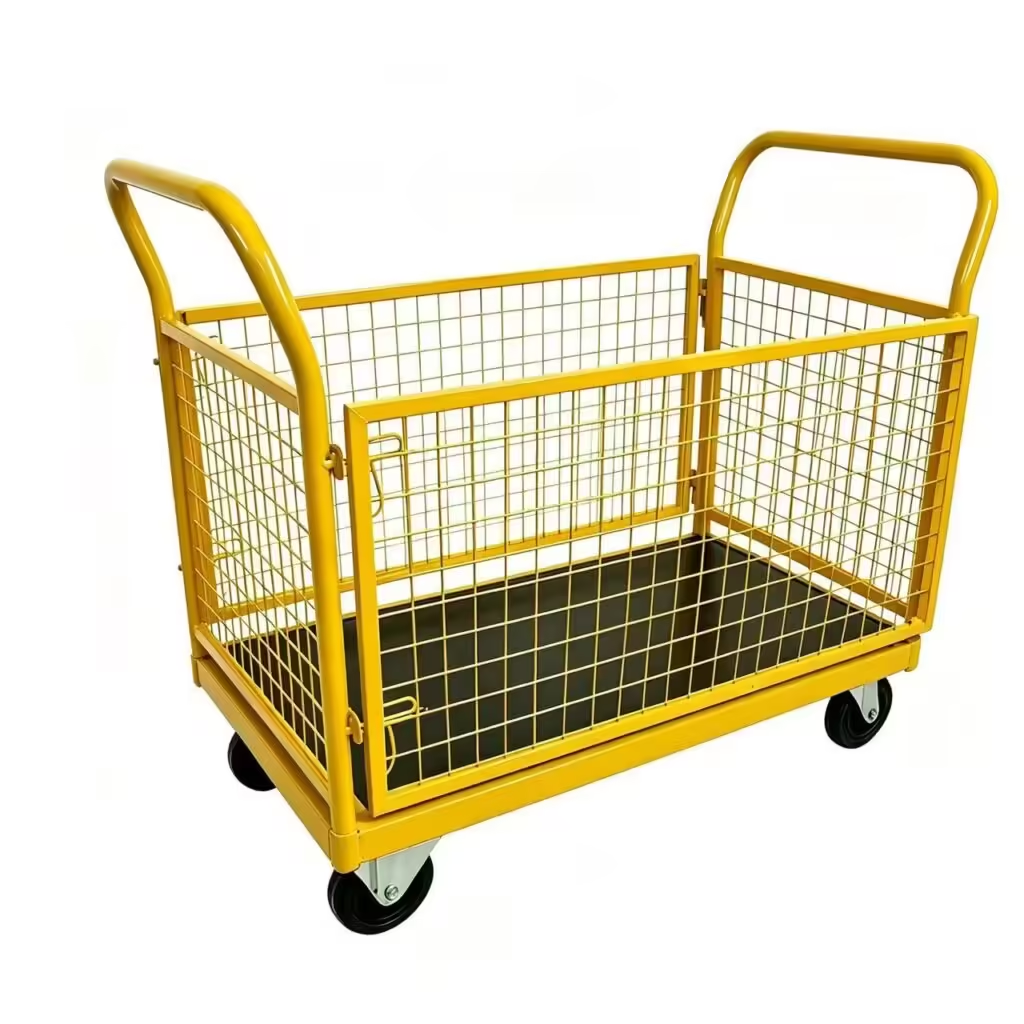
A 500 kg load spread across most of a platform is structurally different from a 500 kg machine supported by four small feet.
Uniformly Distributed Loads
Boxes, flat containers, cabinets, furniture, and broad equipment bases often distribute weight across a larger deck area.
This reduces localized stress.
Concentrated Loads
Machinery feet, metal stands, cylinders, narrow frames, and other small contact points concentrate force into limited areas of the platform.
In these cases, deck stiffness and local reinforcement become particularly important.
Off-Center Loads
Heavy items placed close to one side can transfer significantly more load to the casters below that area.
An uneven load can also make steering more difficult and increase tipping risk during sharp turns.
As a practical rule, the operator should keep heavy items low and as centrally positioned as the load shape allows.
Step 3: Choose the Correct Platform Size
A heavy duty platform cart needs enough deck area to support the cargo safely, but an oversized cart creates its own problems.
A larger platform may:
- Require more turning space
- Occupy more storage area
- Reduce maneuverability in narrow aisles
- Create difficulty near shelving
- Increase the distance between operator and load
- Be harder to position at workstations
An undersized platform can create overhang and unstable loading.
Measure the Load Before the Cart
Record the normal maximum:
- Load length
- Load width
- Load height
- Contact footprint
Then compare these dimensions with:
- Aisle width
- Door width
- Elevator size
- Storage area
- Turning radius
- Workstation clearance
The best platform size is not necessarily the largest one available. It is the platform that supports the load while remaining practical on its operating route.
Step 4: Evaluate the Platform Construction
Platform material influences weight, rigidity, corrosion resistance, surface protection, and long-term use.
Common platform constructions include:
Steel Platform
Steel can provide high structural rigidity and is commonly associated with industrial carts and platform trucks.
Important factors include:
- Frame design
- Deck thickness
- Weld quality
- Coating
- Corrosion protection
- Reinforcement
Wood or Plywood Platform
Wooden and plywood platforms can provide a broad load surface and may be useful when surface contact characteristics are important.
For lower-profile material handling tasks, Easemovo also provides several moving dolly configurations that use flat wooden or plywood decks.
Anti-Slip Platform
Loads such as cartons, equipment cases, furniture, and smooth containers can shift during acceleration, braking, or turns.
An anti-slip surface can therefore be important when cargo movement is a greater concern than the basic platform material.
Easemovo’s product range also includes 滑り止め移動台車 for applications where increased surface grip is required.
Step 5: Select the Right Casters
Caster selection is one of the most important parts of heavy duty platform cart performance.
あ caster combines a wheel with a mounting structure and may use either a rigid or swivel configuration. Wheel diameter, tread characteristics, swivel geometry, and bearing design all influence how easily a loaded cart starts, rolls, and turns.
Small vs Large Diameter Wheels
Larger wheels generally cope better with:
- Floor joints
- Small gaps
- Uneven surfaces
- Thresholds
- Minor debris
Smaller wheels can help keep the platform lower, but they may require greater effort when operating surfaces are imperfect.
OSHA guidance on material handling similarly notes that wheels should match floor conditions and that larger-diameter wheels may improve cart maneuvering.
Rigid Casters
Rigid casters roll in a fixed direction.
They can help maintain straight-line travel over longer routes.
Swivel Casters
Swivel casters rotate around a vertical axis, allowing the cart to change direction more freely.
They are valuable in:
- Tight aisles
- Workshops
- Storage rooms
- Loading areas
- Locations requiring frequent positioning
Mixed Caster Configurations
Some platform carts use a combination of rigid and swivel wheels to balance straight travel and steering.
The best arrangement depends on whether the cart spends most of its time:
- Traveling long straight routes
- Turning frequently
- Positioning beside machinery
- Navigating confined spaces
Step 6: Match Wheel Material to the Floor
Wheel material affects noise, floor protection, rolling resistance, durability, and traction.
| Wheel Consideration | Typical Priority |
| Smooth warehouse concrete | Low rolling resistance and predictable steering |
| Finished indoor floor | Floor protection and low noise |
| Rough industrial surface | Durability and larger wheel diameter |
| Thresholds and joints | Obstacle-crossing ability |
| Wet or contaminated area | Traction and material compatibility |
| Heavy repetitive use | Wear resistance and bearing durability |
No single wheel material is ideal for every environment.
A heavy duty platform cart used on polished indoor flooring may require a different wheel configuration from one used across workshop joints or rough loading areas.
Step 7: Consider Push and Pull Ergonomics
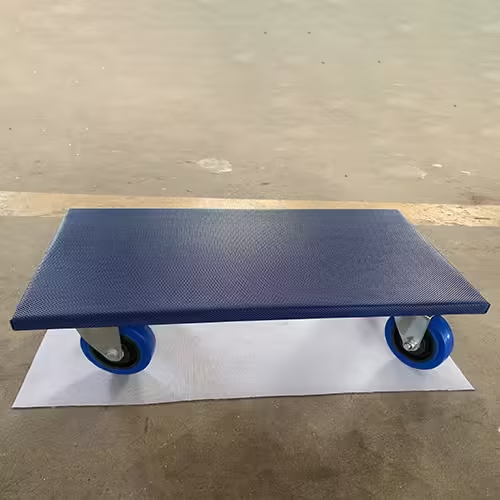
A cart that technically carries the load but requires excessive force to start or steer is not well matched to the application.
The U.S. Occupational Safety and Health Administration recommends using carts for horizontal material movement where appropriate and notes that pushing is generally preferable to pulling. OSHA also emphasizes appropriate wheel selection, usable handles, balanced loads, and keeping loads within manufacturer ratings.
Relevant guidance is available in OSHA’s Materials Handling – Pushing, Pulling and Carrying.
Handle Position Matters
The handle should allow the operator to control the cart without excessive bending or awkward wrist positioning.
For frequent pushing, consider:
- Handle height
- Handle width
- Grip area
- Distance from the load
- Operator visibility
- Clearance around the hands
Visibility Matters Too
A high stack of cartons may remain within the cart’s load capacity but still create an unsafe operating condition if the operator cannot see the route.
Do not confuse weight capacity with overall handling safety.
Step 8: Consider the Operating Route
Before specifying a heavy duty platform cart, physically inspect the route it will travel.
Check for:
- Narrow aisles
- Corners
- Door thresholds
- Elevator gaps
- Ramps
- Drainage channels
- Uneven concrete
- Floor debris
- Loading docks
- Wet areas
- Pedestrian traffic
A cart used exclusively on a smooth factory floor can be optimized differently from a cart that frequently crosses thresholds or outdoor transitions.
The Easemovo article Warehouse Trolley vs Platform Cart provides additional guidance on matching transport equipment to aisle width, load shape, storage space, turning requirements, and warehouse routes.
Heavy Duty Platform Cart vs Standard Platform Cart
The word “heavy duty” should describe more than marketing language.
A meaningful difference should normally involve some combination of:
- Higher verified load rating
- Stronger platform structure
- More robust frame
- Higher-capacity casters
- Stronger caster mounting
- Appropriate bearings
- Suitable wheel materials
- Durable handle construction
- Reinforced joints
- Design for frequent use
| Factor | Standard Platform Cart | Heavy Duty Platform Cart |
| Main role | General transport | Demanding or heavier transport |
| Load frequency | Light to moderate | Moderate to frequent |
| Frame requirement | General-purpose | Higher structural demand |
| Caster requirement | Normal indoor handling | Higher load and durability demand |
| Typical cargo | Cartons, office goods, light equipment | Machinery parts, heavy cartons, tools, equipment |
| Route evaluation | Important | Critical |
| メンテナンス | Routine | More frequent inspection may be justified |
A standard cart can still be the better choice when the load and route do not justify a larger industrial design.
A Practical Easemovo Platform Cart Example
Easemovo’s TC1860 折りたたみ式プラットフォームトラック is positioned within the company’s material handling range as a folding platform solution.
The folding structure is particularly relevant where the equipment must combine transport capability with more compact storage.
Easemovo’s existing Best Platform Cart for Warehouses guide also discusses the TC1860 in the context of warehouses, factories, retail environments, and other material transport applications.
Rather than selecting this or any other model based only on maximum capacity, users should compare:
- Required load
- Deck dimensions
- Wheel option
- Route
- Storage requirements
- Operating frequency
- Required maneuverability
This creates a much more reliable selection process.
Folding vs Fixed Heavy Duty Platform Cart
Folding handles can provide a practical advantage where carts need to be stored between uses.
Folding Platform Cart
Consider a folding configuration when:
- Storage space is limited
- Carts are transported between locations
- Equipment must be stacked or stored compactly
- The cart is not required to remain continuously deployed
Fixed Platform Cart
A fixed structure may be preferred where:
- The cart operates continuously
- Storage footprint is less important
- Structural simplicity is preferred
- Workers need the cart available immediately throughout a shift
The choice should reflect actual workflow rather than assuming one construction is universally stronger or more convenient.
Heavy Duty Platform Cart vs Warehouse Trolley
These two terms sometimes overlap, but their ideal applications can differ.
A platform cart generally emphasizes a broad open loading surface.
A warehouse trolley may include:
- Shelves
- Side panels
- Baskets
- Multiple levels
- Specialized containment
- Different handle arrangements
Choose a heavy duty platform cart when the load consists primarily of stable cartons, containers, machinery components, furniture, or equipment that benefits from open access.
Choose a specialized warehouse trolley when containment, sorting, multiple shelves, or smaller loose items are more important.
For a deeper comparison, see Easemovo’s Warehouse Trolley vs Platform Cart Buying Guide.
When Is a Custom Platform Cart Worth Considering?
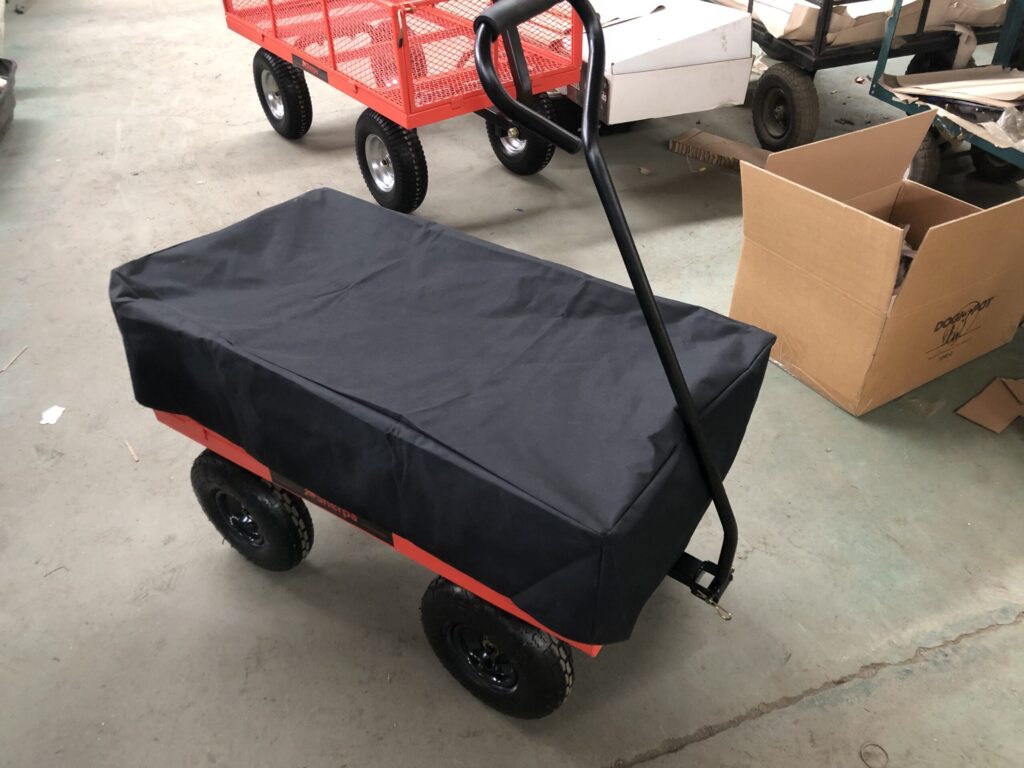
Standard carts work well when standard dimensions and configurations match the application.
Customization becomes more useful when the operation has unusual requirements such as:
- Special platform dimensions
- Higher or unusual load requirements
- Specific wheel materials
- Different caster layouts
- Additional brakes
- Anti-slip deck treatments
- Side rails
- Special handles
- Branding requirements
- Specific packaging requirements
- Unique warehouse routes
Easemovo’s カスタムマテリアルハンドリング機器 service covers product design, material selection, dimensional customization, and functional customization for material handling applications.
For B2B projects, defining these requirements before production is considerably more useful than simply requesting “a stronger cart.”
Heavy Duty Platform Cart Inspection Checklist
Capacity selection is only the beginning. A cart also needs to remain in suitable operating condition.
Check periodically:
Casters
Look for:
- Excessive wheel wear
- Cracks
- Flat spots
- Debris around axles
- Poor swivel movement
- Loose mounting hardware
Platform
Inspect for:
- 曲げ
- Cracks
- Loose surface material
- Corrosion
- Damaged anti-slip areas
- Sharp edges
ハンドル
Check:
- Attachment points
- Deformation
- Loose hardware
- Grip condition
Brakes
Where fitted, confirm that the braking or locking mechanism operates correctly.
OSHA guidance also emphasizes that material handling equipment and wheels should be properly maintained because wheel condition directly affects pushing and pulling effort.
10 Questions to Ask Before Selecting a Heavy Duty Platform Cart
Use this checklist before choosing a model:
- What is the heaviest load the cart will transport?
- Is the load evenly distributed or concentrated?
- What platform length and width are required?
- How high will the load be stacked?
- What floor surfaces will the cart cross?
- Are thresholds, joints, ramps, or gaps present?
- How narrow are the aisles and doors?
- How often will the cart operate each day?
- Does the handle need to fold for storage?
- Are custom dimensions, wheels, brakes, or surfaces required?
If these ten questions are answered first, comparing platform carts becomes much easier.
How to Choose the Right Heavy Duty Platform Cart
The most effective selection process is based on the complete application rather than a single load number.
Start with:
- 最大荷重
- Load footprint
- Load distribution
- Platform size
- Caster configuration
- Wheel diameter
- Wheel material
- Floor conditions
- Route distance
- Turning space
- Handling frequency
- Storage requirements
Then compare the product’s complete specification against those conditions.
For additional examples of platform-based warehouse equipment, Easemovo’s 7 Trolley for Transport Tips discusses folding platform trolleys, extendable dollies, low-profile handling equipment, and other configurations for different transport tasks.
A good heavy duty platform cart does not simply carry a high number of kilograms. It carries the required load with stable support, manageable steering, suitable wheel performance, and dimensions that fit the working environment.
よくある質問
What load capacity should I choose for a heavy duty platform cart?
Start with the heaviest real load the cart must move and confirm the manufacturer’s rated capacity exceeds the intended operating load. Also evaluate load distribution, deck dimensions, caster configuration, floor conditions, and travel route. Capacity should never be selected from total weight alone.
Does a higher load rating make a platform cart easier to move?
No. A higher rating mainly describes load capability, not rolling effort. Wheel diameter, tread material, bearings, caster arrangement, floor condition, load distribution, and handle geometry all affect how easily a loaded cart starts, turns, and travels through a warehouse.
Are larger wheels better for a heavy duty platform cart?
Larger-diameter wheels can make it easier to cross joints, small gaps, and uneven surfaces, but they also increase platform height and may affect turning space. Wheel selection should therefore balance obstacle handling, deck height, maneuverability, floor protection, and load requirements.
Should I choose four swivel casters or fixed and swivel casters?
Four swivel casters provide high maneuverability in confined spaces, while a combination of rigid and swivel casters can provide more predictable straight-line travel. The best configuration depends on aisle width, route length, turning frequency, load size, and the way operators control the cart.
When should I order a custom heavy duty platform cart?
Customization is useful when standard models do not match the required platform dimensions, load structure, wheel material, caster configuration, braking system, handle design, anti-slip surface, or operating environment. Defining these requirements clearly before production helps create a more suitable handling solution.
 Japanese
  English
  French
  Spanish
  German