Table of Contents
Key Takeaways
- Match the trolley’s rated capacity to the real working load, including packaging, tools, and occasional peak loads.
- Choose wheel material and diameter according to the floor, route length, thresholds, ramps, and outdoor conditions.
- Compare platform, folding, extendable, handled, and anti-slip designs before focusing on price.
- Check platform dimensions and load geometry, not only the maximum weight rating.
- Prioritize controllability, braking, handle position, and stable weight distribution.
- Evaluate construction quality, replaceable wear parts, and maintenance access before ordering.
- Calculate total operating value instead of selecting the cheapest trolley for transport.
Introduction
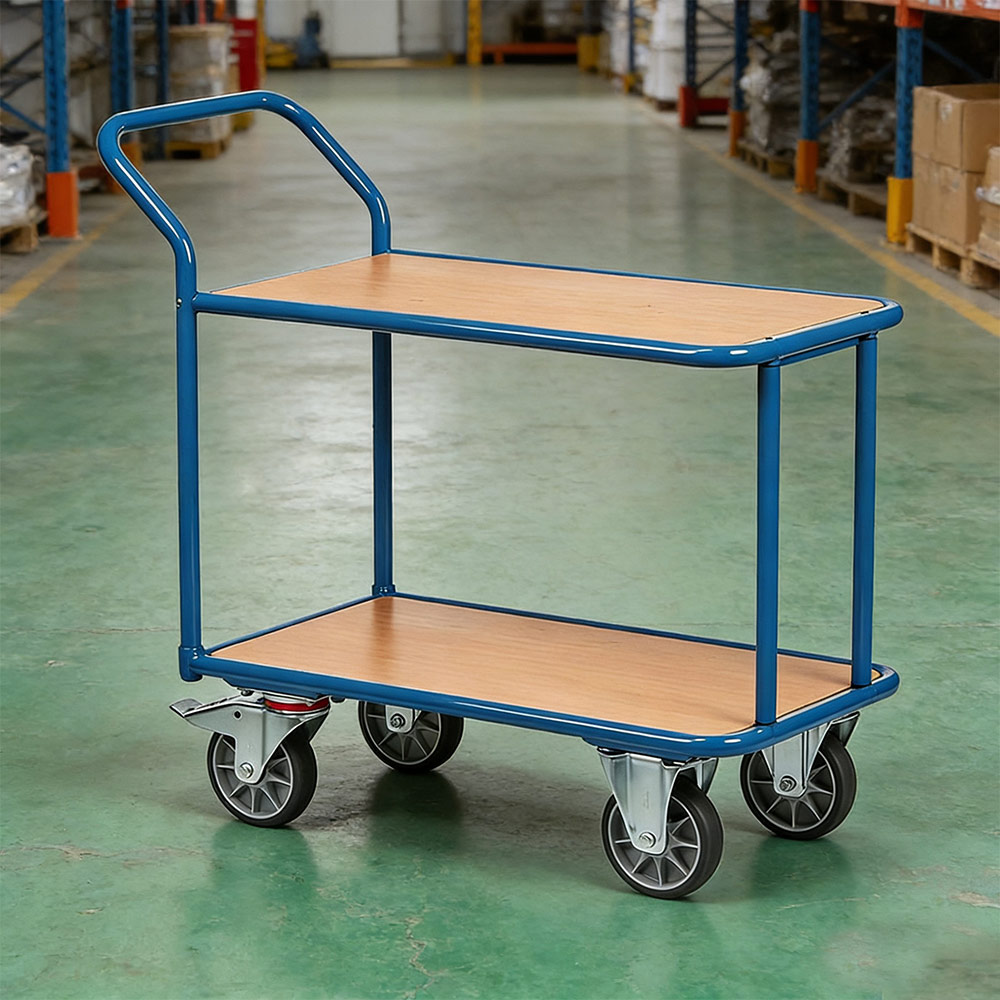
A trolley for transport may look like a simple wheeled platform, but small design differences can have a major effect on daily handling efficiency. Load rating, wheel configuration, platform size, handle geometry, and surface grip determine whether a trolley moves goods smoothly or creates repeated delays, instability, and operator fatigue.
The best buying decision begins with the task rather than the product catalogue. A trolley used for cartons on a polished warehouse floor has different requirements from one carrying furniture, tools, machinery components, garden materials, or irregular loads across thresholds. Buyers should therefore define the load, route, frequency, storage conditions, and operating environment before comparing models.
This guide explains seven practical trolley for transport buying tips for warehouses, workshops, retail operations, offices, homes, landscaping teams, and logistics buyers. It also compares common trolley designs and connects buyers with relevant product and technical resources available from Easemovo.
What Is a Trolley for Transport?
Functional Definition
A trolley for transport is a manually moved or towable wheeled device designed to carry materials over short distances. It may use a flat deck, raised sides, an extendable platform, a fixed handle, a folding handle, or a compact dolly structure depending on the application.
The broader concept belongs to material handling, which covers the movement, protection, storage, and control of goods through manufacturing, warehousing, distribution, and use. A transport trolley is especially valuable where forklifts or powered equipment would be excessive, inconvenient, or unable to enter tight spaces.
Trolley, Cart, Dolly, and Platform Truck
These terms often overlap, but they describe slightly different structures. A trolley or cart commonly includes a handle or enclosed carrying area, while a dolly is usually a low platform placed directly beneath a load.
A platform truck normally has a larger deck and an upright pushing handle. Buyers can review Easemovo’s Wagons & Trolleys range to compare these formats in practical product configurations.
Why the Terminology Matters
Searching only by product name can lead buyers toward the wrong design. Instead, compare equipment by load support, steering method, platform geometry, wheel setup, and intended working environment.
Tip 1: Define the Real Load Before Choosing a Trolley for Transport
The first buying decision is not the trolley model. It is the actual load profile.
Rated Load Capacity
Rated capacity indicates the maximum load a trolley is designed to carry under specified conditions. Buyers should not treat this figure as the only selection standard because uneven floors, concentrated loads, impacts, poor weight distribution, and worn wheels can increase stress on the structure.
Choose a trolley for transport with a reasonable operating margin above the normal load. This gives the equipment room to handle packaging variation, tools, fixtures, and occasional heavier items without making overload a routine practice.
Static Load vs Working Load
A static load rests on the platform without movement. A working load creates additional forces during starting, stopping, turning, crossing joints, or moving on a slope.
A trolley that appears stable while stationary may become difficult to control once it moves. For that reason, buyers should base their decision on realistic operating conditions rather than a best-case weight figure.
Concentrated Loads
A compact machine part can place most of its weight in a small area. The deck, frame, and caster mounting points must resist this concentrated pressure without bending or loosening.
Bulky Loads
A light but oversized carton can extend beyond the platform and obstruct the operator’s view. In this situation, deck dimensions and load restraint may matter more than maximum capacity.
Practical Capacity Examples
For heavier warehouse or workshop tasks, the 400kg Heavy Duty Table Transport Trolley with Handle provides a useful reference for buyers comparing reinforced handled platforms.
For changing load lengths, the PWD6045SD Extendable Dolly demonstrates how an adjustable loading area can support items with different dimensions.
Tip 2: Match the Wheels to the Floor and Route
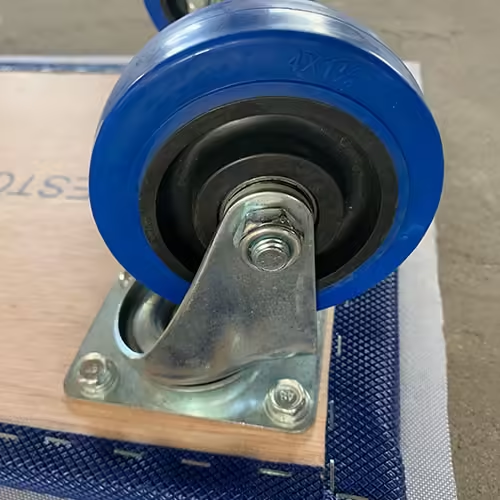
Wheels are among the most important components of any trolley for transport. A strong frame with unsuitable wheels can still be difficult to start, noisy to operate, unstable at thresholds, or damaging to the floor.
Wheel Diameter
Larger wheels generally pass over joints, small debris, and surface irregularities more easily than smaller wheels. Compact wheels can reduce deck height and storage space, but they are usually better suited to clean, smooth floors.
Long routes, rough concrete, outdoor surfaces, or frequent thresholds usually justify a larger wheel diameter. Tight indoor areas may favor smaller, highly maneuverable casters.
Wheel Material
Wheel tread affects rolling resistance, noise, grip, durability, and floor protection. The correct choice depends on surface type, load, contamination, temperature, and whether the trolley operates indoors or outdoors.
The caster overview explains how wheel diameter, tread design, hardness, and caster geometry influence movement. Buyers should ask suppliers for the wheel material and intended surface rather than assuming every wheel performs equally.
Soft-Tread Wheels
Soft-tread wheels can reduce vibration, noise, and marking on sensitive floors. They are useful in offices, retail spaces, homes, and finished warehouse areas.
Hard-Tread Wheels
Harder wheels may roll efficiently on smooth industrial floors and resist deformation under load. However, they can transmit more vibration and noise over rough surfaces.
Pneumatic and Solid Tires
Pneumatic tires provide cushioning on uneven ground but require pressure checks and can be punctured. Solid tires demand less routine care and are suitable for many industrial routes, although their ride can be firmer.
The TC1860 Folding Platform Truck is a relevant example because its platform design and tire configurations address different handling environments.
Fixed Casters vs Swivel Casters
Fixed casters support straight tracking, while swivel casters allow directional changes. A four-swivel arrangement offers excellent turning freedom but may wander during long straight runs.
A mixed configuration can improve directional stability. Buyers should test turning radius, straight-line tracking, and control under load before confirming a large order.
Tip 3: Select the Right Trolley for Transport Type
The best trolley for transport is the design that fits the load and movement pattern. Choosing one general-purpose model for every task often creates compromises in stability, storage, and handling speed.
Platform Trolley
A platform trolley provides a flat deck and usually an upright handle. It is suitable for cartons, containers, tools, appliances, and other loads that can sit securely on a broad surface.
This design is easy to load and supports efficient horizontal movement. Folding-handle versions are especially useful when storage space is limited.
Low-Profile Dolly
A dolly sits close to the floor and supports furniture, equipment, boxes, or other heavy objects from below. It is compact and easy to store but may require the operator to bend during loading and positioning.
Low-profile dollies are valuable for relocation, furniture handling, maintenance, and short-distance movement. Easemovo’s Normal Moving Dolly category includes fixed, anti-slip, jointable, and extendable formats for comparison.
Extendable Trolley
An extendable trolley changes length to fit loads with different footprints. It can reduce the need to purchase multiple fixed-size units and improve support under long or irregular items.
The detailed guide to extendable dollies explains the relationship between adjustable platform length, load stability, floor-friendly wheels, and handling flexibility.
Wagon or Sided Cart
A wagon includes side panels, rails, or a contained loading area. It is useful for loose materials, garden supplies, packaged goods, and items that could slide from an open platform.
For outdoor and mixed-use applications, buyers can compare the TC1831 Wagon with Wood Sides with open-platform trolley designs. The side structure improves containment, while an open platform can be faster for loading large cartons or equipment.
Trolley for Transport Type Comparison
| Trolley type | Best suited for | Main advantage | Main limitation | Key buying check |
|---|---|---|---|---|
| Folding platform trolley | Warehouses, shops, offices, deliveries | Broad deck and compact storage | Folding joints require inspection | Handle lock and deck rigidity |
| Fixed platform trolley | Repetitive industrial transport | Stable structure and simple operation | Requires more storage space | Frame strength and caster layout |
| Low-profile dolly | Furniture, machinery, and boxes | Compact and easy to position | Limited load containment | Deck grip and load restraint |
| Extendable dolly | Long or variable-size loads | Adjustable support area | Contains more moving parts | Extension lock and frame alignment |
| Sided wagon | Loose goods and outdoor materials | Better load containment | Slower side loading | Side-panel strength and steering |
| Anti-slip dolly | Smooth or delicate items | Reduces load movement | Grip surface may wear | Surface adhesion and replacement |
| Heavy-duty table trolley | Workshops and production areas | Higher capacity and controlled handling | Requires more turning space | Brakes, welds, wheels, and handle |
Tip 4: Check Platform Size, Shape, and Surface Grip
Capacity tells buyers how much a trolley for transport can carry. Platform geometry determines whether the load can be carried securely.
Platform Length and Width
The deck should support the load’s main contact area. Excessive overhang can shift the center of gravity, block visibility, or cause the item to strike doorways and shelving.
A platform that is too large can also be inefficient in narrow aisles. Measure the load, doorway width, aisle width, elevator space, vehicle opening, and storage location before ordering.
Platform Height
A low deck reduces lifting height and can improve stability. A higher working surface may make loading easier when goods move between benches, shelves, or production stations.
The correct height depends on how the trolley connects with the rest of the workflow. Buyers should observe where goods start, where they finish, and how often employees must lift them between levels.
Anti-Slip Surface
A high-friction deck helps prevent cartons, furniture, containers, or tools from shifting during acceleration and turning. It is particularly useful when goods have smooth bases or when the route contains slopes and floor joints.
Easemovo’s anti-slip products can be found within the moving dolly range, allowing buyers to compare standard wooden decks with grip-enhanced transport platforms.
Edge Protection
Rubber ends, bumpers, raised edges, or side rails can protect goods, walls, doorframes, and machinery. Select the protection style according to the likely contact points along the route.
Tie-Down Points
Handles, slots, rails, or dedicated anchor points allow straps to secure tall, uneven, or valuable loads. A restraint system should stabilize the load without damaging the product or interfering with wheel movement.
Tip 5: Evaluate Steering, Braking, and Ergonomics
A trolley for transport must be controllable at the start, during movement, and while stopping. Capacity without control can create problems in crowded warehouses, ramps, retail aisles, and workshops.
Push or Pull Operation
Pushing generally allows the operator to use body weight more effectively and maintain better control of the load. Pulling may be appropriate for certain wagons and low-profile dollies, especially when the design includes a drawbar.
The OSHA ergonomics guidance recommends minimizing demanding push-pull forces and using handling equipment that is easy to move, with handles that can be grasped while maintaining an upright posture.
Handle Height and Grip
A suitable handle helps operators steer without excessive bending, wrist deviation, or shoulder elevation. Vertical or multi-position handles can accommodate different users and operating conditions.
The grip should remain comfortable when gloves are worn. It should also provide enough clearance so the operator’s hands do not strike walls, racks, or the load.
Braking System
Brakes are important when a trolley for transport is parked during loading, used on slight gradients, or operated in busy areas. Buyers should determine whether they need wheel brakes, directional locks, total-lock casters, or a separate parking mechanism.
A brake should be easy to activate while wearing work footwear. It must also remain accessible after the trolley is loaded.
Starting Force
The force required to start movement is often higher than the force needed to keep rolling. Wheel diameter, bearing quality, floor condition, load distribution, and caster alignment all affect starting effort.
Turning Control
A trolley should turn predictably without sudden caster flutter or excessive deck swing. Test the product with a representative load rather than evaluating it only when empty.
Tip 6: Inspect Materials, Construction, and Maintenance Needs
A durable trolley for transport is a system made from a deck, frame, fasteners, caster plates, bearings, handles, brakes, and protective components. Failure often begins at connection points rather than on the visible platform surface.
Steel Construction
Steel frames offer strength and resistance to impact. Protective coatings help limit corrosion in warehouses, workshops, garden applications, and humid environments.
Buyers should inspect weld consistency, tube dimensions, caster mounting plates, handle joints, and coating coverage. A heavy frame alone does not guarantee a well-engineered trolley.
Wood and Multiplex Platforms
Wooden and multiplex decks provide useful friction, impact absorption, and easy customization. They are common in moving dollies because they can support furniture and equipment while remaining relatively compact.
The deck should be checked for thickness, moisture resistance, edge treatment, fastener retention, and surface damage. Rubber pads or carpeted sections may be added where product protection is a priority.
Plastic or Composite Platforms
Plastic and composite decks can resist moisture and simplify cleaning. Their suitability depends on load concentration, temperature, impact exposure, and chemical contact.
A buyer should confirm whether the deck is replaceable and whether the frame supports the entire working area.
Maintenance Access
Caster bolts, wheel axles, bearings, brakes, and folding mechanisms should be easy to inspect. Maintenance is more likely to be completed when wear points are visible and replacement parts are accessible.
Appropriate wheel selection and regular wheel maintenance are essential because damaged, misaligned, or contaminated wheels increase the effort needed to move a trolley for transport.
Recommended Inspection Points
- Loose caster bolts or mounting plates
- Wheel tread damage, flat spots, and trapped debris
- Bearing noise or excessive wheel play
- Cracked decks, bent frames, and damaged welds
- Weak folding locks or extension mechanisms
- Worn anti-slip surfaces and missing bumpers
- Brakes that do not engage or release correctly
Tip 7: Compare Total Value, Not Only Purchase Price
The lowest-priced trolley for transport may be suitable for occasional light use, but intensive operations should consider lifecycle value. Downtime, damaged products, replacement wheels, operator effort, maintenance, and storage all affect the real cost.
Purchase Cost
Initial price usually reflects capacity, materials, wheel specification, platform size, manufacturing complexity, and included safety features. Comparing products only by price can hide major differences in expected service conditions.
Create a consistent quotation sheet that includes load capacity, deck dimensions, wheel material, caster arrangement, brakes, handle type, finish, packaging, replacement parts, and warranty terms.
Operating Cost
A trolley that rolls smoothly and fits the route can reduce unnecessary handling time. A poorly matched trolley may require more workers, smaller loads, repeated trips, or frequent repairs.
The Easemovo Material Handling Carts Buying Guide provides further criteria for comparing cart types, lifecycle cost, adaptability, and operational use.
Storage and Fleet Flexibility
Folding and extendable equipment may improve storage density or serve multiple load sizes. Fixed heavy-duty models may provide better simplicity and stability for repetitive tasks.
A mixed trolley fleet is often more effective than requiring one design to serve every department. Warehouses may combine platform trucks, low dollies, anti-slip units, and sided carts according to the load type and route.
Questions to Ask a Supplier
- What is the recommended working load for my route and floor?
- Which wheel material is best for concrete, tile, epoxy, or outdoor ground?
- Are replacement casters, brakes, handles, and deck components available?
- Can the platform size, handle, color, wheel layout, or load rating be customized?
- How is the trolley packaged for bulk shipment?
- What inspections are completed before delivery?
- Can the supplier provide samples or drawings before production?
Easemovo presents custom material handling options across moving dollies, trolleys, wagons, and platform trucks. Buyers with unusual dimensions, wheel requirements, or loading methods can use the Easemovo product range as a starting point for specification discussions.
How to Choose a Trolley for Transport in Five Steps

Step 1: Record the Load
Measure normal weight, peak weight, dimensions, base shape, center of gravity, and surface sensitivity. Include any box, fixture, strap, or container used during movement.
Step 2: Map the Route
Record travel distance, aisle width, turns, slopes, doors, floor joints, elevators, thresholds, outdoor sections, and pedestrian traffic. The route often determines wheel and steering requirements.
Step 3: Select the Equipment Type
Choose between a platform trolley, dolly, extendable design, sided wagon, anti-slip platform, or heavy-duty table trolley. Compare at least two types before selecting a model.
Step 4: Test with a Representative Load
A trolley for transport should be evaluated while loaded. Test starting, straight movement, turning, braking, visibility, noise, floor marking, and storage.
Step 5: Confirm Supply and Maintenance
Verify lead time, packaging, replacement parts, customization, inspection, and after-sales support. A reliable supply plan is important for buyers operating a larger trolley fleet.
Common Trolley Buying Mistakes

Choosing by Capacity Alone
A high load rating does not guarantee easy movement or safe control. Platform size, caster layout, floor type, and operator visibility remain essential.
Ignoring the Route
A trolley may perform well on a smooth demonstration floor but poorly across thresholds, ramps, debris, or uneven concrete. Route analysis should happen before product selection.
Using One Trolley for Every Task
A single universal trolley for transport may be convenient for purchasing, but it can create inefficient compromises. A small number of task-specific designs usually improves performance.
Overlooking Replacement Parts
Wheels and brakes are wear components. A trolley with replaceable, standardized parts can offer better long-term value than a cheaper unit with limited service options.
Skipping Loaded Testing
Empty trolleys are easier to steer and stop. A loaded trial gives buyers a more realistic view of rolling resistance, stability, handle comfort, and turning behavior.
For additional warehouse-focused guidance, the Easemovo article on trolley safety considerations covers load distribution, wheel maintenance, ergonomics, and environmental conditions.
Conclusion
Selecting a trolley for transport requires more than comparing capacity and price. The strongest buying process begins with the load and route, then evaluates wheel design, trolley type, platform geometry, steering, braking, ergonomics, construction, maintenance, and lifecycle value.
A folding platform trolley may be the best option for broad loads and compact storage. An extendable dolly can adapt to long or changing items, while a low-profile anti-slip dolly can support furniture and equipment close to the floor. Sided wagons are more suitable when containment and outdoor mobility matter.
The right trolley for transport should make movement predictable, controlled, and repeatable. Buyers who document their working conditions and compare products using the same criteria are more likely to select equipment that protects goods and supports efficient daily operations.
FAQ About a Trolley for Transport
What trolley for transport is best for a warehouse?
A platform trolley is a practical choice for cartons, containers, tools, and packaged goods on regular warehouse routes. Low-profile dollies are better for furniture or equipment, while extendable models support long or variable-size loads.
The best design depends on weight, load dimensions, floor condition, aisle width, turning space, and movement frequency. The Easemovo guide to common warehouse trolley types provides further comparisons.
How much weight should a transport trolley carry?
Select a rated capacity above the normal operating load and avoid treating the maximum rating as the everyday target. Consider peak loads, uneven weight distribution, floor joints, slopes, braking forces, and concentrated contact points.
The supplier should confirm the recommended capacity for the intended route and operating conditions. Buyers should never exceed the stated rating.
Are bigger trolley wheels easier to push?
Larger wheels generally cross small obstacles and floor joints more easily. However, wheel material, bearing quality, load, caster geometry, and floor condition also affect rolling effort.
A larger wheel may increase deck height and turning space, so the entire configuration should be evaluated rather than wheel diameter alone.
Should I choose fixed or swivel wheels?
Fixed wheels improve straight-line tracking, while swivel wheels improve maneuverability. Many transport trolleys combine both types to balance steering control and turning ability.
Four swivel casters may suit tight spaces, but they can be harder to guide over long straight routes. Testing the trolley under load is the best way to confirm the arrangement.
Is it safer to push or pull a trolley?
Pushing is generally preferred for many handled carts because it can improve posture and control. Some wagons and drawbar dollies are specifically designed to be pulled.
Follow the product’s operating instructions and assess visibility, slope, traffic, handle position, and stopping distance. The UK Health and Safety Executive provides a useful pushing and pulling risk assessment overview.
What is the best trolley for moving furniture?
A low-profile wooden, carpeted, rubber-ended, or anti-slip dolly can support furniture while limiting lifting height. The platform should provide sufficient contact area, grip, floor protection, and tie-down capability.
Large or tall furniture may require more than one dolly, additional restraint, or specialized handling equipment. Buyers can also review Easemovo’s guide to choosing furniture moving equipment.
How often should trolley wheels be inspected?
Inspection frequency depends on operating hours, load, floor cleanliness, speed, impacts, and environmental conditions. High-use warehouse equipment may require quick visual checks before each shift and more detailed scheduled inspections.
Remove trapped material, tighten fasteners, test brakes, and replace damaged wheels promptly. Maintenance records are useful when managing multiple trolley units.
Can a trolley for transport be customized?
Common customization options include platform dimensions, frame structure, handle type, wheel material, caster arrangement, brakes, surface grip, color, and load capacity. Customization is most valuable when standard models do not fit the load or route.
Provide the supplier with drawings, load details, floor information, operating frequency, and storage restrictions. This allows the trolley for transport to be matched more accurately to the application.
Keep the Conversation Going!
Loved this article? Join our community for more industry insights, real-time discussions, and exclusive updates. Find me here:
→ Facebook: Qingdao Kinkayo Industry and Trade Co., Ltd.
→ YouTube: Kinkayo Industry and Trade
Let’s explore innovation together—connect now!
 English
  French
  Japanese
  Spanish
  German