Introduction
In modern logistics, manufacturing, and warehousing systems, efficiency is no longer defined only by automation or heavy machinery. A large portion of operational performance still depends on simple but highly effective tools—material handling carts. As global supply chains become more complex and labor costs continue to rise, businesses are increasingly investing in optimized manual transport solutions to bridge the gap between automation and flexibility.
According to industry logistics reports (Material Handling Industry of America, MHIA), inefficient internal material movement can account for up to 25–30% of total warehouse operational time. This makes selecting the right cart system a strategic decision rather than a simple procurement task. In 2026, modern material handling carts are no longer basic trolleys—they are engineered systems designed for ergonomics, durability, and smart mobility.
This guide provides a deep, structured breakdown of material handling carts, including technical standards, cost analysis, industry applications, and real-world engineering insights to help buyers make data-driven decisions.
Key Takeaways
- Material handling carts directly impact warehouse productivity and labor efficiency
- Load capacity, wheel design, and platform material determine performance and safety
- Extendable and folding carts improve adaptability in dynamic operations
- Lifecycle cost is more important than upfront purchase price
- Industry standards such as ISO 11228 guide ergonomic load handling
- Smart design improvements reduce workplace injuries by up to 40%
- Real-world case studies show ROI improvement within 6–18 months
Table of Contents
What Are Material Handling Carts?
Material handling carts are wheeled transport platforms designed to move goods efficiently in industrial, commercial, and residential environments. They reduce manual lifting and improve material flow across production and logistics systems.
Engineering Definition of Material Handling Carts
From an engineering perspective, material handling carts are low-speed, manually operated load-bearing transport devices.
They are designed to optimize force distribution, reduce friction, and ensure stable load transfer.
Operational Purpose in Industry
Material handling carts are used to bridge short-distance material movement gaps.
They improve workflow continuity between storage, production, and dispatch zones.
Global Industry Overview of Material Handling Carts
Market Growth and Demand Trends
According to a 2025 logistics automation white paper (Deloitte Supply Chain Insights), the global material handling equipment market is projected to exceed $200 billion by 2028, with carts and manual handling systems accounting for approximately 12–15% of total demand.
Key Growth Drivers
- Expansion of e-commerce warehouses
- Increasing demand for lean manufacturing systems
- Rising labor costs in developed economies
- Growth of smart factory hybrid systems
Regional Adoption Patterns
- North America: High adoption of ergonomic and safety-compliant carts
- Europe: Focus on sustainability and recyclable materials
- Asia-Pacific: High-volume industrial usage and cost efficiency focus
Types of Material Handling Carts (Engineering Classification)
Extendable Material Handling Carts
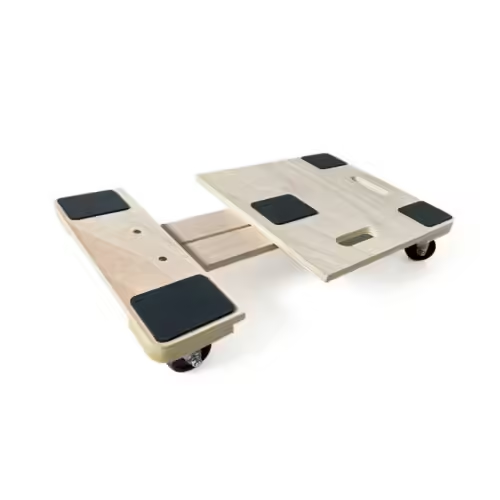
Extendable carts feature adjustable platforms that can be expanded depending on cargo size.
This makes them highly flexible for irregular or oversized loads.
Structural Mechanism
The platform uses sliding rail systems or modular expansion plates.
This allows dynamic adjustment without compromising load stability.
Application Advantage
They are widely used in furniture transport and industrial assembly lines.
One cart can replace multiple fixed-size transport units.
Folding Platform Material Handling Carts
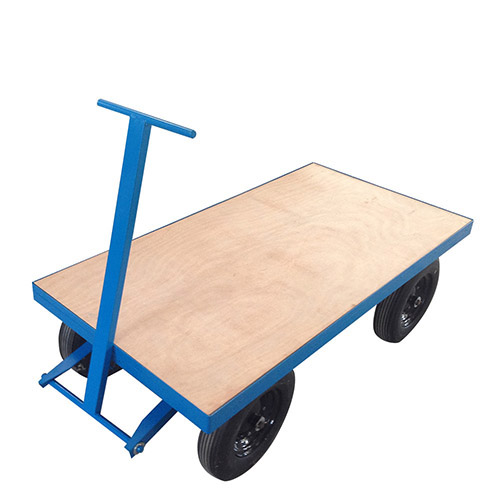
Folding carts are designed for compact storage and portability.
They are widely used in mobile logistics and retail environments.
Engineering Design Concept
These carts use hinge-based steel frames that allow flat folding.
This reduces storage footprint by up to 70%.
Industry Use Case
Courier services and delivery logistics heavily rely on folding carts.
They improve last-mile delivery efficiency.
MDF and Plywood Material Handling Carts
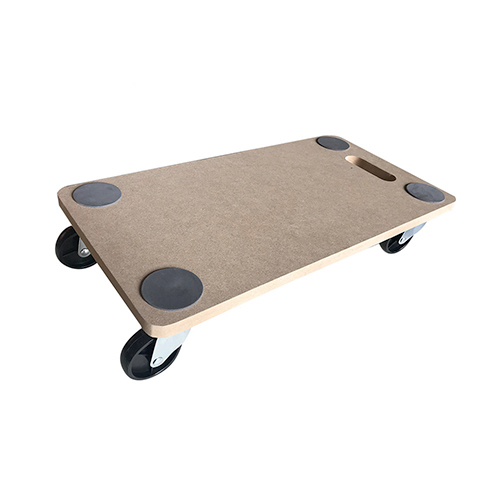
These carts use engineered wood platforms for cost-effective load transport.
They are commonly used in warehouses and office relocation.
Structural Properties
MDF provides uniform density and load distribution.
Plywood offers higher tensile strength and resistance to bending.
Performance Note
Standard models can support up to 300 kg–500 kg safely.
They are ideal for medium-duty applications.
Material Handling Carts vs Forklift Systems
| Feature | Material Handling Carts | Forklifts |
|---|---|---|
| Investment Cost | Low | Very High |
| Operating Cost | Minimal | High (fuel, maintenance) |
| Flexibility | High | Limited |
| Training Requirement | Low | High |
| Space Efficiency | Excellent | Requires wide aisles |
| Maintenance Cycle | 12–24 months | 3–6 months servicing |
Strategic Insight
Material handling carts are not competitors to forklifts but complementary systems.
They optimize micro-level movement where forklifts are inefficient.
Material Handling Carts Engineering Standards
ISO Ergonomic Standard Compliance
ISO 11228 defines safe manual handling limits for loads.
It recommends limiting repetitive pushing forces to reduce musculoskeletal risks.
Load Stability Engineering Standard
A stable cart must maintain a center of gravity within a defined base polygon.
This reduces tipping risk during acceleration or uneven flooring.
Wheel Performance Standard
Industrial wheels must withstand:
- Continuous load cycles exceeding 10,000 hours
- Shock resistance up to 2–3 times rated load
- Temperature range from -20°C to +60°C
Cost Structure of Material Handling Carts
Initial Procurement Cost
Basic carts: $50–$150 per unit
Industrial-grade carts: $200–$1,000+ per unit
Operational Cost
Includes:
- Wheel replacement every 12–36 months
- Lubrication and maintenance
- Floor wear impact cost
Lifecycle Cost Model
Total cost of ownership (TCO) includes:
- Purchase cost
- Maintenance cost
- Downtime cost
- Replacement cycle
Material Handling Carts Performance Metrics
Load Efficiency Rate
High-quality carts improve load transfer efficiency by up to 35%.
This reduces manual handling time significantly.
Mobility Coefficient
Defined as force required to move a fully loaded cart.
Modern carts reduce this force by up to 50% compared to traditional designs.
Durability Index
Premium carts achieve service lifespans of 5–10 years under industrial use.
Wheel quality is the primary determinant.
Real-World Case Studies
Warehouse Optimization Case
A logistics company in Germany replaced manual pallet dragging with ergonomic carts.
Result: 28% reduction in internal transport time and 22% labor cost savings.
Manufacturing Plant Case
An automotive supplier implemented extendable carts for assembly lines.
Result: 35% improvement in workflow efficiency.
Retail Distribution Case
A U.S. retail chain introduced folding carts in distribution centers.
Result: 40% faster order picking cycle time.
Material Handling Carts in Smart Manufacturing
Integration with Digital Systems
Modern carts are integrated with warehouse management systems (WMS).
This allows tracking of material flow in real time.
Sensor-Enabled Mobility
Advanced carts include load sensors and tracking tags.
This improves inventory accuracy and reduces loss.
Future Trend: Semi-Automated Carts
Hybrid systems combine manual pushing with assisted motorized wheels.
They reduce operator fatigue in high-volume environments.
Material Handling Carts Selection Framework
Step 1: Load Analysis
Determine maximum and average load weight.
This defines structural requirements.
Step 2: Environment Assessment
Evaluate floor type, slope, and distance.
This influences wheel selection.
Step 3: Frequency of Use
High-frequency operations require industrial-grade durability.
Low-frequency use allows cost-efficient models.
Step 4: Storage Constraints
Folding or modular designs are preferred in space-limited environments.
This improves warehouse flexibility.
Material Handling Carts Cost Optimization Strategies
Improve Load Distribution
Even weight distribution reduces wheel wear.
This extends equipment lifespan.
Use High-Quality Wheels
Polyurethane wheels reduce friction and maintenance cost.
They improve long-term efficiency.
Standardize Cart Fleet
Using standardized carts reduces maintenance complexity.
It also improves operational training efficiency.
FAQ
What are material handling carts used for?
They are used to transport goods efficiently in warehouses, factories, and retail environments.
They reduce manual lifting and improve workflow efficiency.
How much weight can material handling carts carry?
Depending on design, they can carry from 150 kg to 1000 kg.
Industrial models support higher loads safely.
What is the difference between carts and trolleys?
Carts typically refer to flat transport platforms.
Trolleys may include shelving or multi-tier structures.
Are extendable material handling carts worth it?
Yes, they offer flexibility for different load sizes.
They reduce the need for multiple cart types.
How long do material handling carts last?
With proper maintenance, they last 5–10 years or more.
Wheel quality and usage frequency affect lifespan.
Conclusion
Material handling carts remain one of the most essential yet underestimated tools in modern logistics and industrial operations. While automation continues to grow, manual transport systems still form the backbone of short-distance material movement.
By understanding engineering standards, cost structures, performance metrics, and real-world applications, businesses can significantly improve operational efficiency while reducing labor and lifecycle costs. In 2026, investing in optimized material handling carts is not just a purchasing decision—it is a strategic upgrade to the entire material flow system.
Keep the Conversation Going!
Loved this article? Join our community for more industry insights, real-time discussions, and exclusive updates. Find me here:
→ Facebook: Qingdao Kinkayo Industry and Trade Co., Ltd.
→ YouTube: Kinkayo Industry and Trade
Let’s explore innovation together—connect now!
 English
  French
  Japanese
  Spanish
  German