Key Takeaways
- A platform cart dolly is one of the most cost-effective tools for improving warehouse productivity.
- Modern warehouses use platform dollies to reduce labor intensity, improve safety, and accelerate material flow.
- Anti-slip platforms help secure loads and reduce workplace accidents.
- Folding platform trucks save valuable storage space while maintaining high load capacity.
- Wheel selection directly affects maneuverability, floor protection, and operational efficiency.
- Heavy-duty models can transport loads ranging from 150 kg to over 1,000 kg.
- Ergonomic design reduces worker fatigue and supports workplace safety programs.
- Choosing the right platform cart dolly requires evaluating load requirements, floor conditions, usage frequency, and warehouse layout.
Introduction
Warehouse managers often focus on large investments such as warehouse automation systems, robotics, conveyor networks, and inventory software. While these technologies undoubtedly improve efficiency, many businesses overlook one of the most practical and cost-effective material handling solutions available: the platform cart dolly.
Every day, warehouses move thousands of products, cartons, spare parts, tools, appliances, and industrial components. Even in highly automated facilities, a significant percentage of internal transportation still depends on manual material handling equipment. According to industry research from logistics and material handling associations, internal transportation activities can account for up to 50% of warehouse labor costs. Any improvement in this area can have a direct impact on productivity and profitability.
A well-designed platform cart dolly allows workers to transport larger loads safely while reducing physical strain. Compared with manual carrying, employees can move significantly more inventory in less time while minimizing injury risks. In an era where labor shortages, workplace safety regulations, and operational efficiency are becoming increasingly important, investing in the right warehouse transportation equipment is no longer optional—it is a competitive advantage.
Whether you operate a distribution center, manufacturing warehouse, retail fulfillment facility, automotive workshop, or logistics hub, understanding how to select and use a platform cart dolly effectively can lead to measurable operational improvements.
Table of Contents
Understanding the Role of a Platform Cart Dolly in Modern Warehousing
What Is a Platform Cart Dolly?
A platform cart dolly is a wheeled transportation device featuring a flat load-bearing platform designed to move goods efficiently across indoor or outdoor surfaces.
Unlike pallet jacks or forklifts, platform dollies offer flexibility, simplicity, and low operating costs. They require no fuel, batteries, or operator certifications, making them accessible for virtually any warehouse environment.
Why Warehouses Continue to Depend on Platform Dollies
Despite advances in automation, warehouses still require flexible transportation tools for tasks that robots and conveyors cannot easily perform.
Typical warehouse applications include:
- Moving inventory between storage zones
- Transporting packing materials
- Delivering tools and maintenance equipment
- Handling oversized products
- Supporting order picking operations
- Moving finished goods to shipping areas
Because these tasks occur continuously throughout the day, even small improvements in transportation efficiency can generate substantial productivity gains.
The Material Flow Concept
Material flow refers to the movement of products throughout a facility.
A properly selected platform cart dolly helps optimize material flow by:
- Reducing transportation delays
- Improving accessibility
- Minimizing handling steps
- Increasing throughput
Efficient material flow often leads to shorter fulfillment times and lower operating costs.
The Evolution of Warehouse Transportation Equipment
Traditional Manual Handling
Historically, workers carried products manually or used simple wooden carts.
While inexpensive, these methods presented several challenges:
- Higher injury rates
- Lower productivity
- Limited load capacity
- Increased employee fatigue
Industrial Transportation Era
As warehouses expanded during the twentieth century, steel carts and industrial dollies became standard equipment.
This shift provided:
- Greater durability
- Improved load capacity
- Better workplace safety
- Enhanced efficiency
Smart Material Handling Solutions
Today’s warehouse environment increasingly integrates traditional equipment with digital technologies.
Modern innovations include:
- Smart tracking systems
- RFID-enabled carts
- Sensor-based monitoring
- Fleet management software
Although advanced systems continue to evolve, the platform cart dolly remains an essential component of warehouse operations.
Core Components of a High-Quality Platform Cart Dolly
Platform Construction
The platform forms the foundation of the equipment.
Plywood Platform Technology
Industrial-grade plywood offers excellent strength while maintaining manageable weight.
Advantages include:
- High impact resistance
- Good dimensional stability
- Long service life
- Cost efficiency
Products such as anti-slip moving dollies commonly utilize reinforced plywood platforms because they provide an excellent balance between durability and affordability.
Steel Platform Construction
Steel platforms are often selected for heavy-duty applications.
Benefits include:
- Higher load capacities
- Superior structural strength
- Resistance to deformation
However, steel platforms may weigh significantly more than plywood alternatives.
Anti-Slip Surface Systems
Load stability is critical during transportation.
Anti-Slip Coating Technology
Advanced anti-slip coatings create friction between cargo and the platform surface.
This technology helps:
- Prevent shifting loads
- Reduce product damage
- Improve worker safety
For example, anti-slip moving dollies featuring Maxi Grip surfaces provide additional stability when transporting cartons, machinery, and packaged products.
Integrated Handle Design
The handle significantly influences user comfort.
Ergonomic Handling Principles
An ergonomic handle should:
- Reduce wrist strain
- Improve maneuverability
- Enhance load control
Integrated handles also simplify storage and transportation when the dolly is not in use.
Wheel and Castor Systems
The wheel assembly largely determines operational performance.
Swivel Castors
Swivel castors rotate 360 degrees.
Benefits include:
- Excellent maneuverability
- Easy turning
- Improved aisle navigation
Fixed Wheels
Fixed wheels maintain directional stability.
They are particularly useful when transporting loads over longer distances.
Comparing Popular Types of Platform Cart Dolly Solutions
Anti-Slip Moving Dolly

Anti-slip moving dollies are among the most versatile warehouse transportation tools available.
Key Features
- Plywood platform construction
- Anti-slip coating
- Galvanized steel brake systems
- Heavy-duty swivel castors
Typical Applications
- Warehouses
- Distribution centers
- Workshops
- Retail stockrooms
Rubber Auto Body Dolly
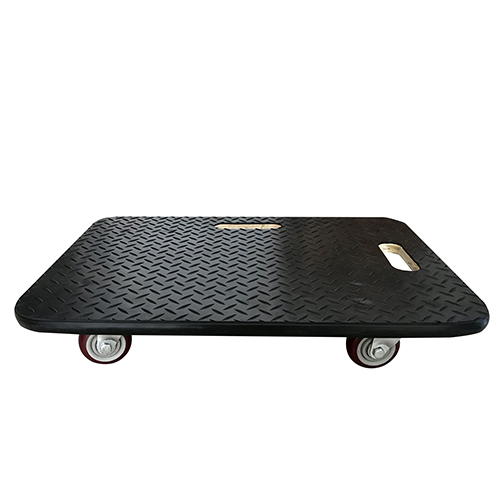
Originally developed for automotive applications, these dollies have found widespread use in industrial environments.
Rubber Surface Benefits
The patterned rubber surface helps:
- Protect delicate finishes
- Prevent slippage
- Absorb vibration
These characteristics make them ideal for transporting sensitive equipment and finished products.
Folding Platform Truck

Folding platform trucks provide maximum flexibility.
Space-Saving Design
One of their greatest advantages is compact storage.
Benefits include:
- Easier transportation
- Reduced storage requirements
- Improved workplace organization
Heavy-duty folding trucks can support loads ranging from 150 kg to 1 tonne, making them suitable for demanding industrial applications.
Platform Cart Dolly Comparison Table
| Feature | Anti-Slip Dolly | Rubber Auto Body Dolly | Folding Platform Truck |
|---|---|---|---|
| Load Stability | Excellent | Excellent | Very Good |
| Floor Protection | Good | Excellent | Good |
| Storage Efficiency | Moderate | Moderate | Excellent |
| Heavy-Duty Capacity | High | Medium | Very High |
| Industrial Use | Excellent | Good | Excellent |
| Equipment Transport | Excellent | Excellent | Excellent |
| Warehouse Applications | Excellent | Good | Excellent |
How Platform Cart Dollies Improve Warehouse Productivity
Faster Internal Transportation
Transportation delays often create hidden inefficiencies.
Studies within logistics operations suggest workers may spend 30–40% of their time moving materials rather than performing value-added tasks.
A properly selected platform cart dolly reduces transportation time significantly.
Reduced Labor Costs
Labor costs continue to rise globally.
By enabling workers to move larger loads per trip, platform carts help reduce total labor hours required for material handling.
Improved Picking Efficiency
Order picking remains one of the most labor-intensive warehouse processes.
Platform dollies assist pickers by:
- Increasing carrying capacity
- Reducing walking frequency
- Improving order consolidation
Better Inventory Movement
Efficient inventory movement contributes directly to warehouse performance metrics.
Benefits include:
- Reduced congestion
- Faster replenishment
- Improved stock accuracy
Workplace Safety and Regulatory Considerations
Reducing Musculoskeletal Injuries
Manual lifting injuries remain one of the most common workplace incidents.
Organizations such as the Occupational Safety and Health Administration (OSHA) continue to emphasize the importance of ergonomic material handling equipment.
Platform dollies help reduce:
- Back injuries
- Shoulder strain
- Repetitive motion injuries
Load Stability Standards
Safe transportation requires proper load management.
Best practices include:
- Centering loads
- Securing unstable items
- Avoiding excessive stacking
Brake Safety Systems
Brakes are particularly important when loading on inclined surfaces.
Galvanized steel braking systems offer:
- Corrosion resistance
- Reliable stopping power
- Long-term durability
Choosing the Right Platform Cart Dolly for Your Warehouse

Evaluate Load Capacity
One of the most important purchasing considerations is weight capacity.
| Warehouse Application | Recommended Capacity |
|---|---|
| Office & Retail | 100–250 kg |
| General Warehousing | 250–500 kg |
| Industrial Manufacturing | 500–800 kg |
| Heavy Equipment Handling | 800–1000+ kg |
Consider Warehouse Layout
Facility design affects equipment selection.
Factors include:
- Aisle width
- Turning radius
- Door dimensions
- Storage density
Analyze Floor Conditions
Different floors require different wheel configurations.
Smooth concrete floors often perform best with solid rubber castors, while rough outdoor surfaces may require pneumatic tires.
Evaluate Usage Frequency
High-volume facilities should prioritize:
- Durable frames
- Premium castors
- Reinforced platforms
Emerging Trends in Warehouse Material Handling
Smart Warehousing Integration
Smart warehouses increasingly combine manual equipment with digital management systems.
Future platform carts may include:
- GPS tracking
- RFID integration
- Load sensors
- Digital inspection records
Sustainable Equipment Design
Environmental responsibility continues to influence purchasing decisions.
Manufacturers are increasingly using:
- Recyclable materials
- Water-based coatings
- Sustainable wood products
Ergonomic Engineering
Modern designs focus on operator comfort.
Innovations include:
- Lower rolling resistance
- Improved grip handles
- Shock-absorbing wheels
Hybrid Human-Automation Systems
Even highly automated warehouses still require manual transportation equipment.
The future is likely to involve hybrid systems where workers and automation technologies collaborate.
Real-World Warehouse Application Examples
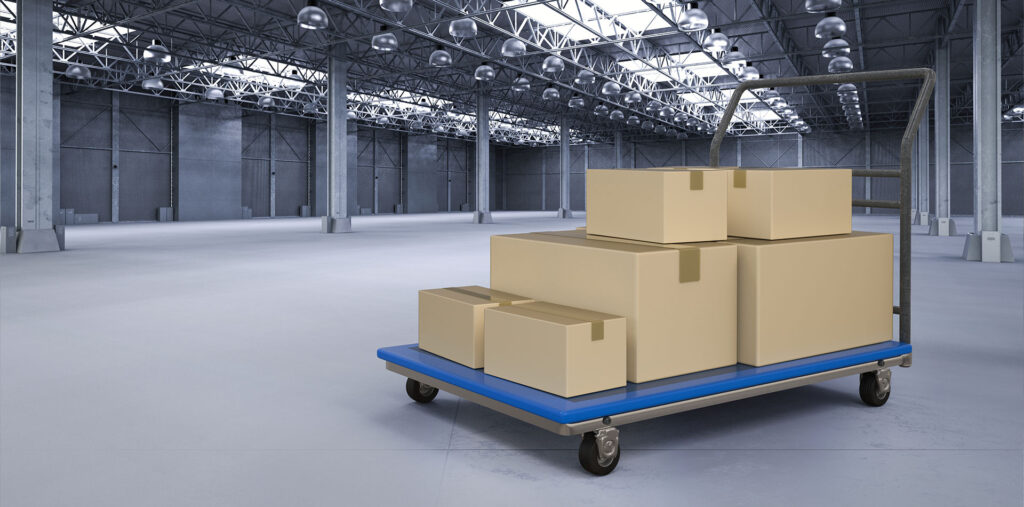
Distribution Centers
Distribution centers often use platform dollies for:
- Cross-docking operations
- Inventory replenishment
- Packaging transportation
Manufacturing Facilities
Manufacturers frequently move:
- Components
- Tools
- Finished products
between production stages.
Automotive Warehouses
Rubber auto body dollies are particularly useful for transporting:
- Vehicle parts
- Body panels
- Engine components
without damaging surfaces.
Retail Logistics Operations
Retail fulfillment centers rely on platform carts to improve picking speed and order accuracy.
Common Buyer Questions
What size platform cart dolly should I buy?
Select a platform that accommodates your largest routine load while allowing safe maneuverability within warehouse aisles.
Is an anti-slip surface really necessary?
Yes. Anti-slip coatings significantly improve load stability and reduce the risk of accidents.
Are folding platform trucks strong enough for industrial use?
Many heavy-duty folding models are designed to handle loads approaching or exceeding one tonne.
Which wheel material lasts longest?
Solid rubber wheels generally provide excellent durability for indoor warehouse environments.
Conclusion
The platform cart dolly remains one of the most valuable and versatile tools in modern warehouse operations. While warehouses continue adopting automation, robotics, and digital technologies, efficient manual transportation equipment still plays a critical role in maintaining smooth workflows.
Whether choosing an anti-slip moving dolly for general inventory transportation, a rubber auto body dolly for delicate equipment handling, or a folding platform truck for maximum flexibility, the right solution can significantly improve productivity, enhance workplace safety, reduce labor costs, and support long-term operational growth.
For warehouses seeking practical, cost-effective improvements, investing in a high-quality platform cart dolly is often one of the fastest ways to achieve measurable efficiency gains and create a safer, more productive working environment.
FAQ
What is the best platform cart dolly for warehouses?
The best option depends on load capacity, floor conditions, and operational requirements. Anti-slip heavy-duty models are often preferred for general warehouse use.
How much weight can a platform cart dolly carry?
Capacities vary widely, ranging from 100 kg for light-duty models to over 1,000 kg for industrial platform trucks.
Why are anti-slip platforms important?
They improve cargo stability, reduce shifting during transportation, and help prevent workplace accidents.
Are folding platform trucks suitable for daily use?
Yes. Industrial-grade folding trucks are specifically designed for frequent warehouse operations.
How often should platform dollies be inspected?
Monthly inspections are recommended, with weekly checks in high-volume facilities.
Keep the Conversation Going!
Loved this article? Join our community for more industry insights, real-time discussions, and exclusive updates. Find me here:
→ Facebook: Qingdao Kinkayo Industry and Trade Co., Ltd.
→ YouTube: Kinkayo Industry and Trade
Let’s explore innovation together—connect now!
 English
  French
  Japanese
  Spanish
  German