
Introduction
In today’s fast-paced warehouse, retail, and industrial environments, material handling efficiency directly impacts operational cost, labor productivity, and workplace safety. According to logistics efficiency studies, over 30–40% of warehouse labor time is spent on internal material movement rather than actual value-added tasks.
This is where tool dolly carts become essential.
They are no longer just simple platform trolleys. Modern dolly carts are engineered transport systems designed to:
- Reduce manual lifting injuries
- Improve warehouse workflow speed
- Protect goods and flooring surfaces
- Optimize micro-logistics inside facilities
From small retail stores to large-scale distribution centers, the demand for efficient tool dolly carts is increasing due to rising labor costs and automation integration trends.
Points clés à retenir
- What tool dolly carts are and how they function in real logistics systems
- Structural differences between MDF, plywood, steel, and extendable models
- Industry standards influencing dolly cart design and safety
- Load capacity benchmarking and performance classification
- Real-world applications in warehouses, retail, and manufacturing
- Data-driven selection framework for buyers
- FAQ based on real search intent and procurement behavior
Table des matières
What Are Tool Dolly Carts?
Definition and Functional Role
Tool dolly carts are mobile platform-based transport devices designed for short-distance material movement. They are widely used in warehouses, logistics hubs, retail environments, and industrial facilities.
Their core function is to minimize manual lifting while improving horizontal transportation efficiency.
Engineering Principle Behind Tool Dolly Carts
Tool dolly carts operate based on three mechanical principles:
- Load distribution across a rigid platform
- Low-friction movement via swivel caster wheels
- Center-of-gravity stability control during transport
These principles allow a single operator to move loads exceeding 150–300 kg depending on model type.
Global Market Trend of Tool Dolly Carts
Logistics Industry Growth Data
According to logistics equipment market reports:
- The global material handling equipment market is growing at ~6–8% CAGR
- Warehouse automation demand has increased over 40% in the last 5 years
- Manual handling equipment still accounts for over 55% of intra-warehouse transport systems
Tool dolly carts remain a critical transitional tool between manual labor and automation systems.
Whitepaper Insight: Efficiency Impact
Industry whitepapers highlight that using dolly carts can:
- Reduce material handling time by 25–45%
- Decrease worker injury risk by up to 30%
- Improve order fulfillment speed by 15–35%
Key Types of Tool Dolly Carts (Expanded Engineering View)
MDF Tool Dolly Carts
Structural Characteristics
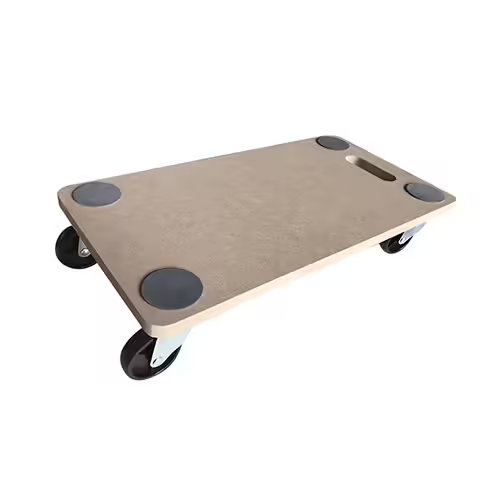
MDF-based carts use engineered fiberboard platforms designed for balanced cost and durability.
They are commonly used in light logistics environments.
Technical Performance
- Load capacity: up to 150 kg
- Platform thickness: typically 12–18 mm
- Suitable temperature range: indoor controlled environments
Industrial Use Case
Best for:
- Office logistics
- Small warehouse picking tasks
- Retail restocking operations
Plywood Tool Dolly Carts
Structural Advantage
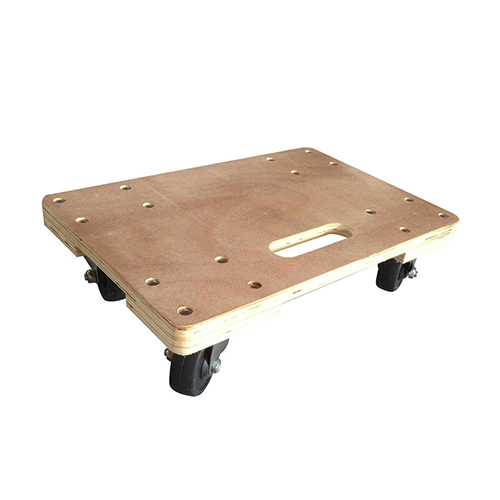
Plywood dolly carts offer multi-layer compression strength, making them significantly more durable than MDF.
Performance Benchmark
- Load capacity: up to 200 kg
- Impact resistance: high
- Moisture tolerance: moderate to high
Industry Use Case
- Warehouses with medium-duty logistics
- E-commerce fulfillment centers
- Furniture and appliance transport
Steel Frame Tool Dolly Carts
Industrial Grade Design
Steel dolly carts are engineered for heavy-duty environments with reinforced load-bearing structures.
Performance Data
- Capacité de charge : 300–500+ kg
- Lifespan: 5–10 years under industrial use
- Resistance: high impact and vibration tolerance
Applications
- Manufacturing plants
- Automotive workshops
- Heavy logistics hubs
Extendable Tool Dolly Carts
Design Innovation
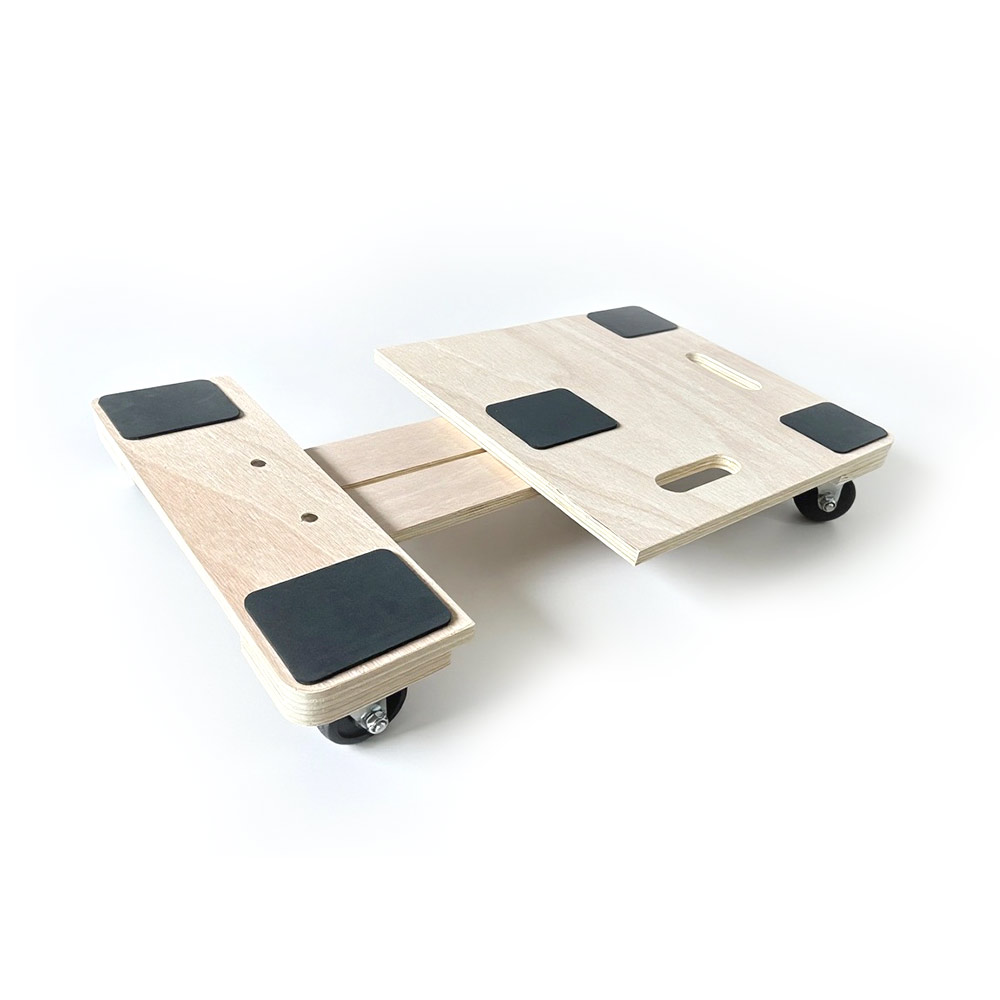
Extendable models introduce adjustable platform length to accommodate variable cargo sizes.
Key Specification Example
- Adjustable length: 60–78 cm
- Load capacity: up to 200 kg
- Material: reinforced multiplex board
Functional Advantage
- Flexible cargo handling
- Reduced need for multiple cart types
- Higher ROI for logistics operations
Tool Dolly Carts Specification Comparison
| Taper | Capacité de charge | Matériel | Durabilité | Cost Level | Cas d'utilisation la meilleure |
|---|---|---|---|---|---|
| MDF Dolly Cart | 100–150 kg | MDF Board | Moyen | Faible | Office / Light warehouse |
| Plywood Dolly Cart | 150–200 kg | Multiplex wood | Haut | Moyen | Warehouse / Retail |
| Steel Dolly Cart | 300–500+ kg | Steel frame | Très élevé | Haut | Industriel |
| Extendable Dolly Cart | Up to 200 kg | Wood + steel | Haut | Moyen-élevé | Flexible logistics |
Key Engineering Factors in Tool Dolly Carts Selection
Load Capacity Safety Margin
Industry safety standards recommend:
- Maximum working load should not exceed 80% of rated capacity
- Example: 200 kg rated cart → safe working load = 160 kg
Wheel System Engineering

Swivel Castor Mechanics
Swivel wheels provide:
- 360° directional movement
- Reduced turning radius
- Improved navigation in narrow aisles
Wheel Diameter Standard
- 3-inch wheels: light-duty use
- 4-inch wheels: industrial use
- Larger wheels: uneven floor environments
Platform Surface Technology
Anti-Slip Coating Systems
Modern dolly carts use:
- Rubber grip layers
- Textured MDF surfaces
- Polymer anti-slip coatings
These reduce cargo shifting risk by up to 70% during movement.
Real-World Application Scenarios
Warehouse Distribution Centers
Tool dolly carts are used in:
- préparation de commandes
- Stock replenishment
- Internal pallet breakdown transport
Retail & Supermarket Logistics
They support:
- Night-time inventory restocking
- Shelf refill operations
- Backroom-to-floor movement
Manufacturing Plants
Used for:
- Component transport
- Assembly line supply
- Semi-finished goods movement
Case Study: Warehouse Efficiency Upgrade
A mid-sized logistics warehouse implemented tool dolly carts across 3 zones:
Before Implementation
- Average picking time: 12.4 minutes/order
- Worker walking distance: 6.2 km/day
After Implementation
- Picking time reduced to: 8.1 minutes/order
- Walking distance reduced by 32%
- Productivity increase: 28%
Tool Dolly Carts Selection Framework (Professional Model)

Step 1: Load Profiling
Identify:
- Average load weight
- Maximum peak load
- Frequency of usage
Step 2: Environment Analysis
- Floor type (tile, concrete, epoxy)
- Space width
- Temperature & humidity
Step 3: Operational Intensity
- Daily usage cycles
- Number of operators
- Distance per transport cycle
Step 4: ROI Evaluation
Calculate:
- Labor time saved
- Injury reduction benefit
- Equipment lifecycle cost
Safety Standards & Compliance Reference
Common Industry Standards
- EN 1757-3 (Industrial trucks safety standards)
- ISO 11228 (Manual handling ergonomics)
- OSHA guidelines for material handling safety
Safety Best Practices
- Do not exceed rated load capacity
- Ensure wheel locking before loading
- Use even load distribution
- Regular maintenance every 3–6 months
FAQ
What is the main purpose of tool dolly carts?
They are designed to safely move heavy goods over short distances in warehouses, retail stores, and industrial facilities.
What is the most durable type of dolly cart?
Steel frame dolly carts offer the highest durability and load capacity, suitable for industrial environments.
How long do tool dolly carts last?
Depending on usage:
- MDF: 2–4 years
- Plywood: 3–6 years
- Steel: 5–10+ years
Are swivel wheels important?
Yes, swivel wheels significantly improve maneuverability and reduce operator fatigue in narrow warehouse aisles.
What is the recommended load safety margin?
Experts recommend using only 70–80% of rated capacity for safe and long-term performance.
Conclusion
Tool dolly carts are a critical component in modern logistics systems, bridging the gap between manual labor and automation. Their importance continues to grow as warehouses, retail systems, and industrial operations demand higher efficiency and lower operational costs.
By selecting the right type—MDF, plywood, steel, or extendable—businesses can significantly improve material handling efficiency, reduce labor strain, and increase overall productivity.
In an increasingly competitive supply chain environment, investing in the right tool dolly carts is not just an operational decision—it is a long-term efficiency strategy.
Continuez la conversation !
Vous avez aimé cet article ? Rejoignez notre communauté pour plus d'informations sur le secteur, des discussions en temps réel et des actualités exclusives. Retrouvez-moi ici :
→ Facebook: Qingdao Kinkayo Industrie et Commerce Co., Ltd.
→ YouTube : Industrie et commerce de Kinkayo
Explorons ensemble l’innovation – connectez-vous maintenant !
 French
  English
  Japanese
  Spanish
  German