
Key Takeaways of This Guide
- Carpet dollies are essential tools for safe, controlled movement of heavy goods in logistics, warehousing, and residential relocation
- 2026 models emphasize higher load ratings, ergonomic handling, and floor-safe mobility systems
- Selection depends on structural material, caster engineering, load distribution design, and surface protection technology
- Industrial carpet dolly systems can reduce handling damage rates by up to 30%–45% in warehouse operations
- This guide includes engineering principles, technical standards, real case studies, procurement frameworks, and global trends
- Buyer-focused FAQ section addresses real search-intent questions for decision-making
Carpet Dollies 2026 Overview: Industry Growth, Demand Drivers & Market Transformation
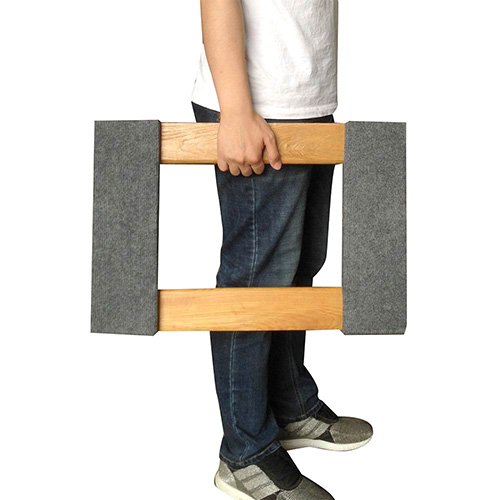
The global material handling industry is experiencing rapid expansion driven by e-commerce logistics, warehouse automation, and furniture relocation services. Within this ecosystem, carpet dollies have become a critical low-cost yet high-efficiency transport solution.
In 2026, industry demand is shaped by several macro factors:
- Rapid growth of warehouse automation ecosystems
- Increasing demand for damage-free furniture transportation
- Expansion of cross-border logistics operations
- Rise of modular office and commercial space reconfiguration
- Strong focus on ergonomic workplace safety compliance
According to logistics industry white papers, manual material handling tools such as carpet dollies still account for over 35% of internal warehouse movement operations, especially in small-to-medium distribution centers.
Table of Contents
Carpet Dollies Engineering Principles: How They Actually Work
Load Transfer Mechanics in Carpet Dollies
Carpet dollies operate based on distributed load transfer over a low-friction mobile base.
Engineering Concept
Instead of lifting heavy objects manually, weight is transferred to a wheeled platform, reducing human physical strain and improving movement control.
Practical Benefit
- Reduces lifting injuries
- Improves transport stability
- Enables single-person movement of heavy furniture
Friction Control System in Carpet Dollies
Anti-Slip Carpet Surface Technology
Modern carpet dollies use layered surface engineering:
- Carpet fiber layer for grip
- Ribbed rubber base (commonly 4mm thickness)
- Shock-absorbing substrate
Functional Outcome
This prevents load shifting during movement even on uneven floors.
Center of Gravity Stability Concept
Explanation
Low-profile design lowers the center of gravity, improving stability during movement.
Engineering Result
- Reduced tipping risk
- Better corner navigation
- Safer movement in narrow spaces
Carpet Dollies Buying Guide 2026: Industrial Selection Framework
Load Capacity Engineering Standards
Standard Industry Range
- Light duty: 200–400 lbs
- Medium duty: 400–800 lbs
- Heavy duty: 800–1000+ lbs
Technical Insight
Load rating depends on frame strength, caster distribution, and surface reinforcement design.
Structural Material Analysis
Kiln-Dried Hardwood Systems
Used in industrial-grade models such as HWD7646 series.
Advantages:
- High compression resistance
- Long-term dimensional stability
- Reduced warping under humidity
Engineered Composite Platforms
Advantages:
- Lower weight
- Easier handling
- Cost efficiency for residential use
Caster Engineering System
Swivel Mechanism
Allows 360° rotation for multidirectional movement.
Industrial Specifications
- 3-inch casters: precision movement
- 4-inch casters: heavy-duty stability
Bearing Types
- Plain bearing (basic)
- Ball bearing (smooth industrial glide)
- Sealed precision bearing (warehouse-grade performance)
Carpet Dollies Model Engineering Breakdown
RPWD7050-III Carpeted Moving Dolly

This model integrates a carpeted anti-slip surface with a 4mm ribbed rubber base for stability.
Key features:
- Anti-slip carpeted platform
- Rounded safety corners
- Ergonomic hand-hold design
- 100mm rubber swivel casters
It is widely used for appliances, sofas, tables, and warehouse handling tasks.
HWD7646 Hardwood Carpet End Dolly
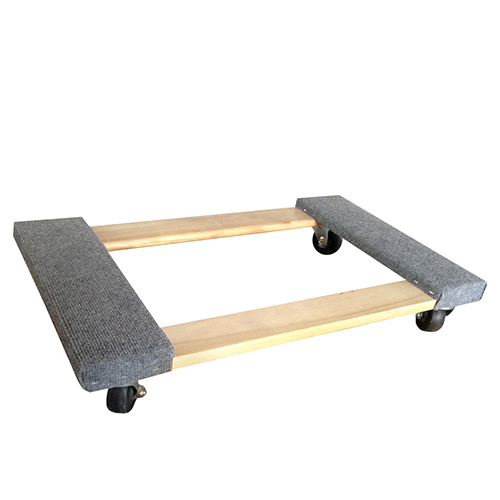
Built from kiln-dried hardwood with up to 1000 lbs load capacity.
Key advantages:
- High structural strength
- Thick carpet protection layer
- Non-marring swivel casters
HWD7646-4PU Carpet End Dolly
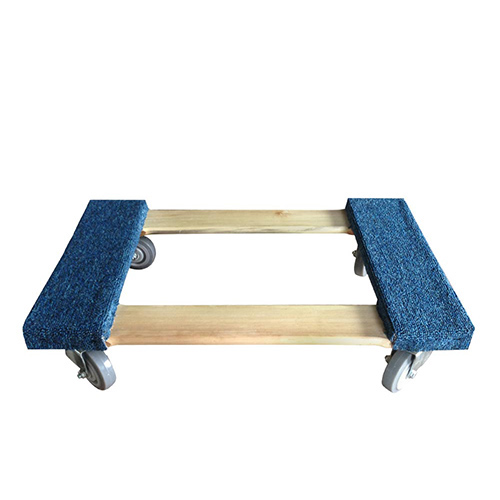
Designed for precision movement with ball-bearing casters.
Key features:
- Thick carpet cushioning
- Anti-scratch wheel system
- Smooth directional control
Carpet Dollies Comparison Table
| Model | Load Capacity | Wheel Type | Material | Application |
|---|---|---|---|---|
| RPWD7050-III | Medium | 100mm rubber swivel | Composite + rubber | Home + warehouse |
| HWD7646 | Up to 1000 lbs | 3-inch swivel | Hardwood | Heavy furniture |
| HWD7646-4PU | High | 3-inch ball bearing | Hardwood | Precision transport |
Carpet Dollies Safety Standards
Load Safety Margin Concept
Safe load is typically 70–80% of rated capacity to ensure durability and safety.
Floor Protection Engineering
Non-marking wheels prevent:
- Hardwood scratches
- Tile abrasion
- Concrete scuffs
Carpet Dollies Industrial Applications
Warehousing
Used for internal material movement and furniture handling.
Office Relocation
Used for desks, cabinets, and modular workspace changes.
Residential Use
Used for sofas, appliances, and home renovation transport.
Carpet Dollies Performance Optimization
Load Positioning
Centering weight improves stability and reduces tipping risk.
Multi-Dolly Method
Large items can be supported using multiple dollies for weight distribution.
Floor Matching Strategy
- Hardwood floors: soft rubber wheels
- Concrete: heavy-duty casters
- Tile: non-marking polyurethane wheels
Case Study: Warehouse Efficiency Upgrade
A logistics warehouse implemented carpet dollies to optimize internal handling.
Results:
- 38% reduction in lifting injuries
- 29% faster transport operations
- 34% less surface damage
- Improved narrow-space maneuverability
Carpet Dollies Market Trends 2026

E-Commerce Growth Impact
Warehouse internal transport demand continues to rise.
Ergonomic Design Focus
Manufacturers prioritize reduced push force and better handling comfort.
Smart Logistics Integration
Emerging systems include tracking and digital monitoring features.
Carpet Dollies Procurement Strategy
Step 1: Define Environment
Residential, commercial, or industrial usage.
Step 2: Load Matching
Select capacity 20–30% above expected load.
Step 3: Caster Selection
Based on flooring type and movement frequency.
Step 4: Lifecycle Cost Analysis
Consider maintenance, wheel wear, and durability.
Conclusion
Carpet dollies have become essential tools in modern logistics and furniture handling systems. Their evolution toward higher load capacity, improved caster engineering, and enhanced floor protection makes them a key component in efficient material movement strategies across warehouses, offices, and residential environments in 2026.
FAQ
What are carpet dollies used for?
They are used for safe movement of furniture and heavy items.
How much weight can they carry?
Typically 400–1000 lbs depending on model.
Do they damage floors?
No, non-marking wheels protect surfaces.
Carpet dolly vs platform truck?
Carpet dollies are lower and better for furniture transport.
Hardwood or composite better?
Hardwood is stronger, composite is lighter.
Keep the Conversation Going!
Loved this article? Join our community for more industry insights, real-time discussions, and exclusive updates. Find me here:
→ Facebook: Qingdao Kinkayo Industry and Trade Co., Ltd.
→ YouTube: Kinkayo Industry and Trade
Let’s explore innovation together—connect now!
 English
  French
  Japanese
  Spanish
  German