

Moving items around your home, office, or warehouse can be challenging without the right tools. A small moving dolly is a versatile solution designed to make lifting, transporting, and handling objects easier. This guide will walk you through the key concepts, features, and practical tips to choose the right dolly for your needs.
Table of Contents
Understanding the Small Moving Dolly
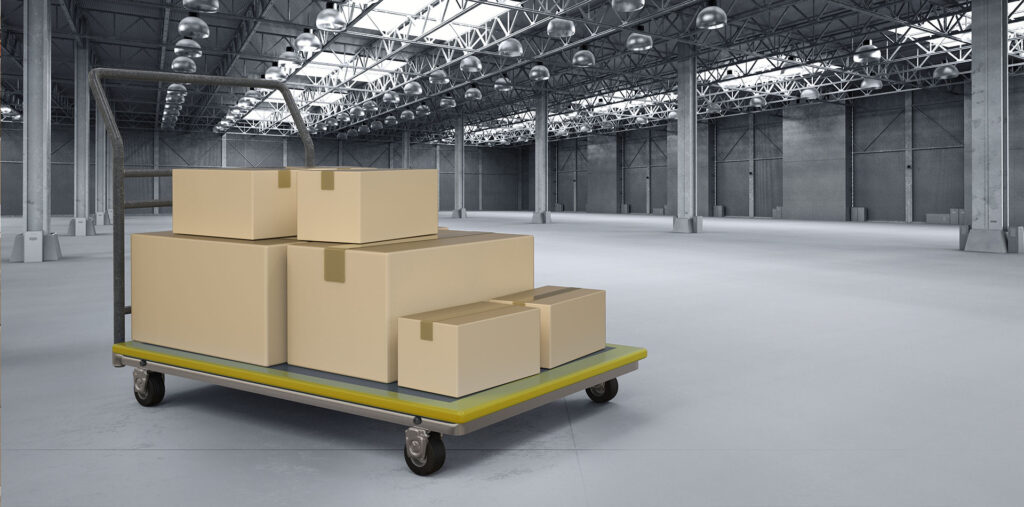
A small moving dolly is essentially a compact platform on wheels, often equipped with a handle for easy maneuvering. While it may look simple, the design and materials play a critical role in safety and efficiency.
What Makes a Small Moving Dolly Different?
A small moving dolly may look simple at first glance, but it offers several advantages over larger moving equipment. Its design focuses on compactness, versatility, and maneuverability. Understanding these differences can help you choose the right tool for your moving or transporting needs.
Compact Design
Small moving dollies are lightweight and designed to fit into tight storage spaces. Unlike full-size hand trucks or pallet jacks, they can be stored in a closet, garage, or under a desk when not in use. Their smaller footprint makes them ideal for apartments, offices, or workshops with limited space.
Versatile Use
These dollies are suitable for a wide range of applications. From moving boxes and appliances at home to transporting office equipment or light industrial materials, a small moving dolly adapts to multiple environments. Their versatility makes them a cost-effective alternative to specialized equipment.
Ease of Maneuvering
Most small moving dollies come equipped with swivel casters, allowing 360-degree rotation. This feature enables easy navigation around tight corners and narrow hallways. For heavier loads, some models also include locking wheels to maintain stability during transport.
Key Components of a Small Moving Dolly
To choose the right dolly, it’s essential to understand its main components. Each part affects performance, durability, and ease of use.
Platform Materials and Their Benefits
The platform is the foundation of a dolly, and the material determines its strength, safety, and suitability for specific items.
Wooden Platforms

Wooden platforms are durable and provide solid support for medium to heavy loads. They are excellent for moving boxes or appliances but may be prone to moisture damage.
Plywood Platforms

Plywood is lighter than solid wood and more cost-effective. It works well for temporary moving tasks but may wear down faster under heavy or repeated use.
Rubber Platforms

Rubber provides grip and shock absorption. It’s ideal for delicate or slippery items such as electronics or glassware.
Carpeted or Padded Platforms

Soft surfaces prevent scratches and protect sensitive items. They are excellent for furniture or equipment but may have lower weight capacity.
Handles and Ergonomics
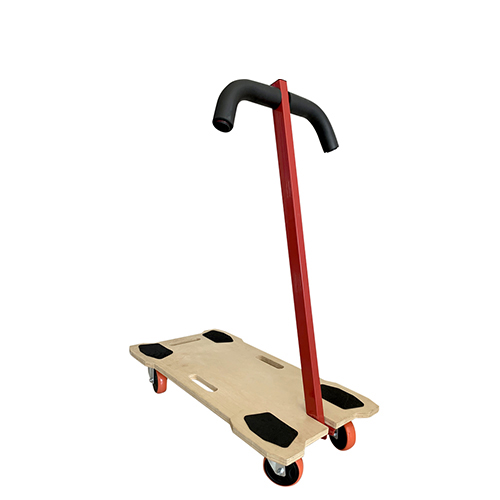
Handles are essential for pushing or pulling the dolly efficiently.
Fixed Handles
Fixed handles provide strong stability and are ideal for repetitive lifting and moving tasks. They offer a consistent grip, reducing the risk of slips.
Detachable Handles
Detachable or foldable handles make the dolly easier to store and transport. They are particularly useful in spaces where storage is limited or when moving the dolly between locations.
Ergonomic Design
An ergonomically designed handle reduces strain on the back and arms. Features like padded grips, adjustable height, or angled handles improve comfort, especially during prolonged use.
Wheels and Casters

Wheels are critical for movement, load capacity, and the type of surfaces the dolly can handle.
Material Choices
- Rubber Wheels: Smooth and quiet, suitable for indoor surfaces such as tiles or hardwood. They also offer moderate grip and vibration absorption.
- Nylon or Plastic Wheels: Lightweight and economical, but may be less stable on rough or uneven surfaces.
- Polyurethane Wheels: Durable and wear-resistant, ideal for industrial or warehouse use, and can handle heavier loads without damaging floors.
Swivel vs. Fixed Wheels
- Swivel Wheels: Rotate 360 degrees for easy maneuvering in tight spaces, making them ideal for offices, hallways, or crowded storage areas.
- Fixed Wheels: Maintain straight-line stability, providing better control for moving heavy loads over longer distances. Some dollies combine both types for optimal performance.
Comparing Small Moving Dollies for Different Needs
Home vs Office vs Industrial Use
| Feature | Home Use | Office Use | Industrial Use |
|---|---|---|---|
| Weight Capacity | Light to medium | Medium | Heavy |
| Platform Material | Wood, Plywood | Rubber, Wood | Metal, Heavy-duty Wood |
| Wheel Type | Rubber, Swivel | Rubber/Polyurethane | Polyurethane, Fixed/Swivel |
| Storage Space | Compact | Medium | Larger |
This comparison helps readers choose the best dolly based on their specific environment and load requirements.
Practical Tips for Using a Small Moving Dolly
- Load Distribution: Center the weight evenly to prevent tipping.
- Avoid Overloading: Exceeding weight limits can damage the dolly and risk injury.
- Use Proper Techniques: Push rather than pull whenever possible to reduce strain.
- Surface Considerations: Use suitable wheels for carpets, tiles, or concrete.
Small Moving Dolly Maintenance and Care
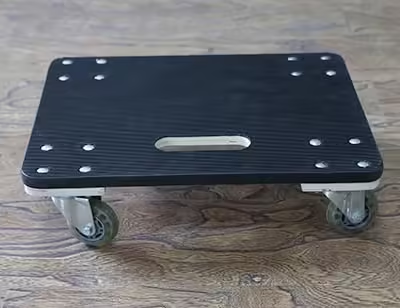
Regular care prolongs the life of your dolly.
Wheel Inspection
Ensure wheels turn smoothly and aren’t worn down.
Clean the Platform
Remove dust, debris, and moisture to prevent damage.
Lubrication
Apply light oil to wheel axles for smoother movement.
Proper Storage
Keep indoors, away from extreme temperatures or moisture.
Conclusion
A small moving dolly is a simple yet powerful tool for making moving tasks easier and safer. By understanding platform materials, wheel types, handle designs, and proper usage techniques, you can select a dolly that fits your environment and workload. Regular maintenance ensures longevity, and following basic safety practices prevents accidents. Whether you are moving boxes at home, transporting equipment in an office, or handling light industrial loads, a small moving dolly can save time, effort, and strain.
FAQ
Can a small moving dolly handle heavy appliances?
Yes, but you should always check the dolly’s weight limit. Heavy appliances may require reinforced platforms or industrial-grade dollies.
Are small moving dollies suitable for outdoor use?
Some models with polyurethane or rubber wheels can handle outdoor surfaces, but avoid rough or uneven terrain unless specified.
How do I prevent my items from slipping on the dolly?
Choose a rubber or carpeted platform for grip, and consider adding straps or bungee cords for added security.
Can the wheels be replaced if they break?
Most dollies allow wheel replacement. Check manufacturer specifications before purchase to ensure spare parts are available.
What’s the difference between a small moving dolly and a hand truck?
A small moving dolly is typically platform-based and designed for pushing, while a hand truck is upright and suited for pulling or tilting heavy objects. Choosing depends on load type and space constraints.
Keep the Conversation Going!
Loved this article? Join our community for more industry insights, real-time discussions, and exclusive updates. Find me here:
→ Facebook: Qingdao Kinkayo Industry and Trade Co., Ltd.
→ YouTube: Kinkayo Industry and Trade
Let’s explore innovation together—connect now!
 English
  French
  Japanese
  Spanish
  German