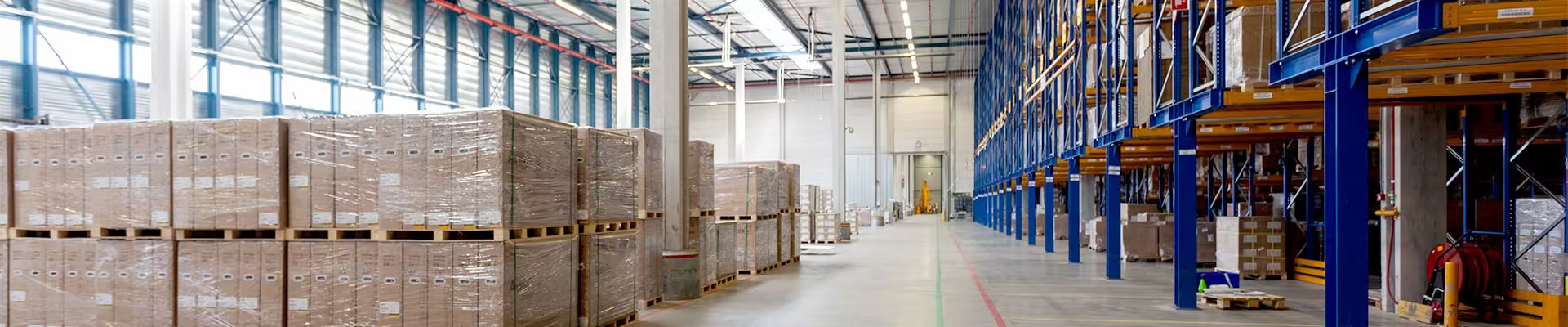
In today’s fast-paced logistics environment driven by global e‑commerce and automation, efficiency and safety are not optional — they are mission‑critical. Warehouses, distribution centers, and manufacturing facilities are handling ever‑increasing volumes of goods, and traditional manual lifting approaches are no longer viable. Safe moving dollies play a foundational role in modern material handling systems, ensuring that goods move quickly and safely from point A to point B while protecting workers from common musculoskeletal injuries and operational hazards. By integrating ergonomic design, specialized features, and evolving innovation, safe moving dollies are now essential tools in the logistics safety toolkit.
Table of Contents
Key Takeaways
- The critical role of safe moving dolly systems in safeguarding personnel and loads in logistics operations.
- Advances in dolly design that improve safety, ergonomics, and operational throughput.
- Data-driven insights on material handling trends, market growth, and industry adoption.
- A comprehensive comparison of dolly options suited for different load types and work environments.
- Best practices for choosing, maintaining, and optimizing safe moving dollies.
- A detailed FAQ section answering natural language search queries around dolly selection and usage.
The Logistics Landscape: Trends and Industry Growth
Material Handling Market Expansion
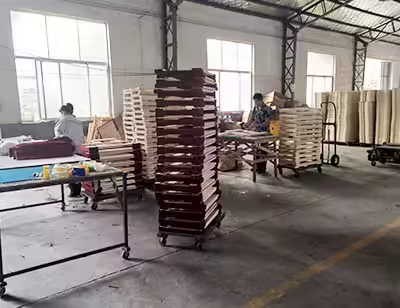
The global material handling equipment market, which includes dollies, pallet trucks, carts, and other tools, continues to grow steadily. Market research shows that the broader automated material handling equipment market was valued at approximately $26.2 billion in 2021 and is projected to reach $55.7 billion by 2029, with a compound annual growth rate (CAGR) of 9.89% — largely driven by safety concerns and automation adoption.
Meanwhile, analysis across all material handling machinery (including manual tools like dollies and powered equipment) forecasts the market expanding from $270.6 billion in 2024 to $418.3 billion by 2032, at a CAGR of 5.59%.
This sustained growth reflects not only operational demand but also increased investment in ergonomics, safety systems, and material handling technology innovation.
Safe Moving Dolly: Core Concepts and Definitions
What Is a Dolly?
A dolly is a type of material handling tool consisting of a platform or frame mounted on wheels, used to transport heavy or bulky goods with minimal physical strain. Dollies vary widely in design — from simple 2‑wheel hand trucks to multi‑wheel platform units with advanced safety features.
The Concept of Safe Moving Dolly
A safe moving dolly goes beyond just being a wheeled platform. It embodies a set of design principles and engineering features intended to:
- Reduce operator strain and injury risk,
- Secure loads against shifting and damage,
- Enhance stability and control during movement,
- Integrate seamlessly into modern logistics workflows.
Safety is not just a benefit — it is a measurable outcome built into the equipment through design, material selection, and user‑centric engineering.
The Human and Economic Cost of Poor Material Handling
Workplace Injury Risks
Manual material handling is a leading cause of workplace injuries. According to occupational safety data, overexertion (such as lifting, pushing, or pulling heavy loads) remains the #1 cause of workplace injuries in logistics environments. Powered and ergonomic handling solutions significantly reduce these risks by minimizing the physical effort required.
Accidents associated with lifting equipment like forklifts and manual handling vehicles have been documented to cause injuries and fatalities — underscoring the need for safer alternatives and training.
Productivity and Cost Impact
Beyond safety, manual handling can slow workflows, increase labor costs, and lead to higher compensation claims. In contrast, smart usage of safe moving dollies improves throughput, preserves workforce health, and lowers long‑term operating costs.
Key Innovations in Safe Moving Dolly Design
Anti‑Slip Moving Dollies

Purpose & Advantage: Designed to prevent load shifting by incorporating high‑traction surfaces or grip features.
- Ideal for fragile, high‑value items.
- Reduces incidents of dropped loads during transport.
- Enhances stability on both smooth and uneven surfaces.
Safety Surface Technology is a growing trend in dolly design that directly tackles one of the most common causes of material loss and worker strain.
Heavy‑Duty and Solid Deck Dollies

Purpose & Advantage: Engineered for heavy industrial loads.
- Support higher weight capacities through reinforced platforms and structural design.
- Useful in manufacturing, construction, and distribution of bulky goods.
These dollies often form part of an integrated handling system where load durability and stability are paramount.
Handle‑Equipped Dollies (Ergonomic Control)

Purpose & Advantage: Incorporates ergonomic handles to allow better manual control.
- Improves precision during movement.
- Reduces the risk of tipping, especially in congested aisles.
- Supports safer operation with minimal training.
Ergonomic designs are backed by research showing that reducing awkward postures significantly lowers strain injuries.
Powered Dollies and Motorized Options
Purpose & Advantage: Powered dollies provide assisted movement to eliminate heavy pushing or pulling.
- Increase workflow speed while reducing fatigue.
- Provide precise control in busy warehouse environments.
- Lower dependency on physical labor for heavy or repetitive tasks.
According to industry data, powered handling equipment improves material flow and reduces fatigue‑related injuries.
Dolly Comparison: Which Option Fits Your Needs?
| Dolly Type | Best For | Key Safety Feature | Common Use Case |
|---|---|---|---|
| Normal Dolly | Everyday loads | Basic maneuverability | Light‑medium goods |
| Anti‑Slip Dolly | Fragile/valuable loads | Non‑slip surface | Electronics handling |
| Heavy‑Duty Dolly | Industrial‑class loads | Reinforced deck | Machinery parts |
| Handle Dolly | Operator control | Ergonomic handle | Tight aisle navigation |
| Powered Dolly | High volume/weight | Motor assistance | Fulfillment centers |
Choosing the right dolly requires balancing load type, work environment, and operational objectives. Dollies that match the specific needs of a workflow produce better safety outcomes and ROI.
Accessories That Improve Dolly Functionality
Load Stabilization Enhancers
Accessories like reinforcement bars, extended platforms, and securing mechanisms help maintain load balance and prevent shifting, especially for large or irregularly shaped items.
Visibility and Safety Markings
High‑visibility markings, reflective elements, and lighting attachments improve awareness in busy environments, reducing the likelihood of collisions when dollies operate near walking pathways or automated machinery.
Digital Tracking and Condition Monitoring
Sensors and tracking modules (e.g., RFID or GPS) add a digital layer to material handling. These technologies allow facility managers to:
- Track equipment usage and movement,
- Predict maintenance needs,
- Optimize workflow patterns through data‑driven decisions.
Quality Assurance in Dolly Manufacturing
Multi‑Stage Inspection and Standards
High‑quality safe moving dollies are the result of thorough quality systems including:
- Raw material verification,
- Process control during stamping and welding,
- Final safety and performance tests before shipment.
This rigorous approach ensures reliability across diverse operational conditions.
Industry Voices: Expert Perspectives
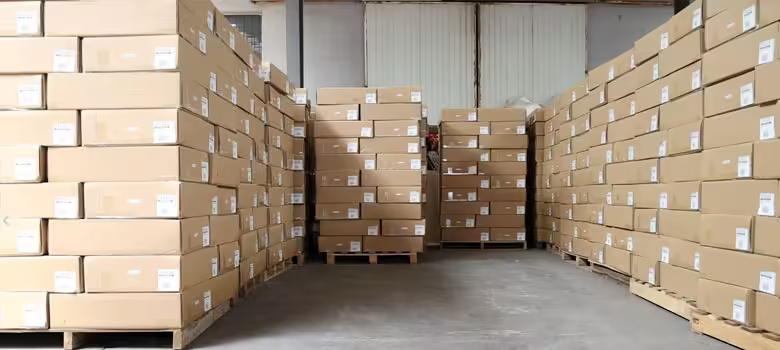
Logistics‑safety professionals emphasize design precision and ergonomic engineering as key drivers for reducing injury rates while improving operational efficiency. Best practices recommended by safety experts include:
- Prioritizing tools that match specific workflow challenges,
- Integrating ergonomic features to minimize fatigue,
- Conducting regular training and inspection programs.
Incorporating expert recommendations into tool selection significantly enhances safety culture and compliance.
Sustainability and Green Logistics
Environmental Philosophy in Dolly Design
Sustainability now influences dolly design and manufacturing. Manufacturers optimize material usage and adopt energy‑efficient production processes, contributing to reduced waste and lower environmental impact.
Eco‑Friendly Operations
Dollies made with recycled components or longer service life reduce replacement frequency and minimize lifecycle environmental costs. Sustainable logistics practices benefit operations and support broader corporate social responsibility goals.
Best Practices for Implementation
Training and Safety Protocols
Effective dolly usage demands proper staff training on load handling, wheel locking mechanisms, and dynamic handling in confined spaces.
Inspection and Maintenance
Regular checks for wheel wear, handle integrity, and platform condition prevent failures that could lead to injuries or equipment downtime.
Conclusion
Safe moving dollies represent a perfect blend of engineering, ergonomics, and innovation. In logistics operations where both human safety and operational efficiency matter, selecting the right dolly — supported by quality manufacturing, advanced features, and sustainability principles — ensures that material handling remains secure, compliant, and cost‑effective.
FAQ
What is the difference between a safe moving dolly and a standard dolly?
A safe moving dolly incorporates enhanced safety features — anti‑slip surfaces, ergonomic handle design, and load securing mechanisms — to reduce risk and protect both goods and personnel, whereas a standard dolly may provide only basic movement capability.
How do I choose the right dolly for my warehouse?
Consider load type, environment, weight capacity, frequency of use, and any ergonomic challenges your team faces. Comparing dolly types based on these factors will help you select the safest and most efficient option.
Are powered dollies worth the investment?
Yes — especially in high‑volume or heavy‑load scenarios. Powered dollies improve throughput, reduce worker fatigue, and can lower injury‑related costs over time.
Do safe moving dollies reduce workplace injuries?
Absolutely — ergonomic and safety‑centric designs reduce strain, minimize physical lifting, and effectively lower the incidence of back injuries and musculoskeletal disorders.
How often should dollies be inspected?
Dollies should be checked before daily use and periodically inspected for wear and tear. Regular maintenance ensures reliable performance and worker safety.
Keep the Conversation Going!
Loved this article? Join our community for more industry insights, real-time discussions, and exclusive updates. Find me here:
→ Facebook: Qingdao Kinkayo Industry and Trade Co., Ltd.
→ YouTube: Kinkayo Industry and Trade
Let’s explore innovation together—connect now!
 English
  French
  Japanese
  Spanish
  German