
Table of Contents
Introduction
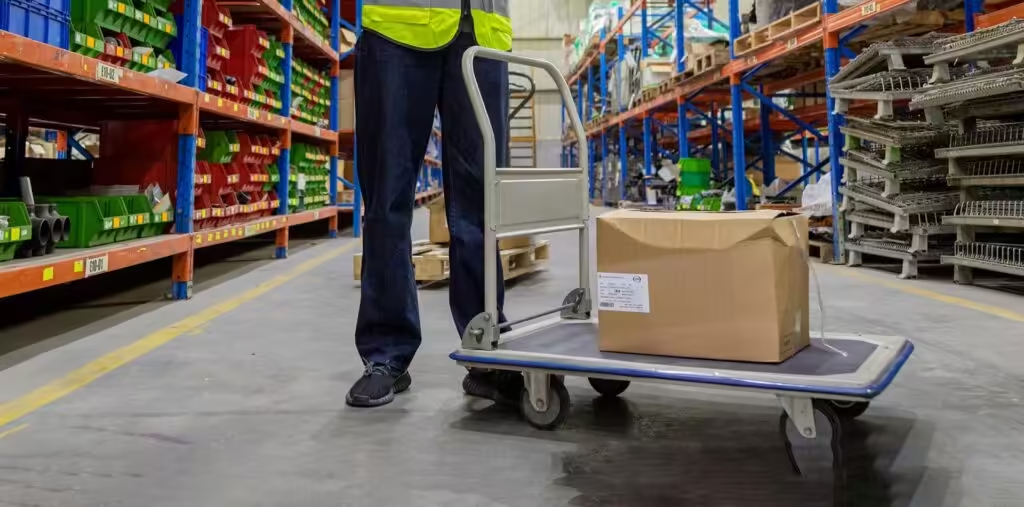
In today’s competitive retail landscape, mobility efficiency defines how fast stores can respond to customer demand, shelf replenishment, and logistics turnover. At the center of this mobility ecosystem stands one seemingly simple yet crucial component — the Supermarket trolley.
Far beyond a basic transport tool, the supermarket trolley has evolved into a strategic asset in modern retail and warehouse management. Whether it’s moving stock from storage to aisles or collecting online order packages, the right trolley design directly influences operational speed, safety, and even the customer experience.
Understanding the Supermarket Trolley: Definition and System Composition
What Is a Supermarket Trolley?
A Supermarket trolley is a wheeled transport platform designed for carrying goods, products, or packaging materials within retail and warehouse environments.
While traditionally used for customer shopping, the modern definition extends to stock-handling carts, folding platform trolleys, replenishment trolleys, and warehouse mobility systems used by staff for internal logistics.
Core Components of a Supermarket Trolley
Most trolleys share several functional parts that determine performance and reliability:
Frame Structure

The skeleton, often made from steel, aluminum, wood, or composite plastic.
Platform or Basket Area

Holds the goods; varies by size, mesh, or flat-surface design.
Caster Wheels

The foundation of movement — their material, diameter, and swivel design impact maneuverability.
Handle Section

Ergonomically shaped for push comfort, safety, and control.
Folding or Modular Mechanisms

Found in platform trolleys for compact storage and transport flexibility.
These elements combine to create an adaptable logistics solution that fits different store scales, from mini-markets to warehouse-style hypermarkets.
The Role of a Supermarket Trolley in Retail Operations
Mobility as a Strategic Element
In large-scale retail, every second saved during stock replenishment translates to higher product availability and customer satisfaction. Efficient trolley systems enable faster movement, reduce manual effort, and ensure operational continuity across shifts.
Enhancing Productivity and Safety
A high-quality Supermarket trolley reduces operator fatigue, lowers accident risks, and minimizes product damage through stable load balance. In environments with high foot traffic, trolleys with silent wheels and anti-collision guards also improve workplace comfort.
Energy and Time Efficiency
Studies show that supermarkets using ergonomic, low-resistance trolleys report 30–40% higher restocking efficiency compared to those with conventional steel carts. This directly influences daily turnover rates and employee productivity metrics.
Types of Supermarket Trolleys and Their Industrial Applications
Folding Platform Trolleys for Compact Retail Stores
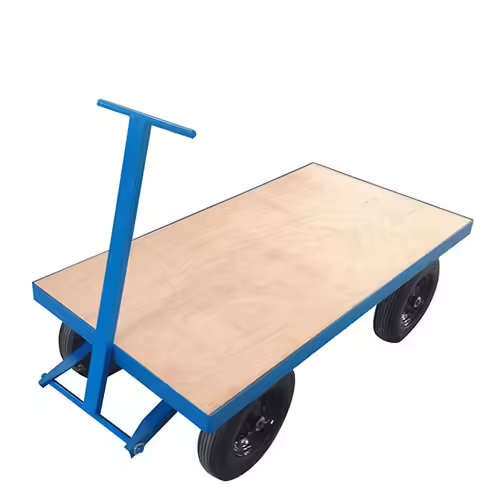
Designed for limited space environments, these trolleys can be folded and stored vertically after use. Lightweight aluminum structures and smooth-rolling PU wheels make them ideal for quick, flexible handling in small or medium-sized stores.
Stock Replenishment Trolleys for Mid-Sized Supermarkets
These models are built for continuous movement between stockrooms and aisles. With reinforced shelves or trays, they enable efficient sorting, stacking, and restocking of multiple SKU types in one trip.
Heavy-Duty Warehouse Trolleys for Bulk Retail Operations
Large-format hypermarkets or retail distribution centers often rely on heavy-duty warehouse trolleys capable of carrying up to 500 kg. Their welded steel frames, industrial-grade casters, and brake systems ensure safety under high load and speed conditions.
Design and Technical Factors Affecting Supermarket Trolley Performance
Load Capacity and Structural Design
A high-performance Supermarket trolley must be designed to carry maximum load safely while remaining easy to maneuver.
- Length-to-Width Ratio: Trolleys with an L/W ratio between 2:1 and 3:1 provide stability without compromising aisle mobility.
- Caster Placement and Size: Proper caster spacing (≥10 cm apart) and wheel diameter (typically 125–200 mm) reduce tipping risks and rolling resistance.
- Load Distribution: Reinforced crossbars and platform bracing help evenly distribute heavy loads up to 500 kg, preventing structural stress and frame deformation.
Case Example: A European hypermarket switched to trolleys with reinforced steel frames and optimized caster spacing. The results showed a 35% reduction in tipping incidents and 20% faster shelf restocking during peak hours, demonstrating the impact of structural optimization.
Material and Manufacturing Quality
Material choice directly affects durability, handling, and long-term cost:
- Steel: Offers high strength, supports heavy loads, and is cost-effective for warehouse-style trolleys.
- Aluminum: Lightweight, corrosion-resistant, ideal for refrigerated zones or high-moisture environments.
- Plastic / Hybrid Composites: Provide silent operation, aesthetic flexibility, and low floor abrasion — suitable for premium retail stores.
Surface Treatments: Powder coating, anti-rust treatments, and polished finishes extend trolley lifespan in challenging environments.
Case Example: A refrigerated grocery chain replaced old steel trolleys with aluminum frames and TPR wheels, reducing trolley maintenance frequency by 40% and extending average service life from 5 to 8 years.
Ergonomic and Safety Considerations
Proper ergonomics improve efficiency and reduce worker fatigue:
- Handle Positioning: Handles at waist level reduce push and pull effort, minimizing strain on shoulders and lower back.
- Anti-Slip Platforms & Bumpers: Soft bumpers and textured decks prevent product sliding and protect both operators and store infrastructure.
- Biomechanical Handle Design: Modern trolleys are tested for repetitive use, reducing wrist and shoulder strain by 15–25%, improving long-term workplace safety.
Case Example: A mid-sized supermarket in Asia implemented biomechanical handle trolleys for restocking. Staff reported 30% less fatigue during long shifts, and the company recorded a 12% reduction in minor workplace strain incidents over six months.
Parameterized Comparison: Understanding the Differences Between Trolley Models
| Feature | Folding Platform Trolley | Stock Replenishment Cart | Heavy-Duty Warehouse Trolley |
|---|---|---|---|
| Load Capacity | 150–250 kg | 100–200 kg | 300–500 kg |
| Material | Aluminum / Steel | Steel / Plastic | Reinforced Steel |
| Maneuverability | Excellent | Moderate | Limited (High Load) |
| Foldable | ✅ Yes | ❌ No | ❌ No |
| Noise Level | Low | Medium | High |
| Maintenance | Low | Medium | Medium-High |
| Operational Environment | Small Stores | Mid-size Markets | Warehouse Retailers |
| ROI Cycle | 6–9 months | 8–12 months | 12–18 months |
This table clarifies how technical parameters align with store environments, allowing buyers to match trolley specifications to operational needs.
Case Study: Mobility Transformation for Retail Efficiency
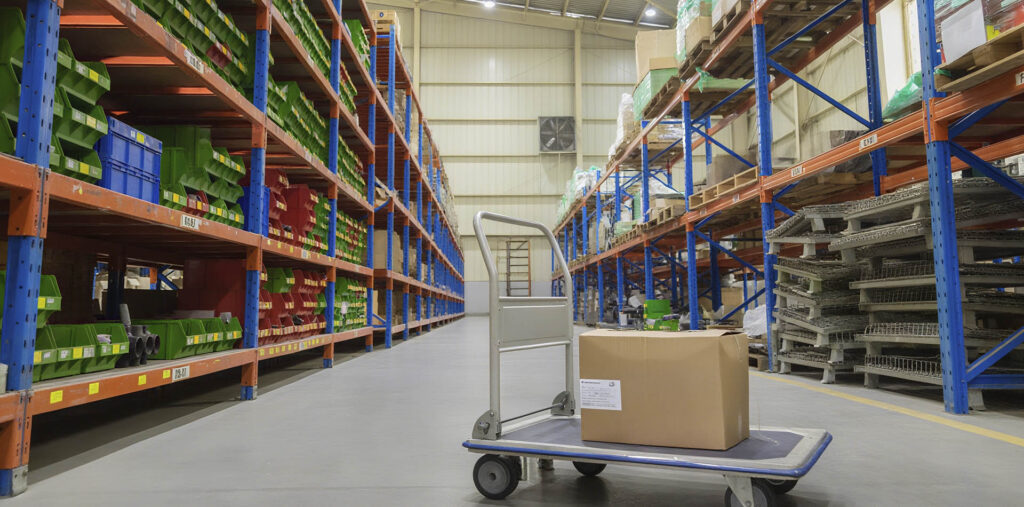
Case 1: Chain Supermarket in Europe
A leading European retailer operating 400+ outlets replaced outdated trolleys with modular, silent-rolling replenishment carts.
After 3 months, the results included:
- 28% shorter restocking time
- 15% labor cost reduction
- Zero customer complaints related to aisle obstruction or noise
Case 2: Urban Grocery Brand in Southeast Asia
Facing space limitations, the company adopted foldable platform trolleys with vertical storage design.
This reduced storage area by 22% and improved operational flexibility during off-peak restocking hours.
Sustainability and Intelligent Design in Supermarket Mobility
Eco-Conscious Manufacturing

Modern trolley producers increasingly use recycled aluminum, biodegradable plastics, and TPR wheels to meet sustainability standards.
This not only reduces carbon footprint but also aligns with corporate ESG goals in large retail chains.
Smart Mobility Integration
Emerging technologies integrate RFID tracking, IoT sensors, and asset management software for fleet monitoring and loss prevention.
Such intelligent systems are reshaping how retailers manage equipment lifecycle and maintenance scheduling.
Conclusion
In the modern retail environment, the Supermarket trolley is no longer just a convenience tool — it’s a measurable productivity driver.
From ergonomic design and materials innovation to intelligent tracking and sustainability, mobility solutions are now central to retail competitiveness.
FAQ
What’s the difference between a supermarket trolley and a retail cart?
A Supermarket trolley typically refers to professional-grade handling carts used for logistics and replenishment, while retail carts are customer-facing shopping tools.
Can trolleys be customized for different store sizes?
Yes. Manufacturers can tailor dimensions, wheel materials, and folding mechanisms based on aisle width, floor surface, and load requirements.
Which trolley material is best for long-term use?
Steel offers the longest lifespan, but aluminum and composite plastic are preferred in humid or lightweight applications.
Are silent trolleys worth the investment?
Yes. Trolleys with TPR wheels and anti-vibration frames improve the store atmosphere and reduce maintenance costs for flooring.
How can I determine the ROI of upgrading trolley systems?
Compare downtime reduction, labor savings, and maintenance intervals. Many retailers see ROI within 6–12 months after modernization.
Call to Action
Need expert guidance in selecting the right mobility system for your retail or warehouse operations?
Contact our engineering specialists for tailored advice on supermarket trolleys, folding carts, and custom logistics solutions designed for your business.
Keep the Conversation Going!
Loved this article? Join our community for more industry insights, real-time discussions, and exclusive updates. Find me here:
→ Facebook: Qingdao Kinkayo Industry and Trade Co., Ltd.
→ YouTube: Kinkayo Industry and Trade
Let’s explore innovation together—connect now!
 English
  French
  Japanese
  Spanish
  German