

- Deep understanding of wooden serving cart on wheels industrial applications
- Explore engineering structure, materials, and load-bearing science
- Compare MDF, plywood, hardwood systems in real use cases
- Analyze caster wheel technology and mobility performance
- Understand international furniture safety standards (BIFMA, EN, ISO)
- Learn commercial ROI in hospitality and logistics scenarios
- Review real-world applications in restaurants, warehouses, and hotels
- Discover buying strategies based on load, durability, and usage intensity
Introduction
In recent years, global demand for mobile furniture systems has increased significantly due to the rapid expansion of e-commerce logistics, restaurant delivery services, and flexible home living concepts.
According to market research from the global furniture mobility industry, demand for mobile service carts and transport dollies has grown steadily as businesses prioritize efficiency, ergonomics, and space optimization.
Among these solutions, the wooden serving cart on wheels stands out because it combines:
- Functional mobility
- Structural strength
- Interior design compatibility
- rentabilité
Unlike traditional metal carts, wooden systems provide a warmer visual aesthetic while still maintaining strong load-bearing performance through engineered wood materials and reinforced caster systems.
Today, this product category is no longer limited to household use—it has become a key component in hospitality logistics, commercial kitchens, warehouse micro-transport systems, and even retail display operations.
Table des matières
Engineering Structure of Wooden Serving Cart on Wheels Systems
Core Structural Layers
A modern wooden serving cart on wheels typically includes:
1. Load-Bearing Platform Layer
This is the main structural surface made from MDF, plywood, or hardwood.
It determines:
- Load capacity
- Stability performance
- durabilité à long terme
2. Reinforcement Frame System
Internal reinforcement is used to distribute load stress evenly.
Structural Concept
Load distribution prevents:
- Surface bending
- Edge cracking
- Long-term deformation
3. Mobility System (Caster Wheels)
Swivel casters are the most critical component for mobility performance.
Engineering Principle: Load Transfer Mechanism
When weight is placed on the cart:
- Force is distributed from surface → frame → caster joints
- Wheels convert vertical load into rolling motion
- Friction is minimized through bearing rotation
This is why caster quality directly determines performance stability.
Wooden Serving Cart on Wheels Material Science Comparison
MDF Material System

Technical Characteristics
- Density: Medium
- Surface: Smooth laminated finish
- Cost: Low–medium
Avantages
- Affordable production cost
- Suitable for indoor environments
- Easy to manufacture in standardized sizes
Limitations
- Sensitive to moisture
- Lower long-term durability compared to plywood
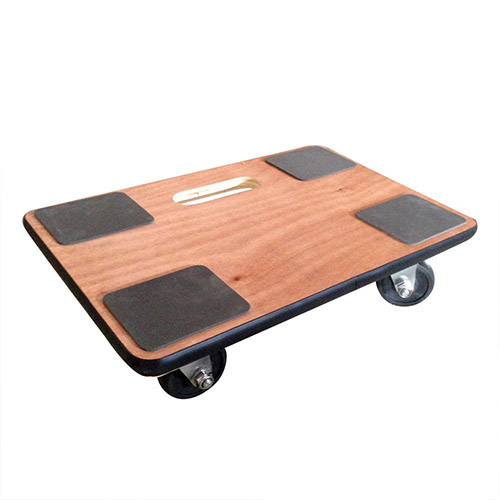
Plywood Material System
Engineering Properties
Plywood consists of cross-laminated layers.
Avantages
- Higher tensile strength
- Better impact resistance
- Plus stable sous charge
Industry Use Case
Widely used in warehouse-grade moving dollies and commercial transport carts.
Hardwood Structural System
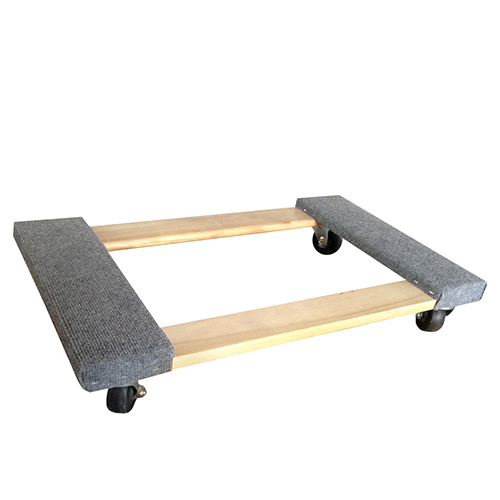
Premium Engineering Level
- Highest density
- Maximum durability
- Long lifecycle performance
Application Focus
- Industrial logistics
- Heavy furniture transport
- High-load commercial use
Caster Wheel Technology in Wooden Serving Cart on Wheels
Swivel Caster Mechanics
Rotation Principle
Swivel casters use a 360° rotating mounting plate allowing:
- Directional flexibility
- Tight-space maneuverability
Wheel Diameter Impact Analysis
| Taille des roues | Performance Effect | Application |
|---|---|---|
| 2 inch | Lightweight movement | Indoor furniture |
| 3 inch | Balanced stability | Standard carts |
| 4+ inch | High load mobility | Industrial use |
Bearing System Importance
High-quality bearings reduce:
- résistance au roulement
- niveau sonore
- Wear and tear
International Standards for Wooden Serving Cart on Wheels
BIFMA Standards (Office Furniture Safety)
Focus on:
- Structural stability
- Load testing
- Material durability
EN 12520 Furniture Standard
Covers:
- Safety requirements
- Strength testing
- Durability cycles
ISO 7170 Furniture Strength Test
Includes:
- Static load testing
- Impact resistance
- Fatigue durability cycles
Real-World Application Cases
Case 1: Restaurant Service Optimization
A mid-sized restaurant chain introduced wooden serving carts to improve food delivery efficiency.
Results:
- 28% faster table service
- Reduced staff fatigue
- Improved customer experience
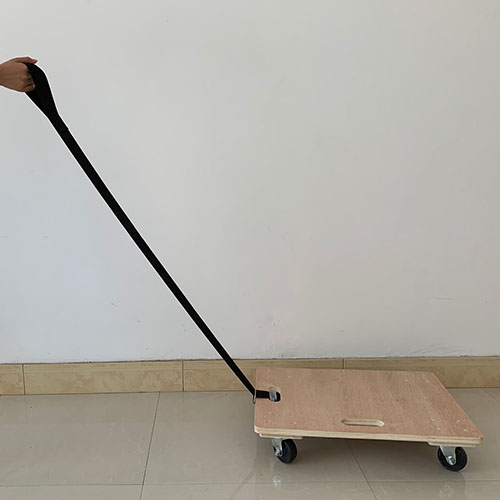
Case 2: Warehouse Micro Transport System
A logistics warehouse used heavy-duty plywood carts for internal movement.
Outcome:
- Reduced forklift dependency
- Lower operational cost
- Improved small-item handling efficiency
Case 3: Hotel Room Service Upgrade
Hotels adopted wooden carts for aesthetic + functional use.
Benefits:
- Luxury appearance
- Silent movement
- Better guest perception
Wooden Serving Cart on Wheels vs Industrial Dolly Systems
Functional Comparison Table
| Fonctionnalité | Wooden Serving Cart | Industrial Dolly |
| Esthétique | Haut | Faible |
| Capacité de charge | Medium–High | Très élevé |
| Mobilité | Excellent | Excellent |
| Design Use | Hospitality/Home | Industriel |
| Protection des sols | Very Good | Bien |
Load Capacity Engineering Analysis
Safe Load Design Principle
Engineers typically design carts using:
- Safety factor of 1.5–2.5x
- Even load distribution model
- Caster weight balance ratio
Example Calculation Concept
If a cart is rated at 150 kg:
- Safe operating load ≈ 100–120 kg recommended
- Avoid dynamic overload during movement
Market Trends in Wooden Serving Cart on Wheels Industry
Trend 1: Smart Mobility Furniture
Future carts may include:
- Smart braking systems
- Sensor-based load detection
- Anti-slip adaptive surfaces
Trend 2: Hybrid Material Design
Manufacturers are combining:
- Wood + aluminum frames
- Reinforced composite panels
Trend 3: Hospitality Automation Integration
Hotels and restaurants are integrating carts into:
- Automated delivery systems
- Service robotics workflows
Cost Analysis and ROI Consideration
Cost Structure Breakdown
- Raw material cost
- Caster system quality
- Manufacturing precision
- Surface finishing
ROI in Commercial Use
Example
A restaurant investing in carts may reduce:
- Staff workload
- Service time
- Operational inefficiency
Resulting in indirect cost savings.
Safety Considerations for Wooden Serving Cart on Wheels
Stability Control Factors
- Center of gravity height
- Wheel spacing width
- Load distribution symmetry
Anti-Slip Engineering
Most modern carts include:
- Rubber pads
- Carpeted surfaces
- Textured coatings
Maintenance and Lifecycle Optimization
Entretien des roues
- Clean debris regularly
- Lubricate bearings
- Replace worn casters early
Wood Surface Protection
- Avoid prolonged moisture exposure
- Use protective coatings
- Store in dry environments
Conclusion
Le wooden serving cart on wheels is evolving from a simple furniture item into a multifunctional mobility solution used across residential, commercial, and industrial environments.
With advancements in material engineering, caster technology, and modular design systems, these carts are becoming:
- Stronger
- Smarter
- More efficient
- More visually integrated into modern interiors
As industries continue prioritizing flexible workflows and ergonomic design, demand for high-performance wooden mobile carts will continue to grow globally.
FAQ
Qu'est-ce qu'un wooden serving cart on wheels utilisé pour ?
It is used for transporting food, equipment, and household or commercial items efficiently across different environments.
How much weight can a wooden serving cart on wheels hold?
Depending on material, load capacity ranges from 100 kg to over 1000 lbs in industrial models.
Which material is best: MDF, plywood, or hardwood?
Plywood offers the best balance of strength and cost, while hardwood provides maximum durability.
Can it be used in restaurants safely?
Yes, it is widely used in hospitality environments due to its mobility and aesthetic design.
Are wooden carts better than metal carts?
Wooden carts offer better aesthetics and floor protection, while metal carts provide higher industrial durability.
How long does a wooden serving cart on wheels last?
With proper maintenance, lifespan can range from 3 to 10+ years depending on material quality.
Continuez la conversation !
Vous avez aimé cet article ? Rejoignez notre communauté pour plus d'informations sur le secteur, des discussions en temps réel et des actualités exclusives. Retrouvez-moi ici :
→ Facebook: Qingdao Kinkayo Industrie et Commerce Co., Ltd.
→ YouTube : Industrie et commerce de Kinkayo
Explorons ensemble l’innovation – connectez-vous maintenant !
 French
  English
  Japanese
  Spanish
  German