Table des matières
Introduction

Dans les secteurs de la logistique et de l'industrie d'aujourd'hui, qui évoluent à un rythme effréné, chariots personnalisés Les chariots jouent un rôle crucial dans l'amélioration de l'efficacité, la sécurité et l'optimisation de l'espace. Que ce soit dans les entrepôts, les entreprises de déménagement ou les usines, disposer d'un chariot adapté à vos besoins précis peut réduire considérablement la pénibilité du travail et accroître la productivité.
Que sont Chariots personnalisés?
Les chariots sur mesure sont des chariots de transport spécialement conçus pour s'adapter à des environnements, des types de charges et des flux de travail spécifiques. Contrairement aux chariots standard, ils sont créés pour résoudre des problèmes particuliers — tels que le levage de charges lourdes, les allées étroites ou la manutention de matériaux spéciaux — rendant ainsi les opérations plus fluides et plus sûres.
Concept : Le rôle de la personnalisation dans la manutention
La personnalisation permet aux entreprises d'adapter la conception des chariots à leurs besoins opérationnels. Elle englobe tout, du réglage des dimensions et des matériaux à l'ajout de roues, de poignées ou d'étagères spéciales.
Types de Chariots personnalisés
Chariots de quai

Chariots à plateau, idéaux pour le transport d'articles volumineux ou lourds dans les entrepôts et les centres de distribution.
Ils offrent stabilité, facilité de mouvement et la capacité de supporter des charges importantes en toute sécurité.
Chariots à cage

Dotés de parois latérales en filet, les chariots à cage empêchent les marchandises de tomber.
Ils sont parfaits pour déplacer plusieurs petits objets ou objets fragiles à la fois.
Chariots pliables ou escamotables

Parfaits pour les entreprises de déménagement ou les petits espaces de stockage, ces chariots se replient lorsqu'ils ne sont pas utilisés.
Ils permettent un gain de place tout en conservant durabilité et performance.
Chariots industriels robustes

Ces structures sont conçues avec des cadres renforcés pour transporter des machines, des outils ou des matériaux de construction.
Ils sont conçus pour les environnements exigeants où la robustesse et la fiabilité sont essentielles.
Chariots à plusieurs étagères
Courants sur les chaînes d'emballage ou de montage, ces chariots permettent aux ouvriers de transporter différents articles en un seul voyage.
Ils permettent d'organiser efficacement les outils, les matériaux et les composants.
Chariots sur mesure spécialisés
Utilisé dans des secteurs de niche tels que la santé, l'hôtellerie ou l'électronique.
Ils peuvent être dotés de revêtements antimicrobiens, de roues antistatiques ou de compartiments réglables.
Éléments clés de conception dans la fabrication de chariots sur mesure
Capacité de charge
La première étape de la conception d'un chariot consiste à déterminer le poids qu'il doit transporter.
La surcharge peut causer des dommages et des risques pour la sécurité ; chaque chariot doit donc être dimensionné en fonction de son utilisation prévue.
Sélection des matériaux
Choisir le bon matériau est essentiel pour construire des édifices durables et efficaces. chariots personnalisés. Chaque matériau offre des avantages uniques en fonction de l'environnement de travail et des exigences de charge.
Acier
Robuste et durable, idéal pour les applications industrielles exigeantes.
Aluminium
Léger, résistant à la corrosion et facile à manipuler – convient aux entrepôts ou aux opérations logistiques.
Plastique / Polypropylène
Résistant aux produits chimiques et à l'humidité, souvent utilisé dans les industries alimentaires ou pharmaceutiques.
Acier inoxydable
Hygiénique et facile à nettoyer, idéal pour les environnements de soins de santé ou de restauration.
Bois
Écologique, robuste et esthétique — convient à la vente au détail, à l'exposition ou à une utilisation légère en entrepôt où une finition naturelle est privilégiée.
Conception des roues et des roulettes
Différents types de sols nécessitent différents matériaux de roues :
- CaoutchoucAmortisseurs pour sols irréguliers.
- Polyuréthane (PU): Doux et silencieux sur les surfaces intérieures.
- Roues pneumatiquesIdéal pour les terrains extérieurs ou accidentés.
Poignée et ergonomie
Les poignées ergonomiques, la hauteur réglable et les revêtements antidérapants réduisent la fatigue de l'opérateur et améliorent la sécurité.
Fonctionnalités personnalisées
- Systèmes de freinage
- modèles pliables
- Plusieurs niveaux d'étagères
- Personnalisation de la marque et des couleurs
Applications des Chariots personnalisés
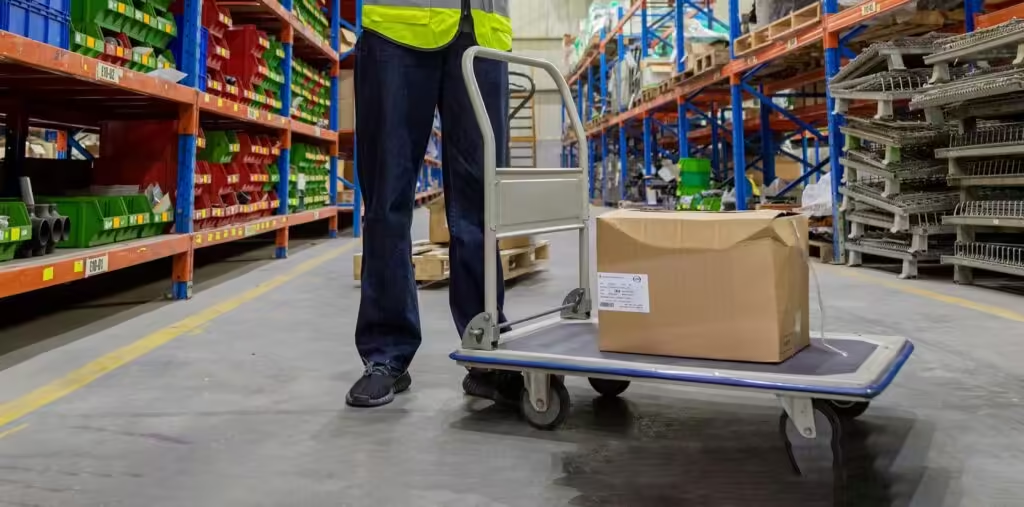
Entreposage et distribution
Utilisé pour la préparation des commandes, le transport des produits et le réapprovisionnement des stocks.
Ils contribuent à rationaliser les opérations d'entrepôt et à minimiser les temps d'arrêt.
Entreprises de déménagement
Outils indispensables pour déménager meubles, cartons et objets fragiles en toute sécurité.
Les modèles sur mesure permettent des cadres réglables et des bases absorbant les chocs.
Ateliers de fabrication
Utilisé pour transporter les matières premières ou les produits finis entre les chaînes de production.
Elles réduisent la manutention manuelle et augmentent l'efficacité opérationnelle.
Commerce de détail et supermarchés
Assurer le réapprovisionnement des rayons, le transport en magasin et la mise en place des présentoirs.
Les modèles compacts améliorent la mobilité dans les allées étroites.
Santé et hôtellerie
Utilisé pour le matériel médical, le linge de maison ou les fournitures de restauration.
L'acier inoxydable ou les matériaux antimicrobiens garantissent l'hygiène et la sécurité.
Avantages de l'utilisation Chariots personnalisés
- Amélioration de l'efficacité des flux de travail
- Amélioration de la sécurité et de l'ergonomie des travailleurs
- Réduction des dommages causés aux produits pendant le transport
- Optimisation de l'espace et meilleure gestion du stockage
- Possibilité de personnalisation de la marque
Comment choisir le bon Chariot sur mesure
- Identifiez vos besoins opérationnels et vos contraintes d'espace.
- Déterminer le poids et les dimensions de la charge.
- Choisir les matériaux appropriés en fonction de l'environnement de travail.
- Évaluer l'ergonomie du volant et de la poignée.
- Pensez aux dispositifs de sécurité tels que les freins et les systèmes de retenue de charge.
Conseils d'entretien et de sécurité
Inspection régulière
Vérifiez chaque semaine le serrage des roulettes, des boulons et des articulations afin de déceler tout jeu ou usure.
Nettoyage
Maintenez les surfaces propres et sèches pour éviter la corrosion ou la contamination.
Lubrification
Lubrifiez régulièrement les pièces mobiles pour un fonctionnement optimal.
Remplacement
Remplacez immédiatement les roues, les roulements ou les poignées usés afin d'éviter les accidents.
Comparaison : Standard vs. Chariots personnalisés
| Fonctionnalité | Chariot standard | Chariot sur mesure |
|---|---|---|
| Conception | Taille et style génériques | Adapté aux besoins spécifiques |
| Durabilité | Modéré | Optimisé pour les charges lourdes ou spécifiques |
| Coût | Plus bas à l'avant | Retour sur investissement plus élevé au fil du temps |
| Ergonomie | Basique | Réglable et axé sur l'utilisateur |
| Image de marque | Aucun | Options de couleur et de logo personnalisées |
Résumé du concept :
Les chariots standard conviennent à un usage général, tandis que les chariots sur mesure offrent une efficacité et une sécurité à long terme en s'adaptant aux exigences opérationnelles spécifiques.
Tendances futures dans Chariot sur mesure Conception
Chariots intelligents
Intégration avec des capteurs IoT pour la détection, le suivi ou la surveillance du poids.
Matériaux durables
Utilisation de métaux recyclés et de polymères écologiques pour une production plus respectueuse de l'environnement.
Conception modulaire
Chariots avec éléments détachables et reconfigurables pour différentes tâches.
Conclusion
chariots personnalisés Ce sont bien plus que de simples outils de transport : ce sont des leviers d'efficacité qui améliorent le flux de travail, la sécurité et l'identité de marque.
Pour les entrepôts, les entreprises de déménagement et les usines, investir dans le chariot personnalisé adapté, c'est investir dans des opérations plus fluides et un succès à long terme.
FAQ
Quels sont les principaux avantages de l'utilisation chariots personnalisés?
Ils améliorent l'efficacité, garantissent la sécurité et sont conçus pour répondre aux besoins spécifiques des flux de travail dans les entrepôts ou les opérations de déménagement.
Les chariots sur mesure sont-ils plus chers que les standards?
Au départ, oui, mais ils permettent de réaliser des économies sur le long terme en réduisant les coûts de maintenance et en augmentant la productivité.
Quel matériau est le plus adapté aux chariots pour une utilisation en extérieur ou dans des zones humides ?
L'aluminium ou l'acier inoxydable sont idéaux en raison de leur résistance à la corrosion et de leur longue durée de vie.
Est-il possible de faire fabriquer un chariot capable de supporter des charges très lourdes ?
Oui. Les fabricants peuvent concevoir des châssis renforcés et des roues spécialisées pour supporter plusieurs tonnes en toute sécurité.
À quelle fréquence dois-je entretenir mes chariots d'entrepôt ?
Les contrôles de base doivent être effectués chaque semaine, et l'entretien complet tous les 3 à 6 mois.
Puis-je personnaliser le chariot avec les couleurs ou le logo de mon entreprise ?
Absolument ! De nombreux fabricants proposent le revêtement en poudre et le marquage de logos pour un rendu professionnel.
Quelle est la différence entre un entrepôt et chariots de déplacement?
Les chariots d'entrepôt sont conçus pour la durabilité et une grande capacité, tandis que les chariots de manutention privilégient la portabilité et la facilité d'utilisation.
Continuez la conversation !
Vous avez aimé cet article ? Rejoignez notre communauté pour plus d'informations sur le secteur, des discussions en temps réel et des actualités exclusives. Retrouvez-moi ici :
→ Facebook: Qingdao Kinkayo Industrie et Commerce Co., Ltd.
→ YouTube : Industrie et commerce de Kinkayo
Explorons ensemble l’innovation – connectez-vous maintenant !
 French
  English
  Japanese
  Spanish
  German