
Points clés de ce guide :
- Introduction complète aux pivots et aux fixations fixes roues de chariot à outils
- Avantages, inconvénients et meilleures applications de chaque type
- Configurations de roues hybrides pour des performances optimales
- Analyse des matériaux, de la capacité de charge et de la durabilité
- Conseils d'entretien et de dépannage
- Scénarios d'utilisation réels dans des ateliers, des garages et des environnements industriels
- Avis d'experts et recommandations du secteur
- FAQ répondant aux questions courantes et aux requêtes optimisées pour la recherche Google
- Tableaux comparatifs et spécifications techniques
Table des matières
Introduction

Chaque atelier, garage ou installation industrielle dépend des chariots à outils pour leur efficacité et leur mobilité. Mais de nombreux utilisateurs sous-estiment l'impact de roues de chariot à outils au quotidien. Les bonnes roues peuvent :
- Réduire la fatigue des opérateurs
- Prévenir les dommages au sol
- Assurer un déplacement plus fluide et plus sûr des outils lourds
- Augmentez la durée de vie et les performances de votre chariot.
Selon une enquête de 2025 menée par Recherche sur la mobilité industrielle, sur 65% des défaillances de chariots à outils dans les ateliers étaient dues à une mauvaise sélection des roues. Choisir entre roues pivotantes et roues fixes est une décision cruciale qui influe sur la sécurité, la maniabilité et la gestion de la charge. Ce guide explore en détail les spécificités de chaque type de roue, en s'appuyant sur des recommandations d'experts et des conseils pratiques.
Que sont Roues pour chariot à outils?
Définition et rôle
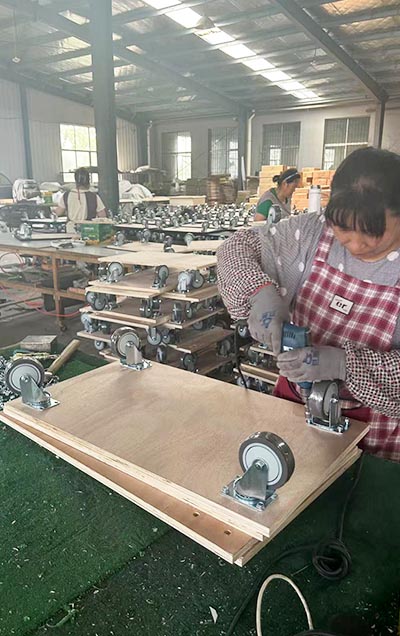
Les roues des chariots à outils sont les éléments roulants qui permettent aux chariots et aux diables de se déplacer efficacement sur différentes surfaces. Elles varient en matériau, en taille et en conception pour s'adapter à différentes applications :
- Roues pivotantes : rotation à 360° pour une grande agilité
- Roues fixes : déplacement avant/arrière pour un transport stable en ligne droite
Un choix judicieux garantit l'efficacité opérationnelle, réduit les temps d'arrêt et minimise les accidents du travail.
Matériaux courants
| Matériel | Caractéristiques | Cas d'utilisation idéaux |
|---|---|---|
| Caoutchouc | Doux, réduit le bruit, protection du sol | Ateliers, garages à domicile |
| polyuréthane | Durable, capacité de charge élevée, résistant aux produits chimiques | Chariots industriels, outils lourds |
| Nylon | Dur, faible résistance au roulement | Sols lisses, chariots légers |
| Métal/Acier | Support extrêmement durable et résistant aux charges élevées | Ateliers de production, chariots robustes |
Roues pivotantes pour chariot à outils
Conception et design
Pivot roues de chariot à outils Conçus pour pivoter autour d'un axe vertical, ces chariots offrent une maniabilité exceptionnelle grâce à une rotation à 360°. Ils sont idéaux pour les ateliers exigus, les sols industriels encombrés et les zones nécessitant des changements de direction fréquents.
Contrairement aux roues fixes, les roues pivotantes permettent des mouvements diagonaux et latéraux, ce qui facilite le passage des virages et le franchissement d'obstacles sans avoir à soulever ni à repositionner le chariot. Elles sont souvent équipées de roulements ou de roulettes lubrifiées à la graisse pour assurer une rotation fluide sous des charges moyennes.
Avis d'expert :
Mark Thompson, consultant en mobilité industrielle : “ Dans les ateliers compacts, les roues pivotantes réduisent la fatigue de l'opérateur de plus de 30% car moins d'efforts sont nécessaires pour naviguer dans les coins et autour des obstacles. ”
Avantages
- Maniabilité exceptionnelle dans les espaces confinés
Les roues pivotantes permettent aux chariots de tourner sur eux-mêmes, autorisant des virages à 180° ou 360° même dans les espaces restreints. C'est un atout essentiel pour les ateliers de maintenance, les garages automobiles et les chaînes de montage où l'espace est limité. - Navigation aisée autour des obstacles
Ces roues peuvent glisser autour des machines, des établis ou d'autres obstacles sans nécessiter de levage manuel ni de repositionnement du chariot, réduisant ainsi les temps d'arrêt et les accidents du travail. - Adapté aux environnements d'atelier dynamiques
Les roues pivotantes sont idéales pour les situations où les chariots se déplacent fréquemment entre les postes de travail, comme dans les zones de distribution d'outils ou les chaînes de production à cadence rapide. - Orientation de charge polyvalente
De nombreuses roues pivotantes sont équipées de mécanismes de verrouillage ou de freins qui permettent de bloquer la roue en position droite sous de lourdes charges, offrant ainsi un compromis idéal entre mobilité et stabilité.
Inconvénients
- Stabilité réduite sous charges très lourdes
Lors du transport d'équipements ou de matériaux extrêmement lourds, les roues pivotantes peuvent vaciller ou dériver si elles ne sont pas correctement équilibrées avec les roues fixes, ce qui peut entraîner une usure irrégulière ou des risques de basculement. - Peut déraper si non associé à des roues fixes
Sans configuration hybride, les roues pivotantes peuvent réduire la maniabilité du chariot sur les sols inclinés ou irréguliers. Une disposition adéquate, généralement avec des roues pivotantes à l'avant et des roues fixes à l'arrière, résout ce problème. - Coût légèrement supérieur à celui des roues fixes
Les roues pivotantes de haute qualité intègrent souvent des roulements à billes, des bandes de roulement en polyuréthane et des roulettes robustes, ce qui les rend plus chères que les simples roues fixes.
Meilleures applications
- Chariots à outils de chaîne de montage en milieu industriel
Les roues pivotantes permettent un repositionnement rapide des chariots le long des lignes de production sans interrompre les opérations, réduisant ainsi les interruptions de flux de travail. - Petits chariots d'atelier pour les amateurs de bricolage
Les roulettes pivotantes compactes permettent aux utilisateurs de se déplacer facilement autour des établis et des étagères étroites, ce qui les rend idéales pour les ateliers à domicile ou les espaces de création. - Stations d'outillage mobiles dans les zones de maintenance
Dans les installations où les techniciens déplacent fréquemment l'équipement ou les outils, les roues pivotantes assurent un déplacement fluide entre les points de service.
Conseil de pro : Utilisez des roulettes pivotantes en polyuréthane ou en caoutchouc pour les environnements bruyants ou les sols sensibles aux rayures. Les roulettes pivotantes en nylon ou en métal sont plus adaptées aux sols lisses de qualité industrielle où la durabilité et la résistance à la charge sont primordiales.
Roues fixes pour chariot à outils
Conception et design
Fixé roues de chariot à outils Conçus pour se déplacer uniquement en avant ou en arrière, ces chariots privilégient la stabilité en ligne droite, la capacité de charge et le contrôle, ce qui les rend indispensables pour les chariots à charges lourdes.
Les roues fixes supportent souvent des charges plus importantes car leur axe est aligné avec le sens de déplacement, ce qui minimise la pression latérale. Elles sont fréquemment associées à des roues pivotantes pour créer une configuration hybride qui allie mobilité et stabilité.
Avantages
- Haute stabilité pour les charges lourdes
Les roues fixes assurent une trajectoire rectiligne et sécurisée aux chariots transportant un poids important, réduisant ainsi le risque de basculement et l'usure des roues. - Mouvement contrôlé en ligne droite
Ces roues empêchent le dérapage, facilitant ainsi la manœuvre des longs chariots dans les allées ou le long des convoyeurs. - Coût réduit et conception simple
Les roues fixes sont mécaniquement plus simples, ce qui réduit les coûts de production et les besoins de maintenance par rapport aux roues pivotantes. - Résistant pour un usage industriel
De nombreuses roues fixes sont fabriquées en polyuréthane, en nylon ou en acier, offrant une haute résistance à l'abrasion, aux produits chimiques et aux sols rugueux.
Inconvénients
- Manœuvrabilité limitée
Les roues fixes ne permettent ni de tourner ni de pivoter. Dans les espaces restreints, il faut soulever ou repositionner les chariots pour changer de direction, ce qui peut ralentir le flux de travail. - Déconseillé dans les espaces restreints
Dans les ateliers ou les garages à l'agencement exigu, les roues fixes rendent la navigation difficile. - Rotation à 360° impossible
Sans mécanisme de pivotement, le chariot est limité aux trajectoires rectilignes, ce qui restreint sa flexibilité dans les environnements dynamiques.
Meilleures applications
- Allées longues et droites dans les entrepôts
Les roues fixes assurent la précision du transport d'objets lourds sur des voies ininterrompues, ce qui est idéal pour les systèmes de stockage et de récupération. - Chariots utilitaires robustes
Les chariots utilisés pour les pièces de machines volumineuses ou les outils industriels bénéficient de la stabilité des roues fixes, minimisant ainsi les risques de basculement. - Chariots d'entretien transportant du matériel lourd
Les roues fixes permettent de garantir la sécurité des outils d'entretien lourds ou des équipements électriques pendant leur transport.
Conseil de pro : Combinez des roues fixes avec 2 roues pivotantes à l'avant pour créer une configuration hybride qui maximise à la fois la stabilité et la maniabilité.
Configurations de roues hybrides
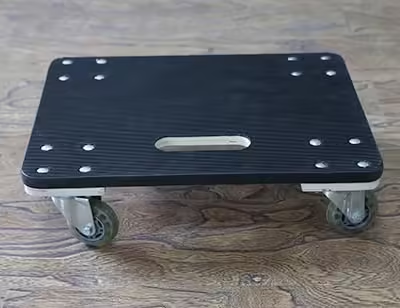
La plupart des chariots à outils professionnels utilisent une combinaison de roues pivotantes et de roues fixes :
- 2 roues fixes + 2 roues pivotantes: équilibre entre stabilité et agilité
- 4 roues pivotantes: maximise la maniabilité, mais nécessite une répartition de charge soignée
- 4 roues fixes: stabilité maximale, maniabilité limitée
Avis d'expert :
Mike Johnson, concepteur d'ateliers : “ Une configuration hybride est idéale pour presque tous les chariots professionnels. Les roues pivotantes facilitent la navigation, les roues fixes supportent les charges lourdes. ”
Capacité de charge et durabilité
Comment calculer la charge par roue
Formule:Charge par roue = Nombre de roues / Poids total du chariot + charge
- Petites charrettes : 50 à 150 kg par roue
- Chariots industriels moyens : 150 à 300 kg par roue
- Chariots robustes : 300 à 500 kg par roue
Durabilité des matériaux
| Matériel | Durée de vie (heures) | Résistance à l'usure | Notes |
|---|---|---|---|
| Caoutchouc | 2000–3000 | Modéré | Souple, peut être porté sur des sols rugueux |
| polyuréthane | 4000–6000 | Haut | Résistant aux produits chimiques et à l'abrasion |
| Nylon | 3000–5000 | Haut | Convient uniquement aux sols lisses |
| Métal/Acier | 8000+ | Très élevé | Durable, plus bruyant, plus lourd |
Considérations de surface
- Sols en béton ou industriels : Roues en polyuréthane ou en nylon
- Parquet ou carrelage : Les roues en caoutchouc évitent les rayures et le bruit
- Utilisation en extérieur : polyuréthane ou caoutchouc résistant aux intempéries
Maintenance et dépannage
Nettoyage
- Enlever régulièrement les débris
- Vérifiez la présence de vis coincées ou de copeaux de métal.
Lubrification
- Roues pivotantes : graisser les roulements tous les 2 à 3 mois
- Roues fixes : lubrification minimale nécessaire
Inspection
- Vérifiez que les bandes de roulement ne présentent pas de fissures, d'usure irrégulière ou de déformation.
- Remplacez rapidement les roues usées pour éviter les accidents.
Applications pratiques et études de cas
Exemple d'atelier
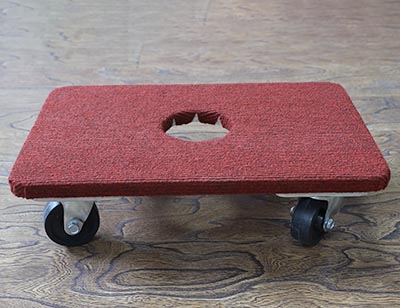
- Chariot hybride avec 2 roues pivotantes et 2 roues fixes
- Carries 200 kg of tools
- Reduced operator fatigue by 40% according to internal study
Chariot utilitaire de garage
- 4-wheel swivel setup for engine maintenance
- Smooth navigation in tight spaces
- Polyurethane wheels prevent concrete damage
chaîne de montage industrielle
- Heavy-duty fixed wheels in front, swivel wheels at rear
- Handles 500 kg load
- Maintains straight-line efficiency while providing cornering flexibility
Comparison Table: Swivel vs Fixed Roues pour chariot à outils
| Fonctionnalité | Swivel Wheels | Fixed Wheels | Cas d'utilisation optimale |
|---|---|---|---|
| Mobilité | 360° rotation | Forward/backward only | Tight spaces vs straight-line |
| Stability | Modéré | Haut | Heavy loads, long aisles |
| Capacité de charge | Medium to heavy | Lourd | Workshops vs industrial carts |
| Protection des sols | Modéré | Haut | Sensitive surfaces |
| Entretien | Modéré | Faible | Lubricate bearings regularly |
| Coût | Higher | Lower | Budget vs premium setup |
Avis d'experts
Sara Kim, Industrial Engineer:
“Selecting the right roues de chariot à outils is about more than mobility. Floor type, load, and material all affect long-term durability and safety.”
James Peterson, Workshop Consultant:
“Hybrid configurations are optimal. Swivel wheels in front for maneuvering, fixed wheels in rear for stability, especially under heavy loads.”
Réflexions finales
Choisir le droit roues de chariot à outils directly impacts:
- Safety and ergonomics
- Load handling efficiency
- Longevity of your cart
- Maintenance requirements
Invest in high-quality wheels, select the right material, and adopt a hybrid configuration for optimal performance. Proper maintenance and inspection will ensure your carts remain reliable and efficient for years to come.
FAQ
Q1: Can I mix different wheel materials on one cart?
A: Yes, but weight distribution and floor type must be considered to prevent uneven wear.
Q2: How do I know when to replace roues de chariot à outils?
A: Worn tread, wobbling, or difficulty steering are clear signs.
Q3: Are all swivel wheels self-locking?
A: Not always. Some industrial swivel wheels include a locking mechanism to stabilize carts.
Q4: Can tool cart wheels be used outdoors?
A: Yes, select weather-resistant polyurethane or rubber for durability.
Q5: How do I maximize lifespan of my tool cart wheels?
A: Regular cleaning, lubrication, and load compliance will extend life significantly.
Continuez la conversation !
Vous avez aimé cet article ? Rejoignez notre communauté pour plus d'informations sur le secteur, des discussions en temps réel et des actualités exclusives. Retrouvez-moi ici :
→ Facebook: Qingdao Kinkayo Industrie et Commerce Co., Ltd.
→ YouTube : Industrie et commerce de Kinkayo
Explorons ensemble l’innovation – connectez-vous maintenant !
 French
  English
  Japanese
  Spanish
  German