

Before choosing a small wood wagon for warehouse handling, buyers should understand how its load capacity is determined and how real working conditions can reduce the usable capacity.
Key points covered in this guide:
- What load capacity actually means
- Which components determine the weight limit
- How wheels, deck material, and frame design affect performance
- Why load distribution matters
- Wood wagon versus steel cart comparison
- How to select the right capacity for warehouse work
- Common questions warehouse buyers ask before ordering
Table des matières
What Does Small Wood Wagon Load Capacity Mean?

Load capacity is the maximum weight that a wagon is designed to carry under specified operating conditions. It normally includes the goods placed on the platform but does not always account for additional forces caused by impacts, ramps, damaged floors, or sudden stops.
Buyers should treat the rated capacity as a maximum limit rather than a recommended everyday working load. The manufacturer’s published rating and operating instructions should always take priority.
Rated Capacity
Rated capacity is established according to the strength of the deck, frame, fasteners, axles, and casters. Because these parts function as one system, the practical rating cannot exceed the limit of its weakest component.
Working Load
The working load is the weight carried during normal daily operations. A warehouse may choose to operate below the maximum rating to accommodate repeated use, uneven floors, turning forces, and variations in load placement.
Static Load
A static load remains on the wagon while it is stationary. The platform may support a higher stationary weight than it can safely transport, but this does not mean the cart should be moved at that weight.
Dynamic Load
A dynamic load is carried while the wagon is moving. Turning, braking, floor joints, and impacts produce additional forces, making dynamic capacity more relevant to warehouse purchasing decisions.
What Determines Small Wood Wagon Load Capacity?
A load rating is not determined by the wooden platform alone. The complete construction must transfer weight safely from the deck through the frame and down to all four wheels.
Wood Deck Material
Hardwood generally provides better resistance to concentrated loads, edge wear, and repeated impacts than low-density wood. Deck thickness, grain direction, moisture content, and the position of joints also influence structural performance.
A solid deck can provide continuous support for cartons and equipment. An open or slatted platform may reduce wagon weight, but goods must be positioned so that pressure is not concentrated between unsupported areas.
Dimensions de la plateforme
A larger platform offers more loading space, but additional surface area does not automatically create a higher capacity. If the frame, cross supports, or deck thickness remain unchanged, a longer platform may flex more under the same concentrated load.
Warehouse buyers should match deck dimensions to both the goods and the required turning radius. A compact platform is often easier to control in narrow aisles.
Frame and Cross Supports
The frame transfers the weight from the wooden deck to the caster mounting points. Steel reinforcement, cross-member spacing, joint design, and fastener quality all contribute to the wagon’s structural strength.
For frequent industrial use, examine the underside rather than judging capacity only by the visible platform. A well-supported deck is less likely to bend or loosen after repeated loading cycles.
Caster Capacity
Caster ratings are a critical part of the total calculation. However, multiplying the rating of one caster by four may produce an unrealistic figure because warehouse floors rarely distribute the load perfectly across all four wheels.
A conservative selection method assumes that only three casters may carry most of the load when the wagon crosses an uneven surface:
Estimated caster requirement per wheel = (cargo weight + wagon weight) ÷ 3
This formula is a selection guideline, not a replacement for the manufacturer’s tested wagon rating.
Axles, Bearings, and Mounting Hardware
Axles and bearings influence rolling resistance as well as capacity. Weak mounting plates, loose bolts, or undersized fasteners can limit the system even when the deck and wheels appear strong.
For high-frequency warehouse movement, sealed or protected bearings may help maintain consistent rolling performance in dusty environments.
Typical Capacity Classes for Warehouse Selection

The following table provides general purchasing categories rather than universal product ratings. Always verify the exact specification with the supplier before ordering.
| Capacity class | Typical warehouse tasks | Common load examples | Main selection concern |
|---|---|---|---|
| Travaux légers | Short, occasional transfers | Small cartons, tools, samples | Compact size and easy storage |
| Usage moyen | Regular stock movement | Packed goods, components, containers | Wheel durability and deck support |
| robuste | Frequent industrial handling | Machinery parts and dense materials | Reinforced frame and caster rating |
| Custom capacity | Specialized workflows | Oversized or unusually shaped loads | Load testing and engineered design |
A heavier rating is not automatically the best choice. Higher-capacity models may be larger, more expensive, and harder to steer in tight storage areas.
How Should Weight Be Distributed?
Load distribution can be as important as total weight. A wagon carrying an evenly spread load will generally be more stable than one carrying the same weight at a single point.
Keep Heavy Items Near the Center
Place the heaviest goods near the center of the platform and keep them as low as possible. This reduces deck stress and helps prevent the wagon from tipping while turning.
Avoid One-Sided Loading
When most of the weight is positioned over one edge, individual casters and mounting points may be overloaded. Uneven loading also makes the wagon harder to steer and control.
Secure Unstable Goods
Round, tall, or irregular products should be restrained before movement. Side rails, straps, anti-slip surfaces, or custom fixtures may be needed even when the cargo remains within the stated weight limit.
Consider Visibility
Do not stack cartons so high that the operator cannot see the travel path. OSHA advises keeping cart loads below eye level so workers can see around the materials without leaning sideways. More guidance is available in OSHA’s resource on pushing, pulling, and carrying materials.
Does Floor Condition Change Usable Capacity?
Yes. A wagon that moves easily across a smooth warehouse floor may require considerably more force on damaged concrete, thresholds, ramps, or outdoor surfaces.
Smooth Indoor Floors
Polyurethane or hard rubber casters are commonly considered for smooth warehouse floors. The final choice should reflect noise requirements, floor protection, rolling resistance, and expected load.
Rough or Uneven Floors
Larger wheels usually pass over gaps and small obstructions more easily. On rough surfaces, pneumatic or resilient wheels may improve shock absorption, although maintenance requirements must also be considered.
Ramps and Slopes
An incline increases the force needed to start and control a loaded wagon. A brake, suitable handle, reduced load, or powered handling solution may be necessary.
The Canadian Centre for Occupational Health and Safety explains that wheel size, floor condition, ramps, aisle width, cart stability, and travel distance all affect how safely a handcart can be moved. Its handcart ergonomics guidance is useful when evaluating warehouse conditions.
Small Wood Wagon vs Steel Platform Cart
Both options can serve warehouse material-handling applications, but their advantages differ.
| Comparison factor | Small wood wagon | Steel platform cart |
|---|---|---|
| Platform surface | Naturally firm and less likely to mark some cargo | Durable but may require a mat for delicate goods |
| Wagon weight | Can be relatively easy to handle | Often heavier depending on construction |
| Noise and vibration | Wood may help absorb minor vibration | Metal can transmit more vibration |
| Moisture resistance | Requires suitable treatment and storage | Coated steel offers better moisture resistance |
| Repair options | Some wooden parts may be replaceable | Damaged structural parts may require welding |
| Best use | Cartons, furniture, tools, and general goods | Dense industrial loads and harsh environments |
UN small wood wagon is often suitable when buyers need a compact, four-wheel flatbed for indoor stock movement. A steel cart may be preferable for wet environments, sharp materials, or demanding industrial loads.
Buyers can compare EaseMovo’s wagons and trolleys with its range of hardwood dollies before deciding which platform style fits their workflow.
How to Choose the Right Small Wood Wagon
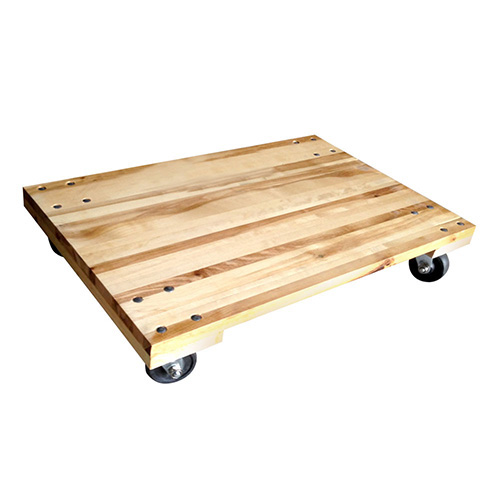
Capacity selection should begin with the heaviest real load, not the average package handled during a normal shift.
Step 1: Identify the Maximum Cargo Weight
List the heaviest cartons, components, or equipment that employees need to move. Include packaging, containers, fixtures, and any removable sides in the total calculation.
Step 2: Study the Travel Route
Measure aisle widths, door openings, elevators, ramps, thresholds, and turning areas. A high-capacity wagon offers little operational value if it cannot move safely through the warehouse.
Step 3: Consider Movement Frequency
A cart used several times per month has different durability requirements from one used throughout every shift. Frequent operation makes caster quality, bearing performance, fastener retention, and deck wear more important.
Step 4: Evaluate Load Shape
Long, tall, fragile, or concentrated loads may require more than a standard flat platform. Side panels, carpeted ends, non-slip pads, brakes, or load-specific supports can improve control.
Step 5: Request Verified Specifications
Ask the supplier for:
- Rated dynamic load capacity
- Platform dimensions and deck thickness
- Wagon weight
- Wheel material and diameter
- Individual caster rating
- Frame and cross-support construction
- Brake and steering options
- Recommended floor conditions
- Inspection or test information
- Replacement wheel availability
For non-standard dimensions, surfaces, wheel configurations, or cargo restraints, buyers can discuss an OEM or custom material-handling solution with EaseMovo.
Common Capacity Selection Mistakes
Buying Only by the Highest Rating
A larger rating does not guarantee better warehouse performance. Platform size, maneuverability, wheel type, handle design, and floor conditions must also suit the task.
Ignoring the Wagon’s Own Weight
Caster calculations should include both cargo weight and the weight of the cart. Ignoring the empty wagon weight reduces the true safety margin.
Using Static Capacity for Moving Loads
A platform may hold a heavy object while stationary but become unstable once it crosses a floor joint. Warehouse buyers need a capacity intended for dynamic movement.
Assuming Every Floor Is Level
Small changes in floor height can shift most of the load onto three wheels. Selecting casters without considering uneven surfaces can lead to premature wear or mounting failure.
Inspection and Safe Operation
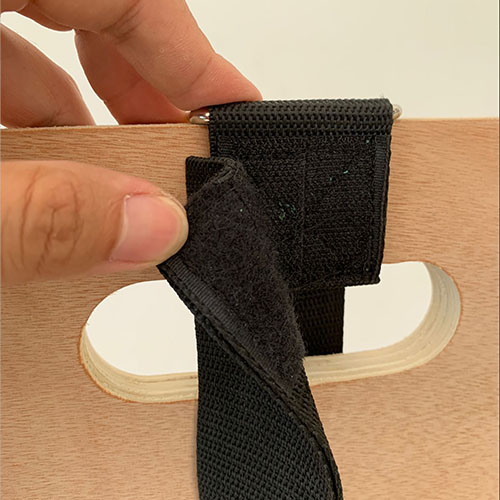
A capacity rating remains meaningful only when the equipment is properly maintained.
Before Each Use
Check the deck for cracks, moisture damage, loose fasteners, and excessive flexing. Inspect the casters for flat spots, trapped debris, wobbling, and loose mounting bolts.
During Operation
Push the wagon when practical, maintain a clear view, and move at a controlled walking speed. Avoid sharp turns, sudden stops, and impacts with thresholds while fully loaded.
Regular Maintenance
Tighten hardware according to the supplier’s instructions and replace damaged wheels with compatible components. Changing wheel size or caster type without technical confirmation may alter stability and capacity.
Final Buying Checklist
A suitable small wood wagon must do more than support the required weight. It should remain stable, steer predictably, fit the warehouse route, protect the cargo, and require reasonable pushing force during repeated use.
Before placing an order, confirm the dynamic load rating, deck construction, caster specification, floor conditions, load distribution, and maintenance requirements. To compare available configurations, browse EaseMovo’s material-handling products ou contact the team for model recommendations and customized options.
FAQ
How much weight can a small wood wagon actually carry?
There is no single universal figure. Capacity depends on the deck, frame, casters, axles, hardware, and operating surface, so buyers should use the tested rating supplied for the specific model.
Can I calculate capacity by adding all four caster ratings?
That calculation may overestimate usable capacity because an uneven floor can place most of the weight on only three wheels. Use the manufacturer’s complete wagon rating and ask whether it covers dynamic warehouse operation.
Is a hardwood wagon stronger than a softwood wagon?
Hardwood can provide better resistance to wear and concentrated pressure, but wood species alone does not determine capacity. Deck thickness, frame reinforcement, joints, fasteners, and caster mounting are equally important.
What capacity should I choose for a 200 kg warehouse load?
Choose a model whose verified dynamic rating exceeds the complete loaded weight under your actual floor and route conditions. Ask the manufacturer to confirm suitability instead of selecting solely from a generic capacity chart.
Will larger wheels increase the load capacity?
Larger wheels can improve movement over gaps and uneven floors, but they do not automatically strengthen the deck, frame, bearings, or mounting plates. Every component must be compatible with the intended load.
Why is my loaded wagon difficult to push even though it is not overloaded?
Common causes include small or damaged wheels, unsuitable tread material, poor bearings, uneven floors, debris, ramps, and incorrect load distribution. CCOHS also notes that cart design and workplace conditions affect the force required to move a load.
Should a warehouse wagon have brakes?
Brakes are valuable where carts are parked with cargo or used near slopes, loading areas, and busy work zones. The correct brake design depends on the wheel arrangement and operating environment.
Can a small wood wagon be customized for unusual cargo?
Yes. Platform dimensions, wheel materials, handles, side panels, protective surfaces, and fixtures may be customized. The supplier should review the load’s weight, shape, center of gravity, travel route, and usage frequency before confirming the design.
Continuez la conversation !
Vous avez aimé cet article ? Rejoignez notre communauté pour plus d'informations sur le secteur, des discussions en temps réel et des actualités exclusives. Retrouvez-moi ici :
→ Facebook: Qingdao Kinkayo Industrie et Commerce Co., Ltd.
→ YouTube : Industrie et commerce de Kinkayo
Explorons ensemble l’innovation – connectez-vous maintenant !
 French
  English
  Japanese
  Spanish
  German