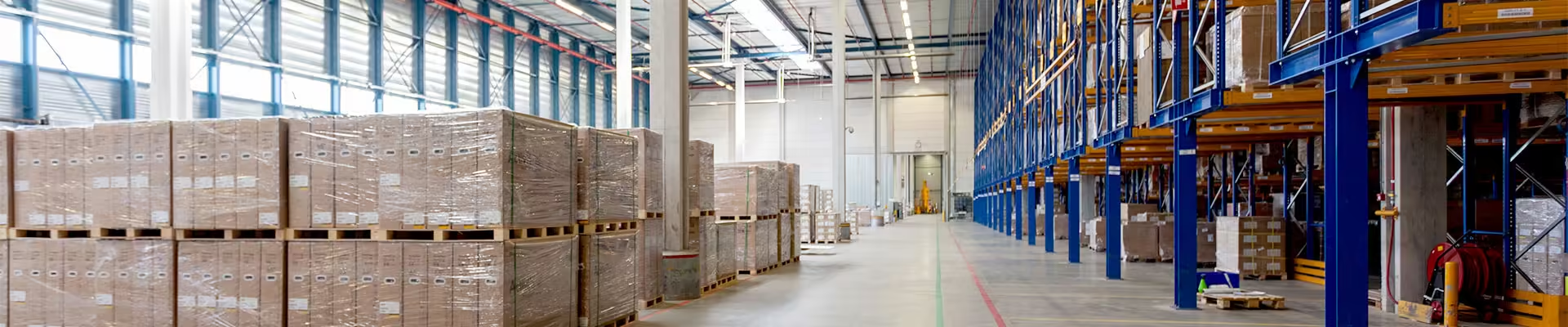
Les entrepôts efficaces ne se résument pas à l'espace, ils sont aussi une question de mouvement, organisation et vitesse. Dans le marché concurrentiel actuel, les entreprises perdent environ 15-20% de productivité en raison de processus de manutention inefficaces, selon une étude de 2022 du Warehousing Education and Research Council (WERC).
Équipements de manutention dans l'entrepôt Les systèmes de manutention, qu'il s'agisse de chariots ou de convoyeurs automatisés, jouent un rôle crucial dans la rationalisation des opérations. Ils réduisent les erreurs humaines, minimisent la pénibilité du travail et garantissent la livraison des marchandises dans les délais, ce qui est essentiel dans des secteurs comme le commerce électronique, la production industrielle et la logistique.
Investir dans les bons outils améliore non seulement l'efficacité, mais aussi la sécurité au travail. Les entrepôts modernes s'appuient de plus en plus sur ces outils. équipement intelligent qui combine conception ergonomique, durabilité et automatisation pour obtenir des gains de productivité mesurables.
Table des matières
Points clés de ce blog :
- Aperçu des équipements essentiels de manutention en entrepôt
- Principaux types d'équipements et leurs applications spécifiques
- Avantages en matière de sécurité et d'efficacité liés à l'utilisation d'outils de manutention modernes
- Comparaisons entre différentes solutions de manutention
- Conseils pour choisir le bon équipement pour votre entrepôt
- FAQ répondant aux questions fréquentes des utilisateurs
- Analyses sectorielles, études de cas et meilleures pratiques
Compréhension Équipements de manutention dans l'entrepôt

Qu'est-ce qu'un équipement de manutention ?
Les équipements de manutention (EM) désignent les machines, outils et dispositifs conçus pour déplacer, soulever, stocker et organiser les matériaux de manière sûre et efficace au sein d'un entrepôt ou d'une usine de production.
Il couvre les outils manuels comme les diables et les transpalettes, les solutions semi-automatisées comme les chariots motorisés et les systèmes entièrement automatisés tels que les convoyeurs et les palettiseurs robotisés.
Une mise en œuvre correcte des équipements de manutention réduit les coûts de main-d'œuvre, diminue les dommages aux produits et minimise les accidents du travail. Selon l'OSHA, la mauvaise manutention des matériaux est l'une des principales causes d'accidents du travail. principales causes des accidents d'entrepôt, en soulignant l'importance d'un équipement de qualité.
Pourquoi c'est important pour les opérations d'entrepôt
Un système de manutention efficace garantit un acheminement rapide des matériaux, de la réception au stockage puis à l'expédition. Il réduit les goulots d'étranglement et améliore… délais de traitement des commandes, ce qui est essentiel pour les entreprises qui opèrent sur les marchés de la livraison le jour même ou le lendemain.
expert du secteur John Williams, consultant en logistique chez Supply Chain Insights, note : “ Les entrepôts qui mettent en œuvre des équipements de manutention ergonomiques constatent un Réduction des lésions dues aux mouvements répétitifs (30%) parmi le personnel.”
Principaux types d'équipements de manutention en entrepôt
Chariots et diables de déménagement
Les chariots de manutention sont essentiels pour transport d'objets lourds comme les meubles, les appareils électroménagers et les équipements industriels. Des modèles tels que le FPWD7050 Chariot de déménagement antidérapant et le Chariot de déménagement en PVC RPWD7050 offrir des fonctionnalités adaptées à la sécurité et à la polyvalence.
Caractéristiques principales des poupées modernes :
- Surfaces antidérapantes ou revêtements en PVC pour éviter les glissements
- Roulettes pivotantes pour une maniabilité aisée
- Poignées intégrées pour réduire la tension
- Construction robuste en contreplaqué ou en acier
Chariots de déménagement antidérapants ou en PVC

Chariots antidérapants: Les surfaces à adhérence maximale empêchent les objets lourds de glisser, ce qui les rend adaptés aux entrepôts manipulant des formes irrégulières ou des matériaux en vrac.
Poupées en PVC: Protégez les sols délicats et les produits fragiles, idéal pour les entrepôts de commerce électronique et de vente au détail.
Analyse comparative : Les chariots antidérapants supportent une capacité de charge plus élevée (jusqu'à 500 kg), tandis que les chariots en PVC excellent dans les zones intérieures à fort trafic avec des sols sensibles.
Chariots à plate-forme pliante
Les camions à plateforme pliable, comme les TC1860, sont des solutions polyvalentes pour le déménagement charges de 150 kg à 1 tonne. Leur conception pliable permet un rangement facile, ce qui est particulièrement utile dans les entrepôts. espace limité.
Pneus pneumatiques vs pneus pleins
- Pneus pneumatiques : Absorption des chocs pour les surfaces irrégulières et l'utilisation en extérieur
- Pneus pleins : Durable et nécessitant peu d'entretien pour des sols intérieurs lisses
- Recommandation: Utilisez des pneus pneumatiques pour les environnements mixtes intérieur/extérieur et des pneus pleins pour les opérations fréquentes en intérieur.
Systèmes de convoyeurs
Les convoyeurs automatisent le déplacement des marchandises, réduisant ainsi la dépendance au travail manuel. Ils sont particulièrement efficaces pour centres de distribution à haut volume, où les gains d'efficacité de jusqu'à 50% ont été documentées.
- Convoyeurs à bande : Idéal pour les articles légers et de taille moyenne
- Convoyeurs à rouleaux : Manutentionner les produits et palettes plus lourds
- Convoyeurs modulaires : Prévoir une certaine flexibilité dans les modifications d'aménagement de l'entrepôt
Transpalettes et chariots élévateurs
- Transpalettes manuels : Solution économique pour le transport de palettes sur de courtes distances
- Transpalettes électriques : Réduire la fatigue physique et améliorer la vitesse
- Chariots élévateurs : Capable de lever des palettes jusqu'à une hauteur de 6 mètres, un atout essentiel pour les entrepôts à fort volume de stockage.
Étude de cas : Un entrepôt de commerce électronique de taille moyenne a réduit le temps de préparation des commandes de 40% après être passé de transpalettes manuels à des modèles électriques, démontrant ainsi les avantages concrets du choix d'un équipement de manutention approprié.
Systèmes de rayonnages et d'étagères de stockage
Bien que le mouvement soit essentiel, il doit être approprié. solutions de stockage Compléter l'efficacité de la manutention des matériaux.
- Rayonnages à palettes : Permet le stockage vertical, optimisant ainsi l'espace cubique de l'entrepôt.
- Rayonnages en porte-à-faux : Conçu pour les articles longs ou irréguliers tels que les tuyaux et le bois
- Étagères mobiles : Permet une reconfiguration flexible, idéale pour les stocks saisonniers ou à rotation rapide.
Avantages en matière de sécurité et d'efficacité
Réduire les accidents du travail
Les accidents de manutention sont une cause majeure de blessures dans les entrepôts. Équipement conçu de manière ergonomique réduit les troubles musculo-squelettiques et les blessures liées au port de charges.
Des caractéristiques telles que des surfaces antidérapantes, des systèmes de freinage et des poignées réglables garantissent que les deux Le personnel et les marchandises restent en sécurité pendant le transport.
Améliorer l'efficacité opérationnelle
L'automatisation et le choix judicieux des équipements de manutention rationalisent les flux de travail :
- Les convoyeurs réduisent les mouvements manuels
- Les chariots motorisés augmentent la vitesse de manutention
- Les camions pliables permettent de gagner de la place dans le rangement et de réduire l'encombrement.
Selon les données comparatives WERC 2023, les entrepôts ayant adopté des équipements de manutention modernes ont rapporté un Réduction du temps d'arrêt opérationnel grâce à la technologie 25%.
Technologies avancées de manutention des matériaux
Véhicules à guidage automatique (AGV)
Les AGV sont véhicules robotisés Programmées pour déplacer des matériaux de manière autonome, ces machines sont idéales pour les tâches répétitives et à grand volume dans les grands entrepôts ; elles permettent de réduire les coûts de main-d’œuvre tout en améliorant la précision.
Solutions de robotique et de préparation de commandes
- Bras robotiques : Automatisez la préparation et l'emballage des commandes, et augmentez la vitesse de traitement.
- Robots collaboratifs (cobots) : Travailler en toute sécurité aux côtés des opérateurs humains, en réduisant les efforts manuels
Aperçu: analyste du secteur Sarah Lee, experte en IA pour la chaîne d'approvisionnement, note : “ Investir dans la robotique pour la manutention des matériaux peut rapporter un Retour sur investissement de 2 à 3 fois en trois ans grâce à la réduction des coûts de main-d'œuvre et à l'amélioration de la précision.”
Choisir le bon équipement de manutention

Évaluez vos besoins en entrepôt
Considérer:
- Taille et agencement de l'entrepôt
- Fréquence et poids des articles manipulés
- Types de sols et largeurs d'allées
Comparer les caractéristiques et la durabilité
- Matériel: Contreplaqué, acier, aluminium
- Revêtement de surface : Antidérapant vs PVC
- Capacité de charge : Correspondance avec le poids maximal prévu
- Exigences d'entretien : Garantir une fiabilité à long terme
Conseil de pro : Il convient toujours de procéder à une évaluation des risques avant d'investir dans des équipements coûteux afin de s'assurer qu'ils correspondent aux objectifs opérationnels.
Considérations relatives aux coûts et au retour sur investissement
- Investissement initial : Les équipements de manutention de haute qualité peuvent coûter plus cher au départ, mais réduisent les coûts de main-d'œuvre et de dommages à long terme.
- Coûts d'entretien : Les matériaux durables comme l'acier galvanisé minimisent les frais de réparation
- Gains de productivité : Des études indiquent que les équipements de manutention modernes peuvent augmenter la production de 20-40%, ayant un impact direct sur la rentabilité
Étude de cas : FPWD7050 Chariot de déménagement antidérapant en action
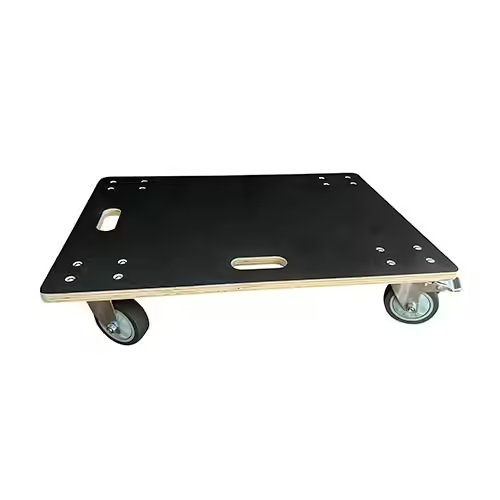
Le chariot FPWD7050 a été adopté dans les entrepôts du monde entier pour la manutention de charges lourdes.
- Capacité de charge : Jusqu'à 500 kg
- Plate-forme: Contreplaqué avec revêtement antidérapant
- Roulettes: Pivotant de 4 pouces, avec freins en acier galvanisé
Résultat: Les entrepôts ont signalé 30% déplacement plus rapide des objets volumineux et une réduction significative des accidents de manutention après l'intégration de ces chariots dans les opérations quotidiennes.
Conclusion
Équipements de manutention dans l'entrepôt Les opérations ne sont pas un luxe, elles sont un investissement crucial en matière de sécurité, d'efficacité et de productivité.
Du chariot de manutention aux transpalettes pliables, en passant par les convoyeurs, les chariots élévateurs et la robotique, le choix de la bonne combinaison d'outils en fonction du type de charge, de la fréquence et des contraintes d'espace peut transformer les performances d'un entrepôt. En tenant compte de la sécurité, de la durabilité et des avancées technologiques, les responsables d'entrepôt peuvent maximiser le retour sur investissement, améliorer les flux de travail et maintenir un environnement plus sûr pour le personnel.
Les experts du secteur recommandent systématiquement une approche mixte : Combiner des équipements manuels, semi-automatisés et entièrement automatisés pour répondre à divers besoins opérationnels tout en conservant une grande flexibilité.
FAQ
Quel est le type de chariot le plus sûr pour les charges lourdes ?
Les chariots de manutention antidérapants avec plateformes à adhérence maximale empêchent les objets de glisser, idéaux pour les charges lourdes ou de forme irrégulière.
Les chariots élévateurs à plateforme repliable peuvent-ils supporter des charges d'une tonne ?
Oui, des modèles comme TC1860 Ces produits sont conçus pour des charges de 150 kg à 1 tonne. Veuillez toujours vérifier les spécifications de charge maximale.
Dois-je choisir des pneus pneumatiques ou des pneus pleins pour mes chariots de manutention ?
Les pneus pneumatiques conviennent bien aux sols irréguliers ou extérieurs ; les pneus pleins sont plus résistants pour les zones intérieures à fort passage.
Comment améliorer l'efficacité de mon entrepôt grâce à des équipements de manutention ?
Utilisez l'automatisation lorsque cela est possible, choisissez des équipements adaptés aux types de charges et formez le personnel aux pratiques de manutention ergonomiques.
Pour les objets fragiles, un chariot en PVC ou antidérapant est-il préférable ?
Les chariots en PVC sont plus adaptés aux sols délicats et aux produits légers ; les chariots antidérapants sont conçus pour les objets plus lourds et plus volumineux.
Les véhicules à guidage automatique représentent-ils un investissement judicieux ?
Pour les entrepôts à fort volume, les AGV offrent un transport fiable et évolutif avec un retour sur investissement généralement atteint en 2 à 3 ans.
Continuez la conversation !
Vous avez aimé cet article ? Rejoignez notre communauté pour plus d'informations sur le secteur, des discussions en temps réel et des actualités exclusives. Retrouvez-moi ici :
→ Facebook: Qingdao Kinkayo Industrie et Commerce Co., Ltd.
→ YouTube : Industrie et commerce de Kinkayo
Explorons ensemble l’innovation – connectez-vous maintenant !
 French
  English
  Japanese
  Spanish
  German