

Table des matières
Introduction
Flatbed carts are essential tools for moving heavy or bulky items in warehouses, workshops, offices, and homes. However, even simple carts can encounter operational problems such as load shifting, wheel malfunction, or inefficient handling. Understanding these issues and applying targeted solutions ensures safety, productivity, and equipment longevity.
1. Ensure Proper Weight Distribution on Flatbed Carts
Pourquoi l'équilibrage de charge est important
Uneven weight on a flatbed cart can cause tipping, difficulty steering, and increased wear on wheels and platform. Correct load positioning minimizes accidents and protects cargo.
Charges lourdes centrales
Always place the heaviest items in the center of the platform. For items like appliances or furniture, align the load lengthwise along the cart to prevent tilting.
Utilisez des sangles et des coussinets antidérapants
Straps, bungee cords, or anti-slip mats stabilize loads further, particularly on tall or irregularly shaped items.
Exemple de cas : RPWD6030/RPWD7050 Chariot de déménagement en PVC
With a Maxi Loader platform and anti-slip PVC surface, the RPWD6030/RPWD7050 ensures even heavy loads remain stable during transport.
2. Améliorer les roues du chariot à plateau pour une mobilité plus fluide
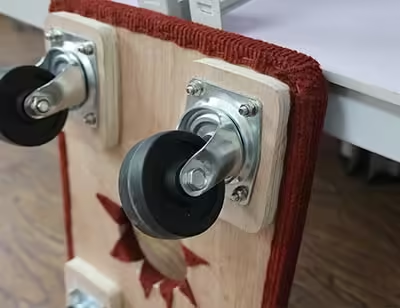
Problèmes courants liés aux roues
- Stiff swivel casters
- Squeaky or locked wheels
- Worn or cracked wheel surfaces
Entretien régulier des roues
Lubricate swivel joints with silicone spray or light oil and remove debris to maintain smooth rotation.
Vérifier les roulements et l'alignement des roues
Check bearings monthly and replace worn wheels to prevent uneven load distribution or steering difficulty.
Product Highlight: MWD5929 Chariot de déménagement en MDF
The MWD5929 comes with 3-inch swivel castors for smooth movement across multiple surfaces, ensuring maneuverability even in confined spaces.
3. Mettre en œuvre des surfaces antidérapantes pour éviter le déplacement de la charge.
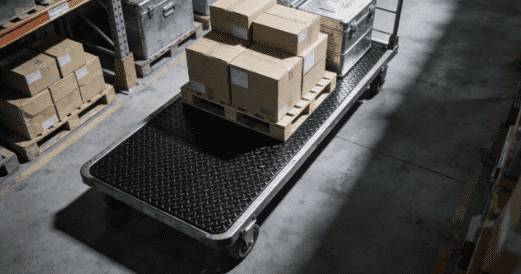
Importance des surfaces antidérapantes
Load sliding is a major cause of accidents and damage during transport. Anti-slip platforms increase stability, especially when moving items on inclines or through turns.
Choisir le bon matériau antidérapant
- PVC mats for lightweight carts
- Rubber or textured MDF for heavier items
- Non-slip adhesive pads for adjustable platforms
Exemple de cas : RPWD6030/RPWD7050 Chariot de déménagement en PVC
The full PVC platform reduces item movement and protects floors from scratches while transporting large furniture or equipment.
4. Optimiser la taille et la manutention de la plateforme du chariot à plateau

Adaptation de la taille de la plateforme à la charge
Selecting the right cart size improves stability and maneuverability. Small platforms risk tipping; overly large carts may struggle in tight spaces.
Poignées télescopiques et réglables
Carts with telescopic handles, like the PWD80406045H-III, offer better ergonomics and control for navigating narrow corridors or crowded environments.
Des designs compacts mais polyvalents
The PWD80406045H-III combines a compact footprint with sufficient platform area to move bulky items efficiently.
5. Entretien et inspection réguliers des composants du chariot à plateau
Preventive Maintenance Checklist
- Inspect platforms for cracks or warping
- Check handles for stability
- Test swivel casters for smooth rotation
- Tighten all fasteners
Benefits of Routine Checks
- Prevents unexpected operational failure
- Extends flatbed cart lifespan
- Improves safety for operators
Example: Weekly Maintenance for RPWD6030/RPWD7050 and MWD5929
Operators can follow a quick checklist before each shift to ensure all components are functional and safe.
6. Operator Training and Proper Usage Guidelines

Common Operator Errors
- Uneven load placement
- Overloading carts
- Improper handling of swivel wheels
- Ignoring floor hazards
Simulation-Based Training
Virtual simulators or CAD-based practice allows operators to troubleshoot potential problems without wasting material or risking injury.
Standard Operating Procedures (SOPs)
Developing clear SOPs for loading, moving, and unloading ensures consistent practices and reduces accidents.
Advanced Tips for Flatbed Cart Handling
- Push rather than pull heavy loads to reduce strain
- Use multiple carts for very heavy items
- Plan transport routes to avoid abrupt turns or obstacles
7. Optimize Storage and Environmental Conditions
Proper Storage Techniques
- Store flatbed carts on level, dry floors
- Avoid stacking items on carts when not in use
- Keep handles upright to prevent damage
Floor and Environmental Considerations
Clean, smooth, and obstacle-free floors improve caster performance and reduce wear on platforms.
Case Insight: Warehouse Setup
Dedicated flatbed cart storage areas with clear markings and easy access reduce clutter and operational risk.
Table: Quick Fix Comparison for Flatbed Cart Operational Issues
| Issue | Quick Fix | Recommended Product | Expected Benefit |
|---|---|---|---|
| Uneven load | Center weight and use straps | RPWD6030/RPWD7050 Chariot de déménagement en PVC | Reduce tipping and load shifting |
| Stiff or noisy wheels | Lubricate and clean casters | MWD5929 Chariot de déménagement en MDF | Smooth movement and easy steering |
| Load sliding | Add anti-slip pads | RPWD6030/RPWD7050 Chariot de déménagement en PVC | Prevent cargo damage |
| Platform too small | Select larger or adjustable dolly | PWD80406045H-III Moving Dolly | Stable transport of bulky items |
| Component wear | Weekly inspection and repair | All models | Extend lifespan and safety |
| Operator errors | Training and SOPs | All models | Reduce accidents and damage |
| Poor storage | Store on level, dry surfaces | All models | Maintain performance and durability |
| Frequent heavy loads | Reinforce platform edges | Custom PVC or MDF flatbed carts | Prevent bending or cracking |
| Narrow pathways | Use compact dollies | PWD80406045H-III | Navigate tight spaces safely |
| Long-distance transport | Smooth wheel upgrade | Heavy-duty swivel casters | Reduce operator strain and load wear |
Additional Tips for Professional Chariot à plateau Usage
Multi-Cart Strategy
Distribute heavy loads across multiple carts to reduce stress on wheels and platforms.
Regular Floor Inspections
Check for obstacles, wet spots, or uneven surfaces to avoid accidents.
Color-Coding Carts
Assign carts to departments or tasks for organized and safe transport.
Maintenance Logs
Keep track of inspections and repairs to ensure reliability and predict failures.
Conclusion
By addressing weight distribution, wheel maintenance, anti-slip surfaces, platform sizing, operator training, and storage, organizations can maximize efficiency and safety when using flatbed carts. Reliable models like RPWD6030/RPWD7050, MWD5929, and PWD80406045H-III offer versatility for various environments, including warehouses, offices, and homes.
FAQ
Q1: How often should flatbed cart wheels be lubricated?
A: Weekly or after heavy use.
Q2: Can flatbed carts be used on carpet?
A: Yes, ensure wheels are suitable for low-friction surfaces.
Q3: What is the maximum load for PVC moving dollies?
A: Approximately 150–200 kg.
Q4: How can load shifting be prevented?
A: Use anti-slip surfaces, center weight, and secure items with straps.
Q5: Is training necessary for all flatbed carts?
A: Yes, proper usage ensures safety and efficiency.
Q6: How do maintenance logs help?
A: Track wear, prevent failures, and improve safety.
Continuez la conversation !
Vous avez aimé cet article ? Rejoignez notre communauté pour plus d'informations sur le secteur, des discussions en temps réel et des actualités exclusives. Retrouvez-moi ici :
→ Facebook: Qingdao Kinkayo Industrie et Commerce Co., Ltd.
→ YouTube : Industrie et commerce de Kinkayo
Explorons ensemble l’innovation – connectez-vous maintenant !
 French
  English
  Japanese
  Spanish
  German