
Tabla de contenido
- Learn the differences between a mobile shop tool cart, rolling utility cart, service cart, platform cart, and moving dolly.
- Compare cart types for automotive garages, maintenance departments, factories, warehouses, and mobile service teams.
- Understand load capacity, platform size, caster layout, wheel material, brakes, and handle design.
- Find out which workshop cart is best for small tools, heavy equipment, boxed parts, and irregular loads.
- Review practical material handling products available from Easemovo.
- Use a clear purchasing checklist before requesting a quotation from a tool cart supplier.
A mobile shop tool cart can mean different things to different buyers. An automotive technician may picture a rolling tool cart beside a vehicle, while a warehouse manager may need a platform cart for transporting equipment, parts, and tool cases.
These products may look similar, but they are designed for different loads and working conditions. Choosing the right cart requires more than comparing dimensions or maximum weight ratings.
This guide explains the major mobile cart types, their advantages, and the questions buyers should ask before selecting a workshop transportation solution.
What Counts as a Mobile Shop Tool Cart?
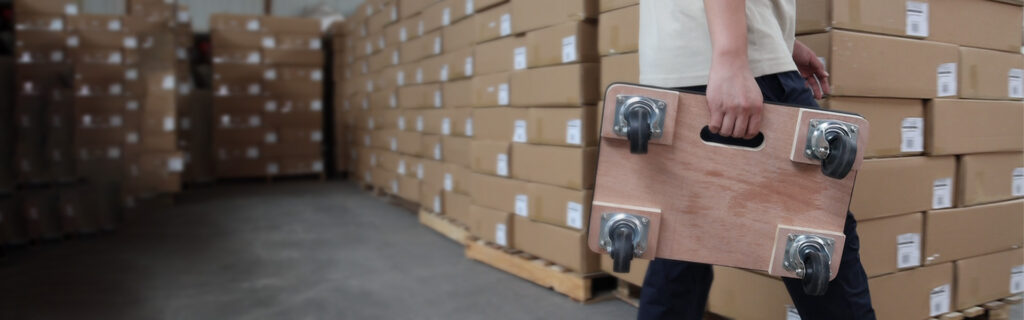
The term mobile shop tool cart generally refers to a wheeled cart used to transport tools, repair equipment, components, supplies, or work materials around a workshop.
Some models have drawers or shelves, while others use a flat platform. The best design depends on whether the buyer needs organized tool storage, heavy-load transportation, or a combination of both.
Rolling Tool Cart
A rolling tool cart usually includes one or more shelves, trays, drawers, or compartments. It is designed to keep frequently used tools close to the operator.
This type of mobile shop tool cart is common in automotive workshops, maintenance departments, assembly areas, and production facilities.
Workshop Tool Cart
A workshop tool cart is a broad product category rather than one specific design. It may include a service trolley, flat platform truck, tool cabinet with wheels, or compact moving dolly.
The key requirement is that the cart can move equipment efficiently within a workshop environment.
Garage Tool Cart
A garage tool cart is normally compact enough to fit between vehicles, workbenches, lifts, and storage cabinets.
It may carry hand tools, diagnostic equipment, batteries, replacement parts, power tools, fluids, or complete toolboxes.
Industrial Tool Trolley
An industrial tool trolley is designed for more demanding operating conditions. Buyers often prioritize durable frames, reinforced platforms, larger casters, brakes, replaceable wheels, and reliable load performance.
This type of mobile shop tool cart is suitable for factories, machinery maintenance, industrial assembly, and production support.
Carro de herramientas de servicio
A service tool cart brings tools and components directly to a repair or maintenance task.
Rather than returning repeatedly to a fixed storage cabinet, technicians can place the required equipment on one mobile unit and move it between work areas.
Plataforma móvil
A moving dolly is usually a low-profile platform fitted with swivel or fixed casters. It may not include drawers or shelves, but it can transport toolboxes, machinery parts, cartons, motors, fixtures, and bulky workshop equipment.
For businesses that need transportation rather than detailed organization, a moving dolly can serve as a simple and cost-effective mobile shop tool cart.
Mobile Shop Tool Cart Types Compared
| Tipo de carrito | Mejor para | Beneficio principal | Possible Limitation |
|---|---|---|---|
| Drawer tool cart | Hand tools and small accessories | Organized storage | Less suitable for bulky equipment |
| Two-tier service cart | Tools, parts bins, and repair kits | Separates different items | Requires balanced loading |
| Flat platform cart | Large toolboxes and cartons | Open loading area | Limited small-tool organization |
| Moving dolly | Machinery parts and heavy cases | Low loading height | No raised handle on some models |
| Folding platform truck | Mobile teams and limited storage | Compact when folded | Folding joints need inspection |
| Extendable dolly | Loads with different lengths | Adjustable loading area | Must be correctly adjusted |
| Carpeted dolly | Finished or delicate equipment | Helps reduce surface damage | Carpet may require more cleaning |
| Heavy duty tool cart | Industrial equipment and dense loads | Higher structural strength | Usually heavier and less compact |
Mobile Shop Tool Cart vs. Rolling Utility Cart
The terms mobile shop tool cart and rolling utility cart are sometimes used interchangeably. However, their intended applications can be slightly different.
Tool-Focused Design
A mobile shop tool cart is usually selected specifically for workshop tools, repair supplies, machine components, and maintenance equipment.
It may include trays, raised edges, tool holders, brakes, or storage features suited to technical work.
General-Purpose Design
A rolling utility cart can be used in workshops, offices, warehouses, retail stores, schools, and service facilities.
It is often designed to transport a wider variety of boxes, supplies, documents, equipment, or packaged goods.
Which One Should You Buy?
Choose a workshop tool cart when organization and frequent access to tools are the main priorities.
Choose a utility cart with wheels when the cart will move different types of loads between multiple departments.
A flat platform model may be the better option when the business regularly moves large tool cases, motors, machine parts, or equipment that will not fit inside a conventional service cart.
Mobile Shop Tool Cart vs. Fixed Tool Cabinet
Movilidad
A mobile shop tool cart follows the technician to the work area. A fixed tool cabinet keeps the complete tool inventory in one permanent location.
Mobile access can reduce unnecessary walking, while fixed storage may provide better security and higher total storage capacity.
Organization
Drawer cabinets are useful for sockets, wrenches, screwdrivers, measuring tools, and other small items.
Platform carts and moving dollies are better for transporting toolboxes, repair machines, replacement parts, equipment cases, and irregular loads.
Best Practical Combination
Many workshops use both systems.
A large cabinet stores the full tool collection, while a smaller rolling tool cart carries only the tools and components needed for the current task.
How Do I Choose the Right Mobile Shop Tool Cart?
Identify What the Cart Will Carry
Begin by listing the actual items that will be transported. Do not select a mobile shop tool cart based only on a general description such as “workshop use.”
Measure the heaviest, widest, longest, and most fragile regular loads.
Small Hand Tools
Small tools benefit from trays, bins, drawers, or raised edges. Open flat platforms may require additional toolboxes or removable containers.
Large Tool Cases
Large cases need a stable platform with enough surface area to prevent excessive overhang.
A flat workshop cart or moving dolly may be more practical than a narrow drawer trolley.
Heavy Machinery Parts
Motors, pumps, dies, batteries, and dense metal components create concentrated loads.
Buyers should confirm whether the stated capacity applies to evenly distributed weight or to a concentrated load placed in one area.
Irregular Equipment
Round, uneven, or unusually shaped equipment may slide or rotate during movement.
An anti-slip platform, carpeted surface, retaining edge, strap point, or customized fixture can improve load control.
Compare Normal and Maximum Loads
The normal operating load is more important than the heaviest load moved once a year.
A mobile shop tool cart should be comfortable to push during everyday use, not merely capable of supporting a theoretical maximum weight.
Leave an appropriate load margin for additional tools, packaging, containers, and future changes in the workflow.
Measure the Complete Travel Route
Measure more than the workshop aisle. Buyers should also check:
- Doorway width
- Corner clearance
- Elevator dimensions
- Ramp angle
- Floor joints
- Threshold height
- Storage space
- Loading areas
- Space beside machinery
- Operator walking clearance
A mobile shop tool cart may fit through a doorway but still be unable to turn into the next aisle.
Which Tool Cart Wheels Are Best?
Wheels and casters have a major effect on how a loaded cart feels during daily operation. A strong platform with unsuitable wheels may still be difficult to use.
OSHA recommends rolling devices with wheels suited to the floor surface and advises using handles rather than pushing from the side, helping reduce hand injuries and improve control.
Swivel Casters
Swivel casters rotate to change direction. They are useful when a garage tool cart must move around vehicles, workbenches, machinery, and narrow service areas.
Four swivel casters provide excellent positioning flexibility, but the cart may be harder to guide over long straight routes.
Ruedas fijas
Fixed wheels keep the mobile shop tool cart moving in a predictable direction.
They are useful for longer aisles, warehouse routes, and transportation between departments.
Two Fixed and Two Swivel Casters
This common layout combines straight-line stability with easier steering.
It is often suitable for a long platform cart, heavy duty tool cart, or industrial tool trolley that follows a regular route.
Wheel Diameter
Larger wheels generally cross gaps, joints, thresholds, and small floor obstacles more easily.
However, they also increase the deck height. Buyers should balance easier movement with the required loading and working height.
Material de la rueda
Ruedas de goma
Rubber wheels can provide quieter movement and help protect finished floors.
They may suit garages, offices, light workshops, and indoor service areas.
Ruedas de poliuretano
Polyurethane wheels are frequently selected for industrial floors because they provide a useful balance of durability, load support, and rolling performance.
The exact wheel should still be matched to floor condition, debris, temperature, oil exposure, and the expected duty cycle.
Pneumatic Wheels
Pneumatic wheels can help a platform trolley travel over rough or uneven surfaces.
They may require more maintenance and should be checked regularly for pressure and damage.
Does a Mobile Shop Tool Cart Need Brakes?
Not every cart requires brakes, but many workshop applications benefit from them.
Brakes are especially useful when the mobile shop tool cart is loaded on a slight slope, parked beside a machine, used near a loading area, or treated as a temporary workstation.
Wheel Brake
A wheel brake prevents the wheel from rolling but may not stop the caster from swiveling.
It can be adequate for general parking on a flat floor.
Total-Lock Brake
A total-lock caster can restrict both rolling and swiveling.
This design may provide a more stable working position when users need to access tools or load equipment.
Directional Lock
A directional lock temporarily converts a swivel caster into a fixed-direction caster.
It can help a heavy rolling cart travel more predictably along long industrial routes.
Platform Materials and Surface Options
Steel Platform
Steel platforms are suitable for demanding industrial use and concentrated loads.
Buyers should examine sheet thickness, reinforcement, welding quality, coating, and caster mounting points instead of judging the cart only by its appearance.
Plywood Platform
A plywood moving dolly offers a practical combination of strength, lower weight, and a surface that is less aggressive than exposed steel.
It can be used for toolboxes, equipment cases, workshop supplies, furniture, and packaged machinery components.
Hardwood Platform
A solid hardwood platform provides a sturdy loading base for irregular items and equipment.
El Easemovo SHWD7646 Solid Deck Hardwood Dolly is designed with a solid deck for transporting items of different shapes and sizes.
Carpeted Surface
Carpet can protect finished, painted, polished, or fragile items from direct contact with a hard platform.
El RPWD7050-III Plataforma de mudanzas alfombrada combines a carpeted platform with a ribbed rubber top to support controlled transportation of delicate or finished loads.
Anti-Slip Surface
An anti-slip surface can reduce movement when transporting smooth tool cases, boxes, repair equipment, and irregular components.
It does not replace proper load securing when the item is tall, unstable, or likely to roll.
Handle Types for a Rolling Tool Cart
Fixed Push Handle
A fixed handle provides a stable pushing position and is suitable for frequent use.
It should provide enough hand clearance so the operator’s fingers are not trapped between the cart and nearby equipment.
Folding Handle
A folding handle reduces storage size and can make the mobile shop tool cart easier to load into a service vehicle.
Buyers should check the locking mechanism, hinge strength, and ease of operation.
Telescopic Handle
A telescopic handle can be adjusted for different operators or retracted for storage.
It is useful for mobile service teams, workshops with limited space, and compact moving dollies.
Integrated Handhold
Some low-profile moving dollies include a cutout or handhold in the deck.
This makes the dolly easier to carry and store, although it does not provide the same pushing posture as a raised handle.
Recommended Easemovo Options for Different Buyers
Easemovo offers several material handling categories that can support workshops, warehouses, factories, maintenance teams, and equipment distributors. The company’s range includes moving dollies, handle dollies, wagons, trolleys, and folding platform trucks.
For Compact Workshop Transportation
Buyers transporting toolboxes, cartons, parts, and repair equipment can explore Easemovo’s normal moving dolly range.
A compact dolly works well where the main requirement is moving a load rather than organizing individual tools.
Suitable Keywords
This type of product is relevant to searches such as:
- Compact workshop cart
- Small rolling tool cart
- Moving dolly with wheels
- Toolbox transport dolly
- Low-profile utility cart
For Easier Steering and Handling
El handle moving dolly range combines mobile platforms with handles that improve positioning and steering.
These models can be considered by buyers searching for a mobile shop tool cart with handle, rolling platform cart, or workshop transport trolley.
For Adjustable Load Lengths
El PWD4530 jointed moving dolly uses a variable-length loading surface that can be adjusted to different load dimensions.
An extendable dolly can be useful when a workshop transports tool cases, long equipment, furniture components, or machinery parts with changing dimensions.
For Large or Bulky Loads
El Camión de plataforma plegable TC1860 is designed for moving large or bulky items and can fold to reduce storage space when it is not in use.
This design is relevant to buyers looking for a folding tool cart, heavy duty platform cart, warehouse trolley, or industrial transport cart.
For Broader Material Handling Requirements
Businesses that move both workshop equipment and general warehouse supplies can review the Easemovo wagons and trolleys range.
This category is suitable when one mobile shop tool cart must support several departments or when a buyer needs multiple cart styles for different working areas.
Which Mobile Shop Tool Cart Fits Each Industry?
Automotive Repair Shop
An automotive workshop needs a cart that can turn between vehicles, fit beside lifts, and transport tools without blocking the service bay.
A compact garage tool cart, two-tier service trolley, or low-profile moving dolly may be suitable depending on whether the load consists of hand tools, batteries, parts, or diagnostic equipment.
Industrial Maintenance Department
Industrial maintenance teams often move heavy tools, replacement motors, pumps, components, and repair equipment.
A heavy duty tool cart should provide a reinforced platform, suitable wheels, dependable brakes, and replacement caster availability.
Manufacturing and Assembly
Assembly teams may need tools, gauges, fasteners, fixtures, and parts bins delivered to individual workstations.
A two-tier workshop cart can separate tools from components, while a flat platform trolley is better for larger fixtures and equipment cases.
Warehouse Maintenance
A warehouse maintenance cart may travel longer distances than a typical garage tool cart.
Wheel diameter, handle comfort, caster arrangement, and directional control become especially important on long routes.
Mobile Repair Service
Mobile technicians need a cart that can be folded, lifted, or stored inside a service van.
A folding platform truck or telescopic-handle dolly may provide a better balance of portability and load space.
Construction and Installation Teams
Installation teams often move equipment cases, power tools, hardware, and packaged materials between temporary work areas.
A rugged utility cart with wheels can be more versatile than a drawer-based tool cabinet.
How to Write a Tool Cart Purchase Specification
A clear specification helps suppliers recommend a suitable cart and reduces the risk of comparing products that are designed for different applications.
| Specification Item | Information to Provide |
| Load type | Tools, cases, parts, machinery, cartons, or mixed items |
| Normal load | Typical weight moved every day |
| Carga máxima | Heaviest expected operating load |
| Load size | Length, width, height, and possible overhang |
| Platform type | Steel, plywood, hardwood, carpeted, or anti-slip |
| Cart structure | Drawer, shelf, flat platform, folding, or extendable |
| Wheel type | Rubber, polyurethane, pneumatic, or other material |
| Caster layout | Four swivel or two fixed and two swivel |
| Brakes | No brake, wheel brake, total lock, or directional lock |
| Manejar | Fixed, folding, telescopic, or integrated handhold |
| Floor condition | Smooth concrete, coated floor, thresholds, or rough surface |
| Ambiente | Indoor, outdoor, wet, dusty, oily, or temperature controlled |
| Order requirements | Quantity, branding, packaging, spare parts, and delivery terms |
Ask About Complete Cart Capacity
Do not calculate the safe load by simply multiplying the rating of one caster by four.
The complete mobile shop tool cart includes the platform, frame, handle, fasteners, caster plates, and load distribution conditions.
Ask About Caster Testing
Industrial buyers can refer to ISO 22883:2004, which covers technical and testing requirements for castors and wheels used in manually propelled or power-towed industrial applications operating at speeds up to 1.1 m/s.
Ask About Replacement Components
Request information about replacement wheels, brakes, bearings, handles, fasteners, and surface components.
A mobile shop tool cart may remain useful for many years if wear components can be replaced without discarding the complete unit.
Ask About Customization
For volume orders, buyers may require custom platform dimensions, caster arrangements, colors, branding, packaging, or surface materials.
Provide application details before requesting customization so the supplier can evaluate whether the requested design remains practical.
Common Mobile Shop Tool Cart Buying Mistakes
Selecting by Price Alone
The lowest-cost cart may not provide suitable wheels, brakes, reinforcement, or replacement parts.
Compare the expected operating life and maintenance requirements rather than only the initial purchase price.
Buying More Capacity Than Necessary
A very high-capacity industrial tool trolley may be heavier, larger, and harder to maneuver.
Select a mobile shop tool cart that comfortably supports the real load without creating unnecessary size and weight.
Ignoring Floor Conditions
Small hard wheels may work on smooth floors but perform poorly on cracks, joints, debris, and thresholds.
Test the expected cart configuration on the actual route when possible.
Forgetting Empty Cart Weight
A cart’s rated load does not show how easy the empty unit is to carry, fold, or load into a vehicle.
Empty weight matters for mobile technicians and teams that frequently move carts between buildings.
Choosing the Wrong Caster Layout
Four swivel casters offer excellent local maneuverability but may wander during long straight movements.
Two fixed and two swivel casters may provide better directional control for a long platform cart.
Overlooking Load Height
A tall stack can block the operator’s view and raise the center of gravity.
Use a larger platform, make additional trips, or choose a cart with suitable retaining features instead of stacking loads too high.
Mobile Shop Tool Cart Maintenance Tips
Inspect Wheels and Casters
Check for flat spots, embedded debris, loose mounting bolts, worn bearings, and caster wobble.
A wheel that does not rotate freely increases pushing effort and can make the cart difficult to steer.
Test the Brakes
Apply and release each brake to confirm that it works correctly.
Do not use a mobile shop tool cart as a stationary workstation if its brakes cannot hold the expected load.
Check the Platform
Inspect plywood, hardwood, carpet, rubber, steel, and anti-slip surfaces for damage.
Replace or repair surfaces that no longer support the load securely.
Tighten Fasteners
Vibration and repeated movement can loosen handles, caster plates, hinges, and frame connections.
Create a maintenance schedule based on usage frequency and operating conditions.
Clean the Cart
Remove metal chips, oil, dust, packaging, and other debris.
Regular cleaning makes damage easier to identify and helps prevent contamination between work areas.
FAQ About Mobile Shop Tool Carts
What is another name for a mobile shop tool cart?
Common terms include rolling tool cart, workshop tool cart, garage tool cart, service cart, industrial tool trolley, utility cart with wheels, platform trolley, and moving dolly.
The best search term depends on whether the buyer needs storage, transportation, or both.
Is a rolling tool cart the same as a tool chest?
No. A rolling tool cart is usually designed for mobility and quick access to frequently used equipment.
A tool chest normally provides greater storage capacity and may remain in one location for most of its service life.
What is the best cart for moving heavy tools?
A heavy duty tool cart or reinforced platform trolley is usually more suitable than a lightweight drawer cart.
Buyers should compare complete cart capacity, platform reinforcement, caster rating, wheel diameter, brakes, and floor conditions.
Can I use a moving dolly as a workshop tool cart?
Yes. A moving dolly can transport toolboxes, equipment, machinery parts, repair supplies, and packaged components.
It may not organize small hand tools, but it can perform the transportation function of a mobile shop tool cart.
Should a garage tool cart have four swivel wheels?
Four swivel wheels make local positioning easier, especially in crowded service bays.
For longer straight routes, a combination of fixed and swivel casters may offer better directional control.
What wheel size is best for a rolling workshop cart?
The correct size depends on load weight, floor condition, gaps, thresholds, required deck height, and travel distance.
Larger wheels normally handle minor obstacles more easily, while smaller wheels keep the loading platform lower.
Is a two-tier service cart better than a flat platform cart?
A two-tier cart is better for separating tools, parts, and supplies.
A flat platform cart is more suitable for large tool cases, machinery components, cartons, and irregular equipment.
Do I need a folding tool cart?
A folding tool cart is useful when storage space is limited or when the cart must travel inside a service vehicle.
A fixed-frame cart may be more appropriate when it remains inside one workshop and is used continuously.
What should I ask a mobile shop tool cart manufacturer?
Ask about complete load capacity, caster specifications, brakes, platform materials, replacement parts, customization, packaging, testing, lead time, and order quantity.
Provide detailed load and workplace information instead of requesting only a general price.
Can workshop carts be customized for B2B orders?
Depending on the supplier and order quantity, customization may include dimensions, surface materials, wheel types, brakes, handles, color, logo, and packaging.
The buyer should confirm whether customization changes the capacity, production time, or testing requirements.
Conclusión
A mobile shop tool cart should be selected according to the load, route, floor, working space, and frequency of use.
Drawer carts organize small tools, service carts support repair work, platform trucks move larger equipment, and moving dollies provide a compact solution for transporting toolboxes and heavy components.
For broader keyword and product research, buyers may also encounter terms such as rolling tool cart, workshop cart, garage tool cart, industrial tool trolley, heavy duty service cart, utility cart with wheels, folding platform truck, and moving dolly.
Although the names vary, the purchasing process remains the same: define the load, measure the route, select suitable wheels, confirm the complete cart capacity, and choose a design that workers can use comfortably every day.
Explore the Easemovo material handling range to compare moving dollies, handle carts, platform trucks, wagons, and trolleys for workshop and industrial applications.
¡Mantenga la conversación!
¿Te gustó este artículo? Únete a nuestra comunidad para obtener más información del sector, debates en tiempo real y actualizaciones exclusivas. Encuéntrame aquí:
→ Facebook: Qingdao Kinkayo Industria y Comercio Co., Ltd.
→ YouTube: Industria y comercio del Kinkayo
Exploremos la innovación juntos: ¡conéctese ahora!
 Spanish
  English
  French
  Japanese
  German