Inhaltsverzeichnis
Introduction: The Global Significance of Sackkarren Und Plattformwagen
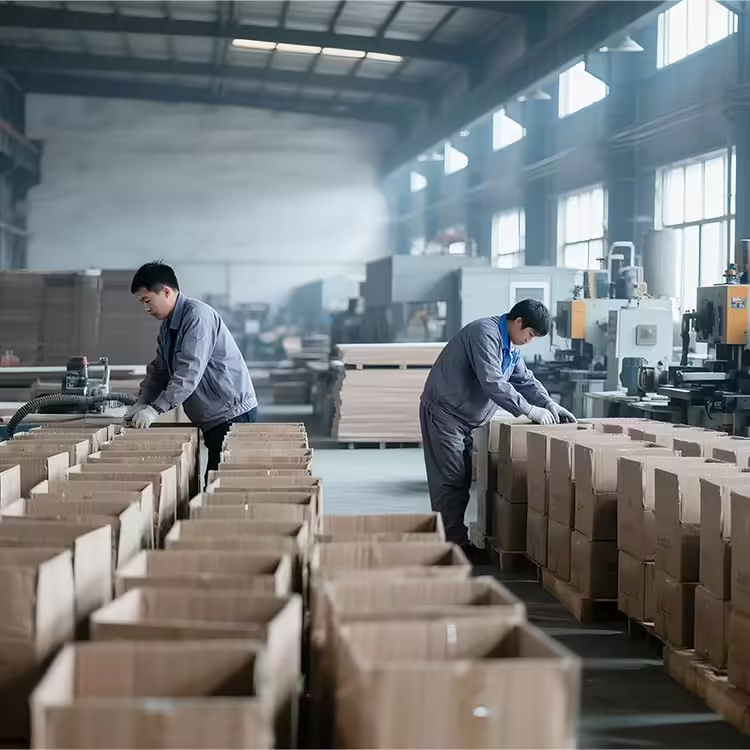
Hand trucks and platform carts are essential tools in logistics, manufacturing, and commercial operations worldwide. These devices streamline material handling, reduce labor costs, and increase operational efficiency. Understanding how these carts are applied across different regions and industries is critical for businesses aiming to optimize workflow and improve safety. This article examines international market trends, industry-specific applications, and provides actionable insights for decision-makers.
Verständnis Sackkarren

Hand trucks, also called dolly carts, are primarily two-wheeled vertical devices designed to move heavy items easily. They are commonly used for transporting stacked boxes, appliances, and smaller industrial materials. The portability and compact nature of hand trucks make them particularly useful in tight spaces such as warehouses or retail stores with limited aisle width.
Exploring Plattformwagen

Platform carts, on the other hand, consist of a flat surface supported by four wheels, allowing for larger and heavier loads to be transported with stability. These carts are essential in warehouses, factories, and logistics centers where efficiency and capacity are crucial. Platform carts come in multiple variations, from fixed flatbeds to foldable and modular designs, each catering to specific operational needs.
Differences and Practical Applications
Selecting between a hand truck and a platform cart often hinges on three main factors: load type, transportation distance, and operational environment. Hand trucks excel at vertical stacking and navigating narrow aisles, making them ideal for delivery services, small-scale warehouses, or urban retail operations. Typically, hand trucks handle loads ranging from 150 kg to 300 kg, and their compact design allows them to move efficiently in tight spaces.
Platform carts, by contrast, are designed for heavier or bulkier loads, with capacities usually between 500 kg and 1000 kg. They are optimal for longer distances across warehouse floors, factory production lines, or construction sites. Platform carts often include reinforced steel frames and industrial-grade wheels, enabling them to carry heavy machinery or pallets safely while minimizing operator fatigue.
Fallbeispiel: In a German e-commerce warehouse, replacing standard pallet jacks with modular platform carts enabled workers to transport up to 800 kg of goods per trip, reducing loading time by 20% and decreasing minor workplace injuries related to manual handling.
International Market Trends
Nordamerika
In the U.S. and Canada, the market is driven by industrial efficiency and strict workplace safety regulations. Hand trucks with ergonomic handles and reinforced steel frames are standard, while platform carts often incorporate motorized assistance or conveyor integration for high-volume operations. Companies report that using motorized platform carts can cut labor time by 15–25%, especially in large fulfillment centers.
Fallbeispiel: A logistics hub in Chicago introduced motorized platform carts with load sensors for high-density shelving, allowing operators to move 1,000–1,200 kg loads per shift safely, which improved throughput without increasing staff.
Europe
European businesses emphasize sustainability and quality materials. Lightweight aluminum carts and foldable designs are popular for SMEs and urban delivery services. Noise reduction and smooth maneuverability are also prioritized for indoor operations.
Fallbeispiel: A Paris-based retail distribution company switched from steel carts to aluminum foldable platform carts, reducing operator strain by 30% and increasing daily transport capacity by 15%, while meeting EU ergonomic standards.
Asia-Pacific
In Southeast Asia, India, and China, rapid growth in e-commerce and small manufacturing is fueling demand for affordable, durable carts. Urban logistics often require compact hand trucks for navigating crowded streets and modular platform carts that can be easily stored when not in use.
Fallbeispiel: A logistics company in Singapore optimized warehouse operations by deploying modular platform carts with 600–800 kg load capacity, resulting in a 25% reduction in order fulfillment time during peak periods.
Latin America
Brazil, Mexico, and neighboring countries rely heavily on cost-effective and high-capacity carts. Reinforced steel models withstand daily heavy usage in retail and warehouse sectors.
Fallbeispiel: A construction materials distributor in São Paulo adopted heavy-duty platform carts capable of carrying 900 kg loads, reducing manual lifting by 40% and lowering employee injury claims by 15% over one year.
Industry-Specific Insights

Lagerhaltung und Logistik
Platform carts dominate bulk transport, while hand trucks handle smaller, frequent deliveries. Key parameters include load capacity, wheel type, and maneuverability.
Example: In Hamburg, Germany, an e-commerce fulfillment center deployed hand trucks with 200 kg capacity and swivel wheels for fast small-item transport, while platform carts with 800 kg capacity moved bulk pallets. The combination improved workflow efficiency by 22% and reduced worker fatigue.
Manufacturing and Industrial Use
Factories require carts that can withstand repetitive use while carrying heavy materials. Reinforced wheels, industrial-grade bearings, and steel frames are standard features.
Example: In Japan, an automotive parts factory implemented a dual approach: hand trucks for small components (200–250 kg loads) and platform carts for bulk assembly parts (up to 900 kg). This setup increased line productivity by 18% and reduced minor workplace injuries by 12%.
Einzelhandel und Supermärkte
Hand trucks streamline shelf stocking, while platform carts transport pallets and bulk goods from storage to the sales floor.
Example: A Canadian supermarket chain upgraded to aluminum platform carts with 700 kg capacity. Stock replenishment time dropped 30%, and staff reported reduced strain during heavy-duty shifts.
Healthcare and Medical Facilities
Smooth, quiet, and hygienic carts are vital for hospitals and labs. Small platform carts with non-marking wheels maintain cleanliness while transporting sensitive medical supplies.
Example: In Sweden, a hospital adopted foldable platform carts to navigate narrow corridors. These carts allowed staff to move medical equipment efficiently without disrupting patient care, improving workflow in high-density wards.
Construction and Building Materials
Heavy-duty carts are essential for moving bricks, cement, and tools safely. Parameters like wheel diameter, frame reinforcement, and surface adaptability are critical.
Example: A Brazilian construction company replaced manual lifting with a combination of steel hand trucks (200–250 kg) and platform carts (up to 1,000 kg). Workplace injuries decreased by 15%, and overall material handling efficiency improved significantly.
Comparing Key Parameters of Hand Trucks and Platform Carts
| Besonderheit | Hand Trucks / Moving Dollies (e.g., FPWD7050) | Platform Carts / Folding Trucks (e.g., TC1860) |
|---|---|---|
| Typische Tragfähigkeit | 150–300 kg | 150 kg – 1 tonne (check max load before use) |
| Plattformmaterial | Robustes Sperrholz mit rutschfester Maxi-Grip-Beschichtung | Heavy-duty steel frame, foldable design |
| Wheels / Castors | 4″ swivel castors, galvanized steel housing | Pneumatic or solid tyres (10×3.00-4) for smooth or uneven surfaces |
| Griffe | Integrated handle on load surface for ergonomic control | Ergonomic steel handle for comfortable pushing/pulling |
| Portabilität | Lightweight, easy to maneuver | Foldable for space-saving storage and transport |
| Sicherheitsmerkmale | Anti-slip platform, dual galvanized steel brakes | Reinforced frame, stable platform, tyre options for surface adaptability |
| Ideal Usage | Warehouses, offices, workshops, homes; moving boxes, furniture, equipment | Warehouses, factories, retail, offices, homes; transporting heavy or bulky loads efficiently |
| Key Advantages | Easy handling in tight spaces; anti-slip protection | High-capacity transport; foldable for storage; versatile tyre options for different surfaces |
This table illustrates how understanding load capacity, material, and mobility is crucial for making the right choice based on operational needs.
Choosing the Right Equipment
Assessing Load Type and Capacity
When selecting a cart, understanding the type of load is the first step. Light boxes, small parcels, or lab equipment may be efficiently handled by hand trucks with capacities ranging from 150–300 kg. Bulkier goods, pallets, or heavy machinery require platform carts with higher load capacities, typically 500–1000 kg. Choosing equipment with the right capacity not only ensures operational efficiency but also prevents damage to goods and reduces the risk of workplace injuries.
Frequency of Use and Operational Environment
Der frequency and intensity of use directly impact equipment choice. For businesses with daily heavy-duty operations, such as warehouses or factories, platform carts with reinforced steel frames and industrial-grade wheels are recommended. For urban delivery services, where space is limited and handling is intermittent, foldable hand trucks offer flexibility and compact storage. Environmental conditions—such as smooth indoor floors versus rough outdoor surfaces—also determine wheel type and material selection.
Customization and Specialized Features
Some operations require specialized features, such as brake systems, foldable designs, adjustable platforms, or modular carts. Customization ensures that carts align perfectly with operational workflows. For instance, an e-commerce warehouse may benefit from modular platform carts that can be easily rearranged for seasonal demand changes, while medical facilities may require small, hygienic carts for sensitive materials.
Importance of Choosing the Right Supplier
Selecting the right supplier is as critical as selecting the right equipment. A reliable supplier ensures high-quality products, consistent delivery, and post-sales support, which directly influences operational efficiency and safety. Poor-quality carts may wear quickly, compromise safety, or increase long-term costs due to frequent replacements.
Why Choose Qingdao Kinkayo Industrie und Handel Co., Ltd.

Gegründet im Jahr 1998, Qingdao Kinkayo Industrie und Handel Co., Ltd. is a national high-tech enterprise specializing in the design, manufacturing, and global distribution of premium material handling equipment. With exports to over 50 countries, including North America, Europe, Japan, and Australia, Kinkayo provides reliable solutions for diverse operational needs.
Professional Material Handling Solutions
Kinkayo offers a comprehensive range of trolleys and platform carts, designed to meet the unique logistics requirements of different industries. Whether for warehouses, retail, healthcare, or manufacturing, their products enhance workflow efficiency and ensure safety.
Anpassungsdienste
The company supports ODM/OEM cooperation, with sample delivery in as fast as 15 days, enabling businesses to implement tailored solutions quickly. Customization options include load capacity adjustments, material choices, and specialized design modifications.
Commitment to Quality and Innovation
Kinkayo has a 20-person engineering team that launches over 15 new product models annually. Their production process includes a dreistufiges Inspektionssystem, covering raw materials, production stages, and finished products, ensuring that each cart meets strict quality standards.
Intelligent Manufacturing and Global Reach
The company adheres to the core value of “Cultivating Virtue and Pursuing Excellence”, leveraging intelligent manufacturing processes to deliver consistent, high-quality products. With decades of experience and a global distribution network, Kinkayo ensures timely delivery and reliable after-sales service, making them a trusted partner for businesses worldwide.
Integrating Equipment Selection with Supplier Partnership
Ultimately, selecting the right cart is only part of the equation. Partnering with a reputable supplier like Kinkayo ensures that your equipment meets operational needs, complies with safety standards, and is backed by reliable support. For businesses aiming to optimize efficiency and reduce long-term costs, the combination of the right equipment and the right supplier is essential.
Market Trends in Technology and Sustainability
Automation and smart carts are shaping the future of material handling. AGVs (Automated Guided Vehicles) and sensor-equipped platform carts increase operational efficiency in large warehouses. At the same time, environmental concerns drive the adoption of lightweight, recyclable materials in Europe and North America. E-commerce continues to fuel demand for versatile carts suitable for fast-moving inventory.
Conclusion: Optimizing Your Material Handling Operations
Hand trucks and platform carts are indispensable in global logistics, warehousing, and industrial operations. Understanding international market trends, industry-specific needs, and technical specifications enables businesses to select equipment that enhances efficiency, safety, and cost-effectiveness.
Need more tailored solutions for your operations? Kontaktieren Sie uns noch heute. to explore the best hand trucks and platform carts for your business needs.
Häufig gestellte Fragen
What is the difference between a hand truck und ein platform cart?
A hand truck is vertical and portable, ideal for tight spaces, while a platform cart is flat and supports heavy, bulky loads.
How do I decide which cart is right for my business?
Consider load size, material, frequency of use, and the operational environment. Hand trucks suit small, stacked loads; platform carts are better for bulk transport and heavy materials.
Are foldable carts practical for international shipping?
Yes, foldable carts are highly practical for space-limited warehouses and urban logistics, particularly in Europe and Asia-Pacific.
Welche Materialoptionen eignen sich am besten für eine lange Lebensdauer?
Steel provides maximum strength, aluminum is lightweight and corrosion-resistant, and plastic is suitable for light loads.
Wie beeinflussen Sicherheitsstandards die Wahl des Einkaufswagens?
North America and Europe emphasize ergonomic design, load testing, and stability to prevent workplace injuries.
Halten Sie das Gespräch am Laufen!
Hat Ihnen dieser Artikel gefallen? Treten Sie unserer Community bei, um weitere Brancheneinblicke, Echtzeit-Diskussionen und exklusive Updates zu erhalten. Hier finden Sie mich:
→ Facebook: Qingdao Kinkayo Industrie und Handel Co., Ltd.
→ YouTube: Kinkayo Industrie und Handel
Lassen Sie uns gemeinsam Innovationen erkunden – verbinden Sie sich jetzt!
 German
  English
  French
  Japanese
  Spanish