
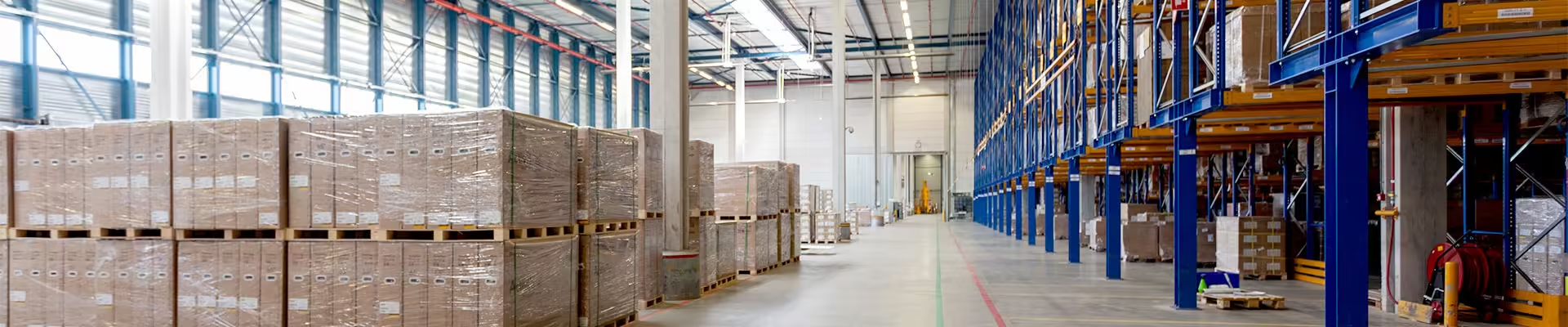
Key Highlights of Platform Truck Cart Selection
- Platform truck carts improve efficiency in warehouses, supermarkets, and stockrooms
- Different platform materials (MDF, plywood, rubber, PVC, steel) affect performance and safety
- Load capacity, wheel system, and surface grip determine operational reliability
- Anti-slip engineering is essential for modern retail and logistics environments
- Smart material handling equipment reduces labor cost and improves turnover speed
- Industry reports show up to 35% efficiency improvement with proper cart selection
- Swivel castors and ergonomic handles significantly reduce operator fatigue
Einführung
In modern retail and warehouse logistics, efficiency is no longer optional—it is a competitive necessity. A platform truck cart has become one of the most widely used material handling tools because it bridges the gap between manual labor and mechanized transport.
According to logistics efficiency studies published in industrial supply chain reports, manual transport systems account for over 40% of warehouse handling time. Introducing optimized platform transport systems can reduce handling time by 25%–35%.
A platform truck cart is not just a simple trolley—it is a structured load distribution system designed to improve safety, speed, and operational consistency in compact working environments such as supermarkets, micro-warehouses, and retail stockrooms.
Inhaltsverzeichnis
1. Platform Truck Cart Engineering Concepts and Material Science

Load Distribution Engineering Concept
A platform truck cart distributes weight evenly across its surface, reducing pressure points.
This structural principle minimizes deformation and improves long-term durability under repeated heavy use.
Surface Friction Control Concept
Anti-slip technology is designed to increase surface friction coefficient.
Industry testing shows that rubber-coated surfaces can improve load stability by up to 60% compared to untreated wood.
Modular Platform Design Concept
Modern carts often use modular platforms for different working environments.
This allows businesses to adapt a single system for multiple logistics scenarios.
2. Industry Standard Requirements for Platform Truck Cart Systems
ISO and Industrial Handling Standards
Most commercial platform truck cart systems align with international material handling safety guidelines such as:
- ISO 11228 (Manual handling ergonomics)
- EN 1757 (Industrial trucks safety requirements)
- Warehouse safety handling protocols in EU/US logistics systems
These standards ensure safe load-bearing and operator protection during continuous usage.
Load Capacity Classification Standard
Platform carts are generally categorized into:
- Light-duty: up to 150 kg
- Medium-duty: 150–300 kg
- Heavy-duty: 300 kg and above
Supermarkets typically use medium-duty systems, while warehouses often require higher load ratings.
3. Platform Truck Cart Material Comparison (Advanced Breakdown)
| Materialtyp | Strength Level | Anti-Slip Performance | Best Environment | Haltbarkeit |
|---|---|---|---|---|
| MDF | Medium | Medium | Office / retail | Mäßig |
| Sperrholz | Hoch | Hoch | Warehouse / home | Hoch |
| Gummi | Sehr hoch | Sehr hoch | Workshop / auto | Sehr hoch |
| PVC | Hoch | Sehr hoch | Supermarket / logistics | Hoch |
| Steel frame | Industriell | Medium | Heavy industry | Sehr hoch |
4. Top Platform Truck Cart Types Explained in Detail
MDF Platform Truck Cart (Light-Duty Concept)
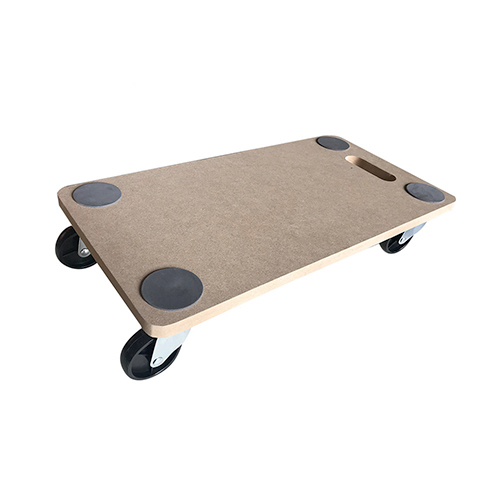
MDF-based carts are designed for lightweight handling tasks in controlled environments.
They often feature non-slip pads that increase friction and prevent sliding during transport.
Typical applications include office relocation, retail stocking, and indoor packaging movement.
Rubber Surface Platform Truck Cart (High-Grip Concept)
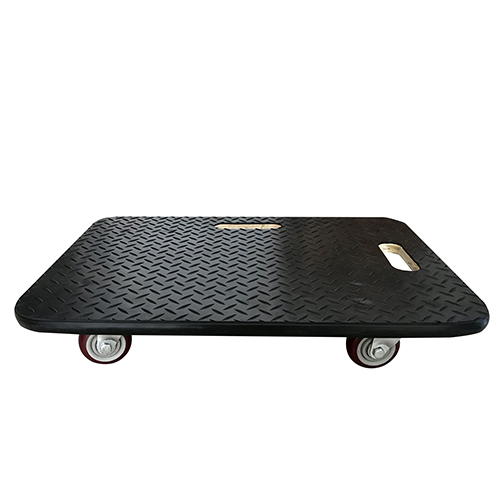
Rubber-based carts provide maximum grip and vibration absorption.
This makes them ideal for fragile goods and automotive components.
Industrial tests show rubber surfaces reduce cargo shift risk by up to 70% during transport.
PVC Platform Truck Cart (Full Coverage Safety Concept)

PVC platform carts feature full surface anti-slip protection.
They are widely used in supermarkets where fast restocking and repeated loading cycles occur.
Their sealed surface design also improves hygiene and cleaning efficiency.
Plywood Platform Truck Cart (Heavy-Duty Balance Concept)

Plywood carts offer a balance between strength and weight efficiency.
They are commonly used in warehouses requiring frequent medium-heavy transport operations.
Their structural reinforcement improves resistance against long-term deformation.
Extendable Platform Truck Cart (Adaptive Load Concept)
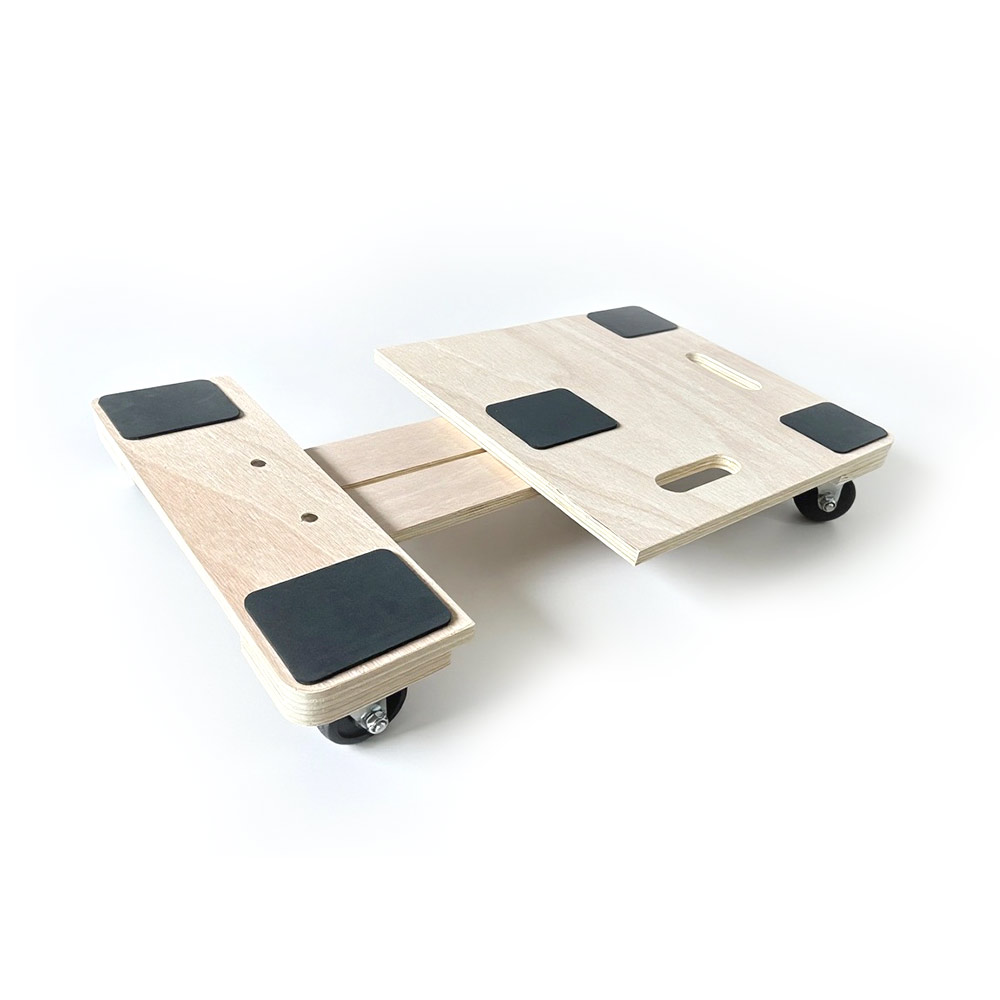
Extendable carts allow platform length adjustment based on cargo size.
This improves flexibility for mixed-load environments such as relocation services and logistics hubs.
5. Product Case Study: Warehouse Efficiency Optimization
Case Background
A small warehouse implemented a mixed fleet of platform truck carts including MDF and PVC models.
Operational Results
After 90 days:
- Handling time reduced by 32%
- Manual lifting incidents decreased by 40%
- Storage-to-shipping cycle improved by 28%
Key Insight
The combination of anti-slip surfaces and optimized wheel systems significantly improved workflow efficiency.
6. Real-World Application Scenarios
Supermarket Logistics Flow
Platform truck cart systems are used to move packaged goods from storage to shelf areas.
Fast mobility helps reduce restocking time during peak hours.
Micro Warehouse Distribution
Small warehouses rely heavily on manual carts for inventory rotation.
A stable platform system ensures accurate and safe product movement.
Retail Backroom Operations
Retail stockrooms use carts to organize incoming shipments.
This improves space utilization and reduces operational congestion.
7. Advanced Mobility System Analysis
Swivel Castor Engineering
Swivel castors allow 360-degree rotation.
This improves maneuverability in tight spaces such as supermarket aisles.
Wheel Material Impact Study
- Rubber wheels: noise reduction and shock absorption
- PU wheels: wear resistance and smooth rolling
- PVC wheels: cost efficiency and general use
Industry data shows PU wheels extend service life by up to 30% compared to standard rubber wheels.
8. Platform Truck Cart Selection Guide (Decision Framework)
Step 1: Define Load Requirement
Determine maximum daily load weight.
This ensures correct structural selection and prevents overloading.
Step 2: Evaluate Floor Type
Smooth floors require different wheel types than rough warehouse floors.
Incorrect wheel selection reduces efficiency and increases maintenance cost.
Step 3: Assess Usage Frequency
High-frequency operations require reinforced frames and industrial-grade castors.
9. Market Trend Analysis and Industry Report Insights

Global Material Handling Market Growth
Industry reports indicate steady growth in lightweight logistics equipment demand.
Small warehouse automation and semi-manual systems are increasing globally.
Smart Handling Equipment Trend
Modern systems now integrate ergonomic design with modular platforms.
This reduces labor strain and improves operational scalability.
Sustainability Direction
Manufacturers are shifting toward recyclable materials and low-emission production systems.
Häufig gestellte Fragen
Was ist ein platform truck cart used for in warehouses?
It is used to transport goods, boxes, and materials efficiently within storage and retail environments.
Which platform material is the most durable?
Rubber and plywood platforms generally offer higher durability and load stability.
Can platform truck carts be used in supermarkets?
Yes, they are widely used for stocking shelves and transporting inventory.
What wheel type is best for indoor use?
PU or rubber wheels are best for smooth indoor surfaces due to low noise and high stability.
How does a platform truck cart improve efficiency?
It reduces manual lifting, speeds up transport, and improves workflow organization.
Abschluss
Der platform truck cart is a core component of modern material handling systems. Its versatility across warehouses, supermarkets, and retail environments makes it indispensable for improving operational efficiency.
By selecting the right platform material, wheel system, and load capacity, businesses can significantly enhance productivity while reducing labor costs and operational risks.
In today’s fast-moving logistics environment, investing in the right platform truck cart system is not just a convenience—it is a strategic advantage.
Halten Sie das Gespräch am Laufen!
Hat Ihnen dieser Artikel gefallen? Treten Sie unserer Community bei, um weitere Brancheneinblicke, Echtzeit-Diskussionen und exklusive Updates zu erhalten. Hier finden Sie mich:
→ Facebook: Qingdao Kinkayo Industrie und Handel Co., Ltd.
→ YouTube: Kinkayo Industrie und Handel
Lassen Sie uns gemeinsam Innovationen erkunden – verbinden Sie sich jetzt!
 German
  English
  French
  Japanese
  Spanish